Portugal culture, traditions and everyday life
Portuguese culture is shaped by more than eight centuries of national history, a long Atlantic coastline, Catholic traditions, regional identities and centuries of contact with Africa, Asia and the Americas. Travelers encounter it in fado houses and neighborhood cafés, tiled churches and railway stations, family meals, local markets, summer festivals, football rivalries and the strong sense of place that distinguishes Lisbon from Porto, the Alentejo from Minho, and Madeira from the Azores.
Some cultural symbols are instantly recognizable: fado, azulejos, pastel de nata, Port wine, the Barcelos Rooster and the April 25 carnation. But Portuguese culture is richer than a checklist of icons. It is also found in the way meals become social occasions, how towns celebrate their patron saints, how literature and music interpret ideas such as saudade, and how historic traditions continue to evolve in modern Portugal.
Portuguese Culture at a Glance
Fado is Portugal’s best-known musical tradition and has been recognized by UNESCO as Intangible Cultural Heritage since 2011.
Fish, olive oil, bread, soups, pork, regional cheeses, pastries and wine vary greatly across the country. Shared meals remain an important social ritual.
Azulejo tilework, Manueline architecture, ceramics and calçada portuguesa give Portuguese towns and cities a distinctive visual character.
Religious feast days, local fairs, summer pilgrimages and popular saints’ celebrations bring music, food and neighborhood traditions into public spaces.
The monarchy, maritime expansion, empire, dictatorship, the Carnation Revolution and European integration all shaped modern Portuguese identity.
Minho, Trás-os-Montes, Porto, the Beiras, Lisbon, Alentejo, Algarve, Madeira and the Azores each retain strong local traditions.
Portugal’s official tourism authority describes the country’s culture as the result of many peoples who settled in the territory and of the encounters created by Portugal’s maritime history. It singles out Manueline art, azulejos and fado as particularly characteristic Portuguese expressions.
Portuguese Food Culture: Regional, Seasonal and Social
Food is one of the easiest ways for travelers to experience Portuguese culture because local identity is strongly expressed at the table. There is no single national menu. Northern Portugal is known for hearty soups, pork, cured meats and dishes such as tripas à moda do Porto; the Atlantic coast emphasizes fish and seafood; the Alentejo uses bread, olive oil, herbs and pork in distinctive ways; the Algarve is associated with fish, shellfish and cataplana; Madeira has its own island dishes; and the Azores combine seafood, dairy, beef and volcanic-island traditions.
Portugal is one of the countries represented in UNESCO’s Mediterranean Diet inscription. Importantly, UNESCO treats the Mediterranean diet as more than ingredients: it includes agricultural knowledge, markets, seasonal food, hospitality and especially the act of eating together. That social dimension is immediately recognizable in Portugal, where lunch and dinner can be as much about conversation and company as the food itself.
Pastel de nata
Portugal’s famous custard tart is now found throughout the country and around the world. The historic Pastéis de Belém bakery in Lisbon has its own proprietary tradition, while pastel de nata is the broader name for the Portuguese custard tart.
Bacalhau
Salt cod occupies a special place in Portuguese cooking. It appears in numerous preparations and is especially connected with family meals and traditional occasions, including Christmas Eve in many households.
Wine culture
Port and Douro wines are internationally famous, but Portugal’s wine culture extends through Vinho Verde, Dão, Bairrada, Setúbal, Alentejo, Madeira, the Azores and many smaller regions.
Markets are another important cultural window. Instead of treating them only as places to buy food, notice the regional produce, fish, cheeses, breads and social rhythms around them. This is especially visible in traditional markets such as Setúbal’s Mercado do Livramento and Ponta Delgada’s Mercado da Graça.
Fado, Saudade and Portuguese Music
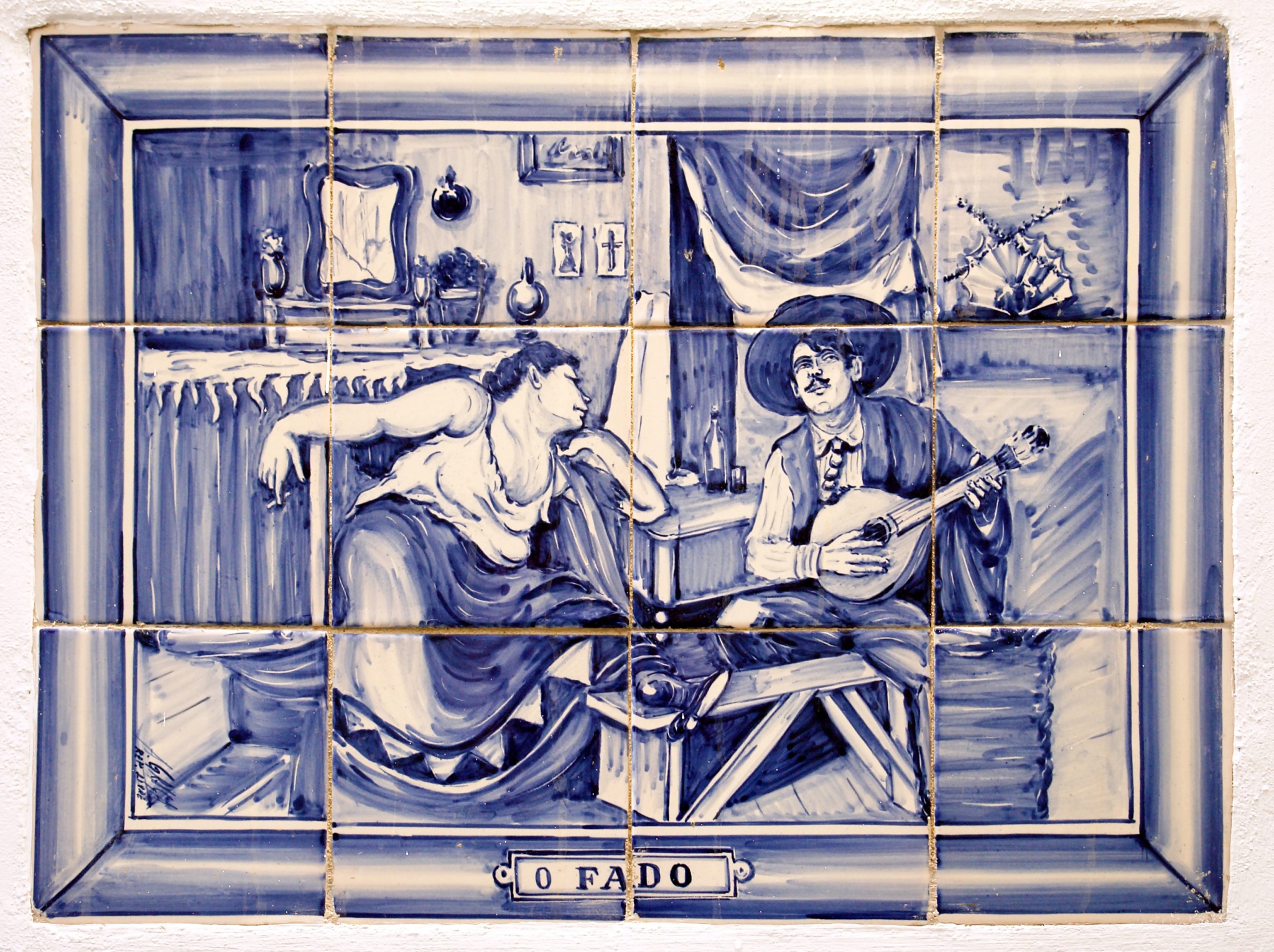
Fado is Portugal’s most internationally recognized musical expression. UNESCO inscribed it as Intangible Cultural Heritage in 2011, describing it as an urban popular song tradition that combines music and poetry and developed particularly in Lisbon.
Fado is often explained through the word saudade—a difficult-to-translate idea involving longing, absence, nostalgia and emotional attachment. Yet fado is not simply “sad music.” Its repertoire can address love, fate, neighborhood life, loss, humor, social experience and memory. The singer’s interpretation and the bright, ringing sound of the Portuguese guitar are central to the experience.
Lisbon and Coimbra have related but distinct traditions. Lisbon fado developed in urban popular settings and became closely associated with neighborhoods such as Alfama, Mouraria and Bairro Alto. Coimbra’s Canção de Coimbra grew around the university and its student culture, poetry, serenades and a distinctive Portuguese-guitar style.
Fado is not Portugal’s only traditional music. The Alentejo has Cante Alentejano, a polyphonic singing tradition inscribed by UNESCO in 2014, while folk music, ranchos folclóricos, marching bands and regional dances remain important parts of local festivities around the country.
Azulejos, Architecture and Portuguese Visual Culture
Few things make Portugal visually recognizable as quickly as azulejos. Decorative tiles appear on churches, palaces, railway stations, fountains, homes and public buildings. Their roots lie in Islamic decorative traditions, but Portuguese patrons adopted tilework enthusiastically from the 15th century onward and developed it into one of the country’s most characteristic artistic forms.
By the 18th century, large narrative tile panels covered the interiors of churches and convents and decorated palaces, gardens and civic spaces. Some depict religious scenes; others show battles, landscapes, allegories or ordinary life. Blue-and-white panels are especially familiar, but Portuguese tilework spans many periods, colors and styles.
Manueline architecture
The ornate style associated with the reign of Manuel I reflects Portugal’s maritime age through carved ropes, armillary spheres, botanical forms and other decorative motifs. The Jerónimos Monastery and Belém Tower are among its best-known expressions.
Calçada portuguesa
Black-and-white stone pavements create geometric and figurative patterns in plazas and sidewalks. Lisbon is especially famous for them, but the tradition can be seen throughout Portugal and in places influenced by Portuguese urban design.
Ceramics and folk art
Portuguese ceramics range from sophisticated tableware to regional pottery traditions and playful folk forms. Craft remains closely tied to place, whether in Barcelos, Caldas da Rainha, Estremoz or Bisalhães.
The Barcelos Rooster
The colorful rooster has become an unofficial visual symbol of Portugal, rooted in the legend of a pilgrim, a judge and a miraculous roasted rooster in the Minho town of Barcelos.
Portuguese Literature: Camões, Pessoa and Saramago
Portugal often describes itself as a land of poets, and literature occupies an unusually visible place in its national culture. Three names provide a useful introduction.
Luís de Camões
Camões is the great Renaissance poet associated with Os Lusíadas, the epic poem published in 1572 that uses Vasco da Gama’s voyage as the framework for a much broader literary vision of Portuguese history, mythology and maritime expansion. Portugal Day on June 10 is officially linked to Camões.
Fernando Pessoa
Pessoa is one of the defining figures of modern Portuguese literature. He famously wrote through multiple literary identities, or heteronyms, each with distinctive biographies, voices and styles.
José Saramago
Saramago received the Nobel Prize in Literature in 1998, making him Portugal’s first Portuguese-language Nobel laureate in literature. His novels brought contemporary Portuguese prose to a vast international readership.
Literature is visible to travelers as well as readers. Lisbon is full of places associated with Pessoa and Camões, while Coimbra’s university tradition has produced generations of poets and writers. Bookstores also form part of the cultural landscape; Lisbon’s Bertrand traces its history to 1732.
Religion, Pilgrimage and Sacred Traditions
Portugal is a secular republic with no official state religion, but Roman Catholicism has had a profound historical influence on architecture, public holidays, family traditions, festivals and local identity. Churches, monasteries, processions and saints’ days remain visible even to travelers whose interests are primarily historical or artistic.
At the same time, Portuguese religious history is more diverse than Catholicism alone. Medieval Jewish communities left traces in places such as Tomar, Belmonte, Trancoso and Castelo de Vide, while Muslim rule left a deep imprint on language, agriculture, architecture and place names in parts of the country.
Fátima became Portugal’s most important modern pilgrimage center after three shepherd children reported Marian apparitions in 1917. When discussing Fátima historically, it is useful to distinguish between the children’s reported experiences, the later Catholic Church recognition and the continuing devotional meaning the site has for pilgrims.
Festivals, Saints’ Days and Community Celebrations
Portuguese festivals are where food, religion, neighborhood identity, music and family life often meet. Almost every town has its own calendar of local celebrations, and many are connected with patron saints or agricultural traditions.
Santo António in Lisbon
Lisbon reaches one of its liveliest moments on the night of June 12 into June 13. Historic neighborhoods fill with street parties, grilled sardines, music and decorations, while the popular marches parade along Avenida da Liberdade.
São João in Porto
Porto celebrates São João on the night of June 23 into June 24. Street festivities, music, food, fireworks over the Douro and the playful tradition of plastic hammers create one of Portugal’s most distinctive urban festivals.
Carnival
Carnival traditions vary greatly by region. Some towns hold elaborate parades, while others preserve older masked traditions. The Carnival of Podence in northeastern Portugal is recognized by UNESCO as Intangible Cultural Heritage.
Pilgrimages and romarias
Religious processions remain important in many communities. Some are large national events, while others are intensely local celebrations combining devotion, fairs, music and family gatherings.
Portugal’s cultural calendar extends well beyond religious events. Traditional fairs, harvest celebrations, folklore festivals, contemporary music festivals and island celebrations such as Madeira’s Flower Festival create very different reasons to travel throughout the year.
History, the Sea and Modern Portuguese Identity
Understanding Portuguese culture becomes much easier when you understand the country’s history. Portugal developed one of Europe’s oldest national borders and became a major maritime power from the 15th century onward. The voyages associated with figures such as Bartolomeu Dias, Vasco da Gama and Pedro Álvares Cabral connected Portugal to Africa, Asia and South America, creating a global empire whose cultural consequences are still visible today.
That history includes scientific exchange, trade and cultural contact, but also conquest, forced labor, slavery and colonial rule. Modern Portuguese culture cannot be separated from either side of that legacy. Portuguese is now spoken across several continents, while migration between Portugal and former colonies has shaped contemporary food, music, language and urban life.
April 25 and the Carnation Revolution
One of the most important symbols of modern Portugal is the red carnation. On April 25, 1974, the Armed Forces Movement overthrew the Estado Novo dictatorship. Civilians placed carnations in soldiers’ rifles, and the flower became the lasting image of the revolution.
April 25 is now a national holiday celebrating freedom and democracy. The event also opened the way for rapid decolonization and Portugal’s transition toward the democratic system that was consolidated in the following years.
Read our complete guide to Portugal’s Carnation Revolution →
Football and Sporting Culture
Football—futebol—is Portugal’s most visible sport and an important part of popular culture. Club loyalties can run through families and neighborhoods, with Benfica, Sporting CP and FC Porto forming the country’s best-known rivalry triangle.
Portugal’s national team has also become a major source of collective pride, particularly through generations of internationally known players. Cristiano Ronaldo is the most famous Portuguese footballer of the modern era, but the culture of the sport is much broader than any one player: match-day rituals, neighborhood cafés, youth academies and club histories all form part of everyday Portuguese life.
Other sports matter too. Surfing has grown dramatically along Portugal’s Atlantic coast, especially around Ericeira, Peniche and Nazaré, while athletics, cycling, roller hockey, futsal and water sports all have strong followings.
Everyday Portuguese Culture: What Travelers Notice
Culture is not only what appears in museums and festivals. Travelers often remember the small rhythms of daily life just as strongly.
- Café culture: coffee is part of everyday social life, from a quick espresso at the counter to a longer conversation at a neighborhood café.
- Meals matter: lunch and dinner are social occasions, and sharing food remains important in family and community life.
- Regional pride is strong: people often identify closely with their town, island or region as well as with Portugal as a whole.
- Politeness is appreciated: a simple bom dia, boa tarde, por favor and obrigado/obrigada goes a long way.
- Churches remain active spaces: many historic churches are both monuments and places of worship, so quieter behavior and respectful dress are appropriate.
- Tradition and modern life coexist: historic neighborhoods may contain old family businesses beside contemporary restaurants, galleries, design shops and technology companies.
Explore Portuguese Culture in More Depth
Fado
History, saudade, Portuguese guitar, Lisbon, Coimbra and where travelers can hear the music today.
Pastel de nata
The difference between pastel de nata and Pastéis de Belém, plus history and a home-style recipe.
Carnation Revolution
What happened on April 25, 1974, why carnations became the symbol and how democracy followed.
Portuguese history
Follow Portugal from the medieval kingdom through maritime expansion, empire, dictatorship and democracy.
Fátima
Understand one of Portugal’s most important religious destinations and plan a respectful visit.
Barcelos Rooster
Discover the legend behind one of Portugal’s most familiar folk-art symbols.
Portuguese Culture FAQs
What is Portuguese culture known for?
Portugal is especially known for fado, azulejos, regional food and wine, maritime history, Catholic heritage, summer festivals, literature, football and strong regional traditions. The country’s culture also reflects centuries of contact with Africa, Asia and the Americas.
What is the most famous Portuguese music?
Fado is Portugal’s best-known traditional music internationally. It developed particularly in Lisbon and is recognized by UNESCO as Intangible Cultural Heritage. Coimbra has a related but distinct university-linked song tradition.
What does saudade mean?
Saudade can express longing, nostalgia or emotional attachment to a person, place or time that is absent. It is strongly associated with Portuguese literature and fado, although it does not define every Portuguese cultural expression.
What food is Portugal famous for?
Well-known examples include pastel de nata, bacalhau, grilled fish, sardines, caldo verde, regional pork dishes, cheeses, Port wine and seafood. The most rewarding approach is to explore regional specialties rather than look for one national menu.
Why are tiles so important in Portugal?
Portuguese patrons adopted decorative tile traditions from the 15th century onward and developed azulejos into a major architectural and artistic form. They appear on churches, palaces, railway stations, homes, fountains and public buildings.
Is Portugal a Catholic country?
Catholicism has had a major historical and cultural influence, and many Portuguese still identify as Catholic, but Portugal is a secular republic with freedom of religion. Jewish, Muslim and other religious histories are also part of the country’s cultural story.
What is Portugal’s biggest traditional festival?
There is no single national festival that defines the whole country. Lisbon’s Santo António celebrations and Porto’s São João are among the largest urban traditional festivals, while towns and regions across Portugal maintain their own patron-saint days, fairs and pilgrimages.
Why is April 25 important in Portugal?
April 25 marks the 1974 Carnation Revolution, which overthrew the Estado Novo dictatorship and began Portugal’s transition to democracy. It is celebrated nationally as Freedom Day.
Who are Portugal’s most important writers?
Luís de Camões, Fernando Pessoa and Nobel Prize winner José Saramago are three of the most internationally recognized names, but Portuguese literature includes many important poets, novelists and playwrights across several centuries.
Is football part of Portuguese culture?
Yes. Football is the country’s most visible sport, with strong club loyalties and a highly followed national team. Benfica, Sporting CP and FC Porto are the best-known clubs internationally.
How different are Portuguese regions culturally?
Quite different. Architecture, food, music, festivals, accents and landscape change significantly between northern Portugal, Lisbon, the Alentejo, Algarve, Madeira and the Azores. Travelers get a fuller picture of Portuguese culture by visiting more than one region.
How can travelers experience Portuguese culture respectfully?
Learn a few Portuguese greetings, try regional rather than only famous foods, visit markets and museums, attend local festivals without treating them as staged entertainment, remain respectful in active churches and give yourself time to experience neighborhoods beyond the major sightseeing routes.
Experience Portuguese Culture as Part of Your Trip
The best cultural itinerary combines Portugal’s major monuments with food, neighborhoods, regional traditions and time to experience everyday life. PortugalOnline can help connect Lisbon, Porto, central Portugal, the Alentejo, Algarve, Madeira and the Azores into a trip that fits your interests and travel dates.
Browse Portugal vacation packages, compare Portugal self-drive itineraries or contact a Portugal travel specialist to start planning.
Official Sources and Further Reading
- Visit Portugal — Art and Culture
- Visit Portugal — Portugal’s Cultural Features
- Visit Portugal — In the Country of Tiles
- UNESCO — Fado, Urban Popular Song of Portugal
- UNESCO — Mediterranean Diet
- UNESCO — Intangible Cultural Heritage in Portugal
- Visit Portugal — Popular Saints’ Festivals
Culture and travel information last reviewed September 2026.