The Azores are not an island destination where more stops automatically mean a better vacation. A volcanic crater lake on São Miguel, the black-stone vineyards of Pico, Horta’s maritime character on Faial, and the historic streets of Angra do Heroísmo on Terceira can feel like completely different journeys. The best Azores multi-island tour packages bring those contrasts together with realistic connections and enough time to experience each island rather than simply check it off a list.
For travelers coming from the United States, good planning matters. Island hopping may involve inter-island flights, ferries, rental cars, transfers, hotel changes, and weather considerations. It also requires an important decision about travel style: do you want private guided touring, the independence of a self-drive vacation, or a combination of organized sightseeing and free time?
A well-designed Azores vacation package coordinates those pieces while leaving room for the moments that often become the most memorable: an unexpected roadside viewpoint, a thermal swim, a village café, or a long seafood lunch overlooking the Atlantic.
Why a Multi-Island Azores Vacation Is Different
The Azores archipelago consists of nine islands spread across a broad section of the North Atlantic. They share Portuguese culture, volcanic origins, green landscapes, and a slower pace of life, but each island has its own character.
São Miguel is the natural starting or finishing point for many itineraries. It has the widest selection of hotels and restaurants, frequent flight connections, and some of the archipelago’s best-known scenery. Furnas, Sete Cidades, Lagoa do Fogo, tea plantations, geothermal landscapes, and dramatic coastal viewpoints can easily fill several days.
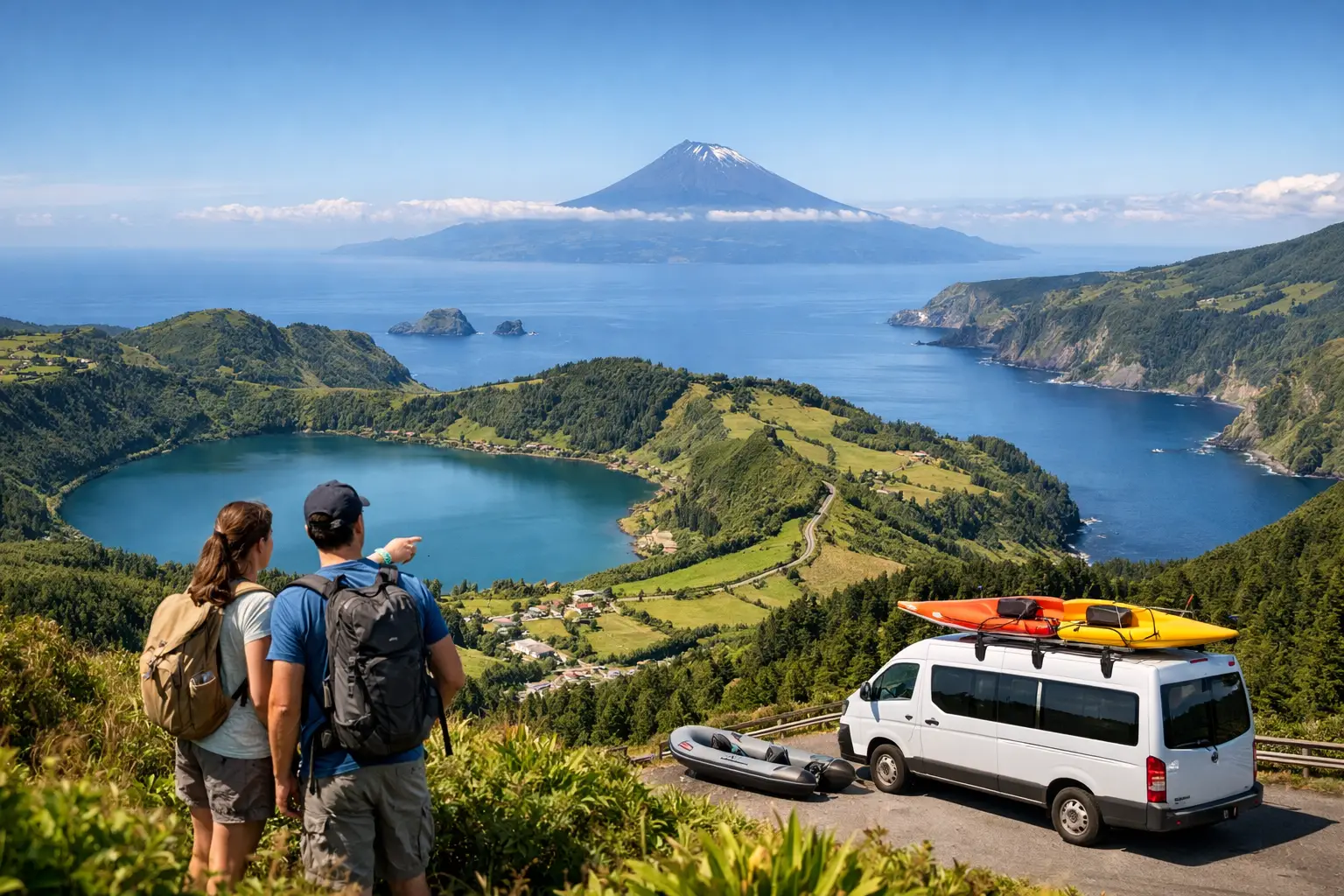
Faial has a strong maritime identity centered on Horta, along with the vast Caldeira and the volcanic landscape of Capelinhos. Nearby Pico feels more rugged, with black lava stone, vineyards, coastal villages, whaling history, and the unmistakable presence of Mount Pico, Portugal’s highest mountain.
Terceira adds another dimension. Angra do Heroísmo brings history and architecture into the journey, while the island’s pastureland, volcanic interior, local traditions, and festivals provide a very different atmosphere from São Miguel or the central islands.
Travelers with more time can extend the journey to Flores, where waterfalls, crater lakes, steep green valleys, and a more remote setting make the island a natural addition to a longer Azores itinerary.
How Many Islands Can You Visit?
Trip length and travel style both matter. It is possible to experience several islands without turning the vacation into a constant sequence of airport check-ins and hotel changes, provided the itinerary is designed around practical connections.
A seven-day journey can combine Faial, Pico and São Miguel. PortugalOnline’s 7-day three-island Azores tour, for example, uses Faial as a base, includes a full-day visit to neighboring Pico by ferry, and then continues to São Miguel. That allows travelers to experience three distinctive islands while limiting the number of hotel changes.
With around 10 days, a fourth island can be added. A route through Terceira, Faial, Pico and São Miguel creates a broader look at the archipelago, combining historic towns, volcanic landscapes, vineyards, maritime culture, geothermal areas, and crater lakes.
With two weeks or more, travelers can consider a five-island journey incorporating Flores, Faial, Pico, Terceira and São Miguel. A longer itinerary provides the breathing room needed to include a more remote island such as Flores without making every day feel like a transfer day.
These are not rules that every traveler has to follow. Someone who enjoys a slower pace may prefer to spend seven days entirely on São Miguel or divide 10 days between only two islands. The advantage of a structured multi-island itinerary is that travelers who want to see more can do so without having to assemble every connection independently.
Three Islands in One Week: Faial, Pico and São Miguel
For travelers who want a compact introduction to the Azores, Faial, Pico and São Miguel form a particularly practical combination.
Faial provides a comfortable base in the central islands. Horta has long been a stopping point for sailors crossing the Atlantic, and its marina remains one of the island’s defining features. Inland, the Caldeira reveals the scale of Faial’s volcanic origins, while Capelinhos shows a much younger volcanic landscape created by the 1957-58 eruption.
Pico is close enough to Faial to visit by ferry, making it possible to experience a second island without another hotel move. A day on Pico can include volcanic vineyards, coastal villages, Mount Pico views, and reminders of the island’s whaling heritage.
São Miguel then offers a strong contrast. Its larger size and variety make it ideal for several days of touring, with Sete Cidades, Furnas, Lagoa do Fogo, geothermal areas, botanical gardens, coastal scenery, and Ponta Delgada providing a satisfying finish to a one-week island-hopping vacation.
Four Islands in 10 Days: Add Terceira
Travelers with a few additional days can add Terceira to create a four-island journey through Terceira, Faial, Pico and São Miguel.
Terceira is a valuable addition because it brings more cultural and historical variety to an itinerary dominated by natural scenery. Angra do Heroísmo is a UNESCO World Heritage city with colorful streets, churches, fortifications, and a long Atlantic history. Beyond the city, the landscape opens into pastureland, volcanic formations, traditional communities, and viewpoints over the coast.
A multi-island Azores itinerary that combines Terceira with Faial, Pico and São Miguel works well for travelers who want both nature and culture without extending the trip to the more distant western islands.
Five Islands in 15 Days: Adding Flores
Flores is one of the most visually dramatic islands in the archipelago, but its western location makes it better suited to a longer itinerary. With approximately two weeks, it becomes practical to combine Flores with Faial, Pico, Terceira and São Miguel.
The reward is variety. Flores brings waterfalls, crater lakes, cliffs, valleys, and a noticeably more remote atmosphere. Faial and Pico introduce the central-island landscape and maritime culture. Terceira adds history, and São Miguel provides the broadest range of geothermal scenery and sightseeing.
Travelers who prefer independent exploration can follow a similar progression on the 15-day five-island self-drive itinerary, which combines prearranged accommodations and transportation with the freedom to explore each island at an individual pace.
Guided Tour or Self-Drive?
One of the most important decisions when planning an Azores vacation is how much driving and day-to-day navigation you want to handle yourself.
A guided itinerary is well suited to travelers who prefer to concentrate on the destination rather than the logistics. Local drivers and guides can provide context for volcanic landscapes, history, food traditions, and island communities while eliminating the need to navigate unfamiliar roads or coordinate sightseeing stops.
A self-drive vacation offers more independence. It allows travelers to stop at viewpoints, change plans according to the weather, spend longer in a village or on a trail, and explore at their own pace. The current PortugalOnline self-drive collection includes three-island, four-island, and five-island Azores itineraries.
Self-drive works especially well for travelers who are comfortable on winding roads and enjoy making spontaneous stops. A 7-day Azores self-drive itinerary can provide a good introduction to the style of travel before committing to a longer multi-island journey.
Some travelers prefer a hybrid approach: independent days with a rental car combined with selected guided excursions. Whale watching, food experiences, specialist hikes, and activities requiring equipment or local expertise can all benefit from advance arrangements even when the rest of the trip is independent.
What Should an Azores Multi-Island Package Include?
No two Azores packages include exactly the same services, so it is important to review the individual itinerary rather than assume that every trip works in the same way.
Depending on the package, arrangements may include accommodations, daily breakfast, airport or port transfers, inter-island flights, ferry tickets, rental cars, guided sightseeing, or a combination of these services. The transportation pattern can also change from island to island.
This is particularly important with multi-island travel. A ferry may be the logical choice between neighboring central islands, while a flight may be more practical between different island groups. On a self-drive program, one rental car may be returned before a ferry or flight and another collected after arrival on the next island.
The value of a coordinated itinerary is not simply that reservations have been made. It is that the hotel stays, transportation, rental periods, tours, and island connections have been arranged in an order that works on the ground.
Pico and Faial: Two Islands That Work Naturally Together
Pico and Faial are close neighbors, and the connection between them makes this one of the most natural island combinations in the Azores.
Rather than changing hotels for a short stay on each island, some itineraries use Horta on Faial as a base and visit Pico as a day trip by ferry. This reduces packing and hotel changes while still allowing time to experience Pico’s volcanic landscapes, vineyards, villages, and maritime heritage.
Ferry schedules vary by season and operating conditions, so the crossing should be treated as a real transportation component rather than assumed to operate on demand. A well-planned itinerary takes the ferry timetable and onward travel into account.
Weather Is Part of the Azores Experience
The Azores are famous for changeable Atlantic weather. Sunshine, cloud, wind, and showers can all appear during the same day, and conditions may be very different on opposite sides of an island.
That does not mean travelers need to avoid ambitious itineraries, but flexibility helps. A crater-lake viewpoint may be completely clear one morning and hidden in cloud a few hours later. Boat excursions can also be affected by sea conditions.
When possible, avoid scheduling every major scenic objective into a single narrow time window. Leaving some independent time in the itinerary gives you the ability to adjust plans when the weather changes.
Hotel Location Matters
Where you stay can influence the feel of the vacation almost as much as the island itself.
On São Miguel, staying in or near Ponta Delgada provides easy access to restaurants, services, and the island’s road network. Travelers who prefer a quieter atmosphere may choose properties farther from the city, accepting additional driving in exchange for a more rural setting.
On Faial, Horta is a practical base for sightseeing and ferry connections to Pico. On Pico, Madalena is convenient for travelers arriving by ferry, while more remote locations can appeal to visitors who value quiet surroundings and open views.
There is no universally best hotel location. The right choice depends on whether your priority is convenience, scenery, nightlife, restaurants, privacy, or easy access to the next connection.
When Should You Book?
Hotels, rental cars, guides, and inter-island transportation all have finite capacity. This becomes especially important during busier travel periods and on smaller islands, where the inventory is naturally more limited.
Booking earlier generally provides a better selection of accommodations and rental-car categories and gives more flexibility when coordinating island connections. This is especially helpful on itineraries involving four or five islands, where one unavailable service can affect several later parts of the journey.
Should You Combine the Azores With Mainland Portugal?
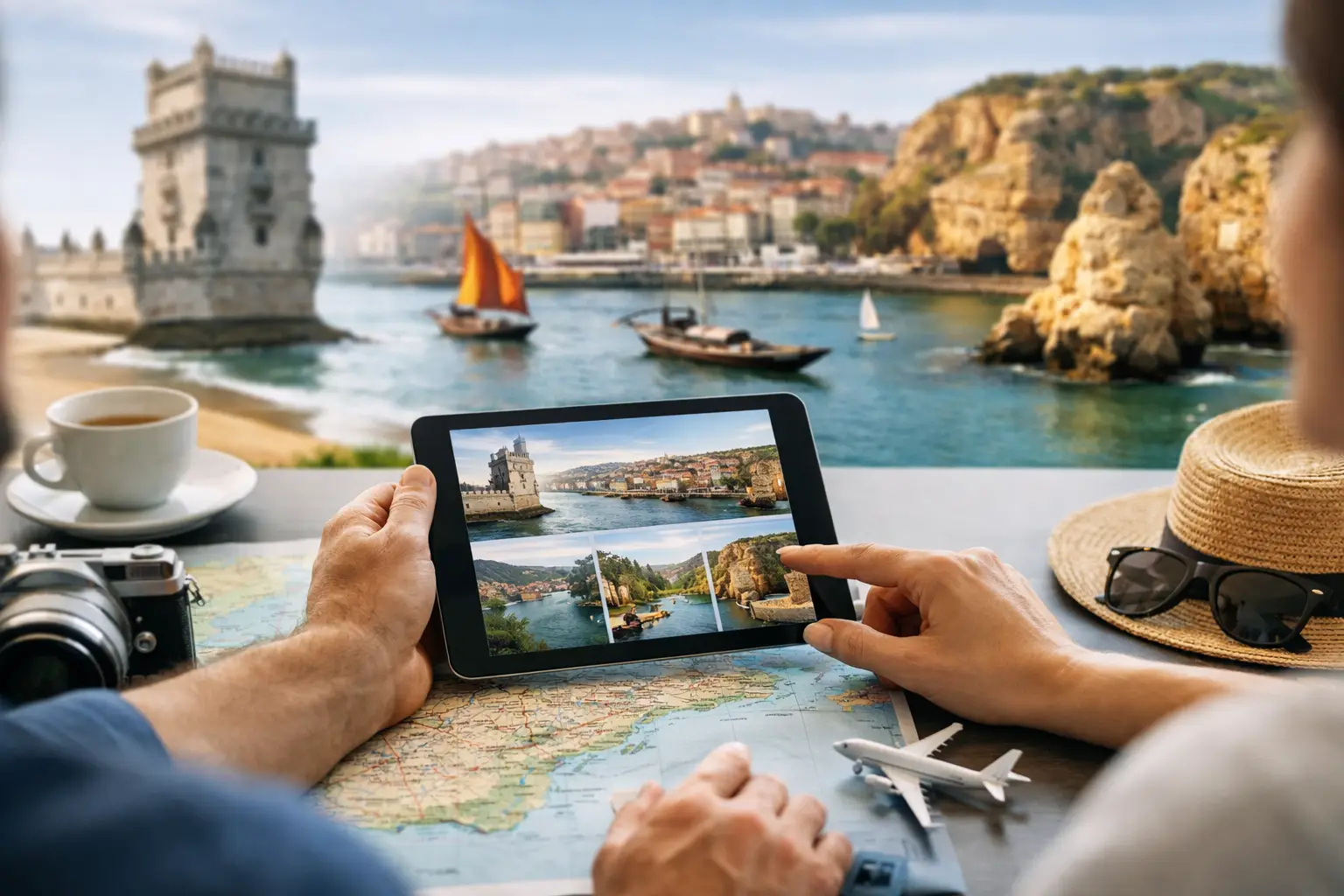
Travelers coming from North America do not necessarily need to choose between the Azores and mainland Portugal. For a longer vacation, the islands can be combined with Lisbon and other mainland destinations in one coordinated itinerary.
PortugalOnline currently offers Azores and mainland Portugal packages that combine three or four Azores islands with Lisbon and central Portugal, with private and semi-private touring options. There is also an 11-day Lisbon and São Miguel itinerary for travelers who want a simpler one-island Azores experience together with time on the mainland.
This type of combination can work particularly well for travelers making one major trip to Portugal and wanting both the volcanic landscapes of the islands and the history, architecture, food, and cultural experiences of the mainland.
Choosing the Right Azores Itinerary
The best itinerary is not necessarily the one with the most islands. It is the one that matches your available time, preferred pace, and travel style.
A traveler who wants an easygoing week may be happiest spending all seven days on São Miguel. Someone who enjoys variety and structured sightseeing can comfortably experience Faial, Pico and São Miguel in the same amount of time. With 10 days, Terceira can broaden the journey, while a two-week itinerary creates room for Flores and a more complete five-island experience.
Couples and active travelers may prioritize scenic drives, hiking, vineyards, and outdoor experiences. Families and multigenerational groups may prefer private touring that reduces driving and simplifies daily logistics. Independent travelers may value the freedom of a rental car and suggested route.
If you are still deciding how many islands fit your trip, our guide to how many days to spend in the Azores can help narrow the options.
Plan the Connections, Then Leave Room to Explore
The Azores reward travelers who leave some space in the schedule. Good planning takes care of the parts that need to work precisely – hotels, rental cars, ferries, flights, transfers, and reserved excursions – without turning every hour of the vacation into an appointment.
Portugal Online organizes guided, private, independent, and self-drive Azores vacations with island connections and accommodations coordinated around the itinerary. The exact services vary by package, so travelers can choose the level of structure that best suits the way they like to travel.
Choose islands that genuinely complement one another, stay long enough to experience them, and let the logistics support the journey rather than dominate it. That balance is what turns island hopping into an Azores vacation rather than simply a collection of stops.