A plate of grilled fish at a waterfront restaurant, a family-run winery in the Douro Valley, and a market visit with a local guide can reveal as much about Portugal as any monument. That is why Portugal culinary travel trends are shifting from quick tasting stops toward deeper, region-by-region experiences that connect food to place, season, and tradition.
For American travelers, Portugal remains especially appealing because it delivers exceptional food and wine without requiring a highly formal, expensive itinerary. A well-planned trip can pair celebrated cities with smaller towns, coastal meals with inland vineyards, and independent time with guided experiences that add real local context. The best culinary journeys leave room for a great lunch to become the afternoon’s main event.
Portugal Culinary Travel Trends: Going Regional
Lisbon and Porto are still essential starting points, particularly for first-time visitors. Both cities offer excellent restaurants, wine bars, historic markets, and easy access to acclaimed day trips. Yet travelers increasingly want to understand the distinct food cultures beyond the two largest cities.
Portugal’s cuisine is not one single style. The Alentejo is known for bread-based dishes, olive oil, black pork, hearty stews, and wines shaped by broad, sunny plains. The Douro Valley brings vineyard landscapes, port wine heritage, and refined regional cooking. In the Algarve, fresh seafood, cataplana stews, citrus, almonds, and coastal produce define the table. Central Portugal offers roast suckling pig, mountain cheeses, and traditional convent sweets, while the Minho is a natural choice for green wine, river fish, and generous northern hospitality.
This regional focus changes how an itinerary should be designed. Rather than booking a single food tour in Lisbon and calling it a culinary vacation, many travelers are building one or two nights around a specific food region. A self-drive holiday can make this especially rewarding, allowing time for a country restaurant, a winery appointment, or a village bakery that would be difficult to reach on a tightly timed city break.
The Return of the Long Lunch
One of the most enjoyable trends is also one of the simplest: travelers are slowing down. Portugal has always rewarded those willing to sit at the table, but visitors now place more value on long, unhurried lunches in local restaurants rather than trying to fit every meal between attractions.
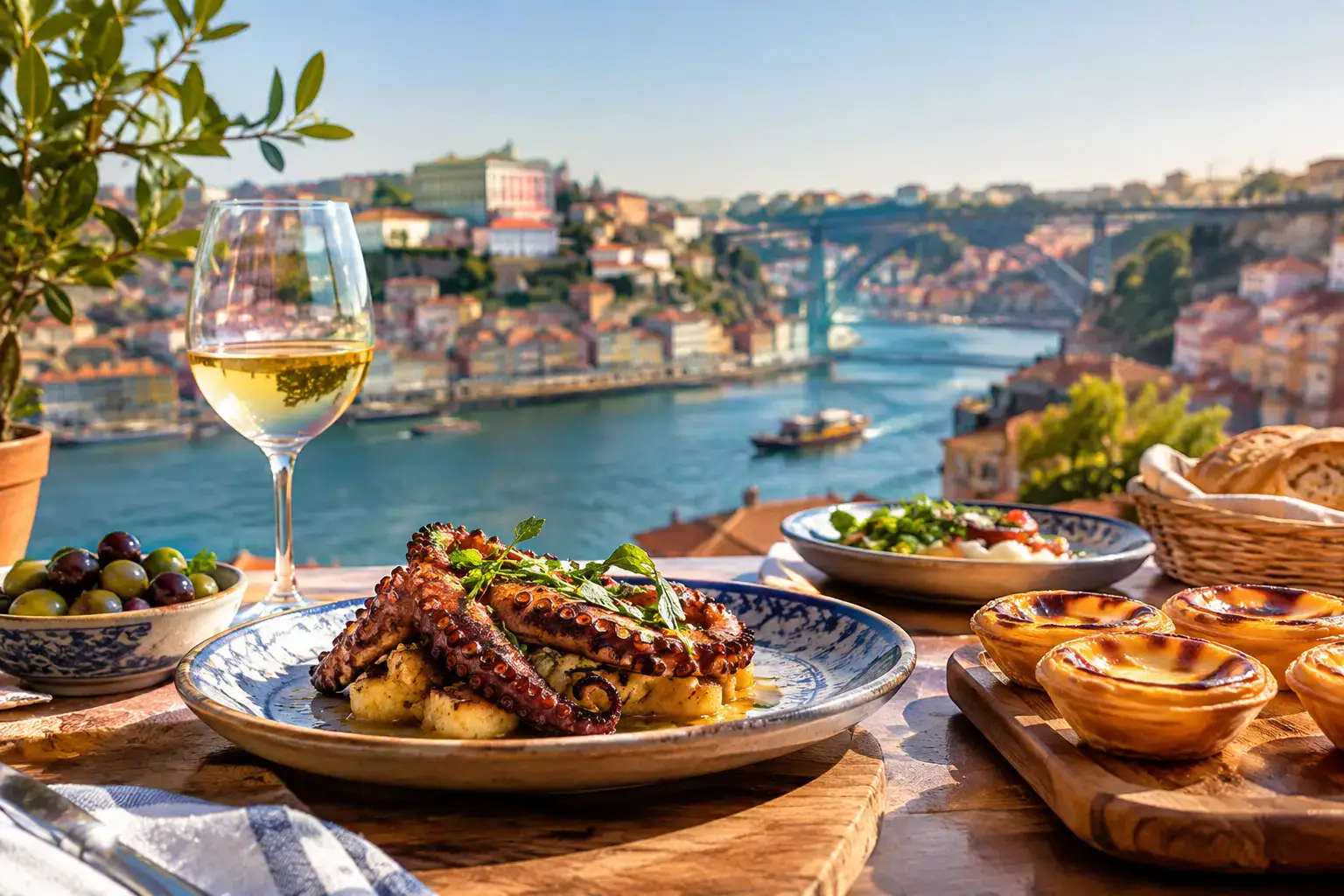
A proper lunch might begin with cheese, cured ham, or seasonal soup, followed by grilled sea bass, octopus rice, or roasted lamb. It may end with a small dessert and a coffee, then continue with a walk through town rather than a rush to the next reservation. This approach is particularly well suited to mature travelers, couples, and families who want a vacation that feels restorative as well as memorable.
There is a practical trade-off. The restaurants most loved by locals may have limited hours, a slower pace, or a location outside the city center. They are often worth planning around, but they require realistic transportation and timing. Travelers who prefer a structured schedule can benefit from having restaurant recommendations and logistics organized in advance, especially in smaller towns and wine regions.
Wine Travel Is Becoming More Personal
Portugal’s wine story reaches far beyond port. Travelers are increasingly seeking out dry Douro reds and whites, crisp Vinho Verde, elegant Alentejo wines, Bairrada sparkling wines, Dão varietals, and Madeira’s distinctive fortified styles. The appeal is not simply tasting wine. It is meeting producers, seeing the landscape, and learning why a grape or growing area tastes different from one valley to the next.
Small estates and family producers are a major part of this experience. A visit may include a walk through vineyards, a cellar tasting, and lunch overlooking the countryside. In the Douro, vineyard stays offer dramatic scenery, but the area can be busier during harvest and peak summer months. In the Alentejo, travelers often find a more relaxed rhythm and easier road access between estates.
Wine-focused travel should be planned with care. Not every winery accepts walk-in visitors, and tastings are more enjoyable when no one has to drive afterward. Private touring, a driver-guided day, or an itinerary that includes overnight stays near wine country can make the experience safer and more relaxed. For rail travelers, the Douro is one of the strongest options, with scenic train journeys that can be paired with selected winery visits.
Cooking Experiences That Go Beyond a Recipe
Cooking classes remain popular, but the most meaningful ones now start before the kitchen. Travelers want to shop at a market, learn how Portuguese home cooks choose seafood or produce, and understand the ingredients behind familiar dishes.
A class in Lisbon might focus on petiscos, Portugal’s small shared plates, or classic dishes such as bacalhau. In Porto, guests may explore northern specialties and local wines. In the Algarve, seafood preparation and market shopping naturally take center stage. The value is not just returning home with a recipe for pastéis de nata or caldo verde. It is gaining confidence in the flavors, techniques, and food traditions that make Portuguese cooking feel both direct and deeply rooted.
For families and multigenerational groups, cooking sessions can be one of the easiest ways to create a shared vacation memory. They are hands-on, adaptable across ages, and less dependent on everyone having the same interest in museums or sightseeing. The best choice depends on the group: a serious home cook may prefer a chef-led workshop, while a family might enjoy a casual market-to-table experience.
The Azores Are Rising for Food-Minded Travelers
The Azores deserve special attention within current Portugal culinary travel trends. These Atlantic islands offer a food culture shaped by volcanic soil, ocean conditions, dairy farming, and a strong connection to local agriculture. The setting adds an entirely different dimension to a Portugal vacation.
On São Miguel, travelers can sample cheeses, local pineapples, tea, seafood, and cozido das Furnas, a stew cooked slowly using natural geothermal heat. Across the islands, fresh fish, butter, dairy products, and seasonal produce feature prominently. Meals often feel less restaurant-driven and more connected to the landscapes outside the window: pastures, crater lakes, black-sand coastlines, and small fishing harbors.
The Azores work particularly well for travelers who want culinary discovery alongside nature. Island hopping can be rewarding, though it adds flight schedules and luggage logistics. For a shorter trip, concentrating on one or two islands allows more time to enjoy local meals without turning the vacation into a series of transfers. A destination specialist can help balance food experiences with whale watching, thermal pools, scenic drives, and accommodations in the right locations.
Responsible Choices Are Becoming Part of the Experience
Food travelers are also paying closer attention to seasonality, local sourcing, and the character of the businesses they support. In Portugal, this often means choosing restaurants that cook what is available locally, visiting smaller producers, and eating regional dishes where they belong.
That does not mean every meal needs to be rustic or informal. Portugal’s contemporary dining scene is creative and internationally respected, with chefs reinterpreting traditional ingredients in polished settings. A well-rounded culinary itinerary can include both a neighborhood tavern and a special tasting-menu dinner. The key is variety. A vacation made entirely of high-end reservations can feel overly scheduled, while relying only on spontaneous choices may mean missing experiences that need advance booking.
Planning a Food-Focused Portugal Vacation
The strongest culinary itineraries give food a central role without making every hour about eating. A classic first trip might combine Lisbon, the Douro Valley, and Porto, adding guided tastings and wine experiences while leaving space for independent meals. Travelers drawn to country flavors may prefer Lisbon, Alentejo, and the Algarve. Repeat visitors can look toward the Azores, the Minho, Bairrada, or central Portugal for a more specialized route.
Season matters. Spring and fall are excellent for comfortable touring, market visits, and wine country stays. Summer brings vibrant coastal dining and festivals but also higher demand in popular destinations. Harvest season in wine regions can be exciting, though availability and rates may reflect that interest. Winter is quieter and appealing for city dining, hearty regional food, and travelers who value fewer crowds over beach weather.
Portugal Online has spent decades designing Portugal vacations around the details that make a trip feel easy once you arrive: the right hotels, sensible travel times, trusted touring partners, and experiences that fit the way you want to travel. When food is a priority, planning the route well means you can spend less time coordinating reservations and more time enjoying the meal in front of you.
Start with the regions that genuinely appeal to you, then allow enough room for the unexpected restaurant, the extra glass of wine, and the lunch that turns into one of the best stories from your trip.