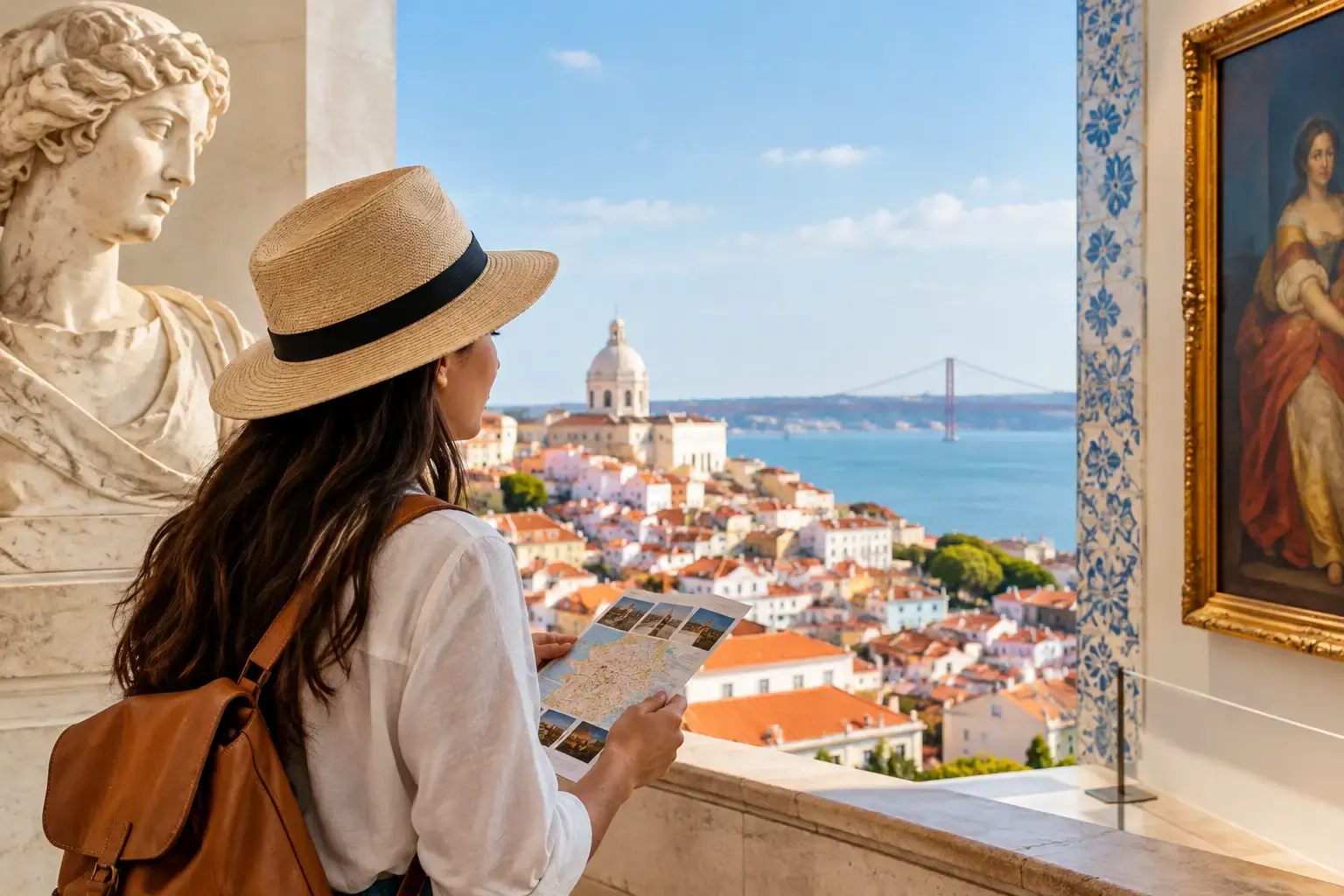
The Museu Nacional do Azulejo in Lisbon is set in a former convent, its tiled rooms telling centuries of Portuguese history in blue, gold, and white. That sense of place is what makes the best Portugal museums itinerary more than a checklist of famous collections. Portugal’s museums are often housed in palaces, monasteries, port lodges, and landmark modern buildings, so the journey between them matters almost as much as what hangs on the walls.
For most first-time visitors, seven days is the right amount of time to pair Lisbon’s exceptional collections with the royal heritage of Sintra, the scholarly character of Coimbra, Porto’s contemporary creativity, and the wine country of the Douro Valley. The route below is designed for travelers who value culture but do not want every vacation day spent indoors.
Why seven days works for Portugal’s museums
Lisbon and Porto both deserve more than a rushed overnight stay, particularly when museums are a priority. A one-week route also lets you travel north by rail, avoiding the inconvenience of picking up and returning a car in major cities. If you would rather include smaller towns, historic estates, or a longer Douro Valley stay, a private driver or self-drive arrangement may be a better fit.
Museum schedules deserve attention. Many national museums close one day each week, and individual galleries may have reduced hours or temporary exhibition changes. Build in some flexibility rather than assigning every visit to a narrow time slot. This is especially useful for travelers arriving from the US, when jet lag can make a fully scheduled first afternoon less enjoyable than expected.
Days 1 and 2: Lisbon’s essential collections
Begin in Lisbon, where Portugal’s artistic, maritime, and imperial history comes into focus. On your first full day, visit the Calouste Gulbenkian Museum. Its collection is unusually broad and personal, moving from Egyptian and Greco-Roman antiquities to Islamic art, European painting, jewelry, and decorative arts. The peaceful garden setting provides a welcome break from the city’s hills and traffic.
Pair it with the Museu Nacional de Arte Antiga, Portugal’s leading museum of historic art. The collection includes Portuguese paintings, religious sculpture, furniture, textiles, and works from the country’s global trading era. Allow time for the garden terrace, where views over the Tagus River make a natural pause between galleries.
On day two, turn toward Lisbon’s distinctive visual language at the Museu Nacional do Azulejo. The museum traces the development of Portuguese tilemaking from early religious panels to elaborate scenes of city life. It is a strong choice for families and travelers who want to understand why azulejos appear on churches, train stations, homes, and palaces throughout the country.
Keep the afternoon lighter. The Fado Museum in Alfama is a worthwhile addition for music lovers, while the Museum of Lisbon offers useful context for the capital’s evolution. Those with a strong interest in modern architecture and design may prefer MAAT, set along the river in Belém. You do not need to see every museum in Lisbon. Choosing two major collections and one specialized visit creates a much more satisfying day.
Day 3: Sintra’s royal history and decorative arts
Sintra is best known for its palaces, but its historic residences function as living museums of Portuguese monarchy, architecture, and decorative arts. A full-day excursion from Lisbon makes sense, though an overnight stay is worthwhile for travelers who prefer a slower pace.
Start with the National Palace of Sintra, recognizable by its twin chimneys and richly decorated interiors. Its tilework, heraldic room, and medieval-to-Renaissance layers make it an excellent complement to the Lisbon museums. Pena Palace is more theatrical and often busier, but it remains a memorable choice for visitors drawn to 19th-century Romanticism and sweeping views.
Avoid trying to visit every palace in a single day. Pick two sites, include time for lunch in the historic center, and return to Lisbon before a late evening. The value of Sintra lies in noticing the details: painted ceilings, hand-crafted tiles, formal gardens, and the changing landscape beyond the windows.
Day 4: Coimbra and the knowledge of centuries
Travel north to Coimbra, ideally by train, and make the University of Coimbra the day’s cultural anchor. The university’s historic buildings reflect Portugal’s long academic tradition, while the Biblioteca Joanina is among Europe’s most remarkable Baroque libraries. Its gilded woodwork and painted decoration are extraordinary, but timed admission can be limited, so advance planning is wise.
The Machado de Castro National Museum is another essential stop. Built around the vast Roman cryptoporticus beneath the former episcopal palace, it brings together sculpture, painting, metalwork, and sacred art in a setting that reveals several layers of the city’s history at once.
Coimbra is compact enough to explore on foot, though its steep streets can be demanding. For travelers with mobility concerns, arranging local transportation between the station, university, and hotel makes the experience more comfortable. Spend the night in Coimbra or continue to Porto in the evening, depending on how much time you want in each city.
Days 5 and 6: Porto’s art, design, and local identity
Porto rewards travelers who balance landmark museums with time to absorb the city itself. Start at the Serralves Museum, Portugal’s foremost contemporary art destination. The museum’s changing exhibitions are complemented by a striking modernist villa, expansive gardens, and the Serralves House. Even visitors who are less committed to contemporary art often enjoy the grounds and architecture.
The following day, visit the National Museum Soares dos Reis, housed in the former Carrancas Palace. Its Portuguese painting, sculpture, ceramics, and decorative arts provide a useful contrast to Serralves. This is the place to see work by António Soares dos Reis, one of Portugal’s most important 19th-century sculptors, while gaining a fuller sense of Porto’s artistic heritage.
For a more specialized afternoon, choose according to your interests. The Museu do Carro Elétrico offers a glimpse of Porto’s historic streetcars. The Museu Militar do Porto suits military-history enthusiasts. Travelers focused on food and wine may prefer a guided port cellar visit in Vila Nova de Gaia, which is not a traditional museum experience but adds essential context to the region’s commercial history.
Porto’s hills, cobbled streets, and riverfront deserve unstructured time. Schedule a leisurely dinner, a Douro cruise, or simply a walk across the Dom Luís I Bridge. A cultural itinerary should leave room for the cities themselves to become part of the collection.
Day 7: The Douro Museum and wine country
Finish in the Douro Valley, where landscape, labor, and winemaking tell a story no gallery can fully contain. In Peso da Régua, the Douro Museum explains the region’s wine heritage and the human effort behind its terraced vineyards. It is a thoughtful starting point before visiting an estate for a tasting and lunch.
A day trip from Porto is possible, but it is a long one. If your schedule allows, an overnight in the Douro creates a calmer finale, especially for travelers who want a scenic train ride, a river cruise, or time at a vineyard hotel. The trade-off is simple: a day trip is efficient, while an overnight gives the valley the time it deserves.
Planning a museum-focused Portugal vacation
The best Portugal museums itinerary is not about filling every hour with masterpieces. It is about placing the right museums in a route that feels comfortable, practical, and genuinely memorable. Book major hotels and rail segments early, especially for spring and fall travel, then shape each day around one principal museum and one smaller cultural experience.
Portugal Online can arrange a custom cultural vacation with accommodations, rail or private transportation, guided visits, and the local support that keeps a multi-city trip running smoothly. Leave the details to Portugal specialists and keep your attention where it belongs: in a tiled chapel, a royal library, a modern gallery, or a Douro vineyard looking out across the river.