
Portuguese music, culture and travel guide
Fado is one of Portugal’s most recognizable cultural expressions: a tradition built around voice, poetry and the distinctive sound of the Portuguese guitar. It is especially associated with Lisbon, where it developed in popular urban settings during the 19th century, and with Coimbra, whose university culture shaped a related but distinct musical tradition.
Fado is often described as sad music, but that is only part of the story. Its lyrics can explore longing, love, fate, separation, neighborhood life, social experience, humor and memory. The emotional intensity matters as much as the subject. A strong performance can make a listener understand the feeling of a song even without understanding every Portuguese word.
In 2011, UNESCO inscribed “Fado, urban popular song of Portugal” on the Representative List of the Intangible Cultural Heritage of Humanity, recognizing both its cultural importance and the communities of singers, musicians, poets, instrument makers and listeners who continue to transmit it.
What Is Fado?
Fado is a Portuguese performance tradition that combines sung poetry with string accompaniment. UNESCO describes it as a genre incorporating both music and poetry, rooted particularly in Lisbon and shaped by a multicultural mixture of urban, rural and international influences.
A solo singer is traditionally accompanied by Portuguese guitar and classical guitar, sometimes with additional bass or a second Portuguese guitar.
Love, longing, fate, loss, memory, daily life, Lisbon neighborhoods and the emotional consequences of ordinary human experience.
Lisbon, particularly its older neighborhoods and popular social spaces, is central to the documented history of fado.
Fado was inscribed on UNESCO’s Representative List of the Intangible Cultural Heritage of Humanity in 2011.
There is no single mood that defines every fado. Some songs are mournful; others are proud, playful, romantic, philosophical or rooted in the details of city life. What often unites them is the close relationship between the words, the singer’s interpretation and the answering phrases of the guitar.
A Short History of Fado
The exact origins of fado are debated, and it is better to resist simple claims that it was invented at one precise moment. The Museu do Fado traces its documented emergence to the popular social settings of 19th-century Lisbon, while UNESCO describes the genre as a multicultural synthesis involving Afro-Brazilian sung dances, local song and dance traditions, rural musical influences brought by internal migration, and cosmopolitan urban song patterns of the early 1800s.
- Early 1800s: fado becomes associated with popular Lisbon life, appearing in taverns, streets, leisure spaces and marginal social environments.
- Mid-to-late 1800s: the genre spreads beyond its earliest settings, enters theater and develops a more recognizable poetic and instrumental language. The Portuguese guitar becomes increasingly central to fado accompaniment.
- Early 1900s: recordings, radio and professional performance circuits bring fado to much larger audiences.
- 1927 onward: government regulation and censorship transform performance, requiring licensing and prior approval of repertoire and contributing to greater professionalization and less improvisation.
- 1930s–1960s: fado houses, radio, theater and cinema help establish major stars. The 1940s and 1950s become closely associated with the international rise of Amália Rodrigues.
- After 1974: fado goes through a difficult period immediately after the Carnation Revolution because of its perceived association with the former regime, then gradually regains a central position in Portuguese musical culture.
- 1990s to today: new generations of singers bring fado into international world-music circuits while expanding its repertoire and instrumentation.
- 2011: UNESCO formally inscribes fado on its Representative List of the Intangible Cultural Heritage of Humanity.
Fado and the Meaning of Saudade
The Portuguese word saudade is frequently used when explaining fado. It can suggest longing, absence, nostalgia or emotional attachment to a person, place or time that is distant or lost. No single English word captures all of its possible shades of meaning.
But fado should not be reduced to saudade alone. The Museu do Fado emphasizes themes including love, luck, fate and the daily narrative of the city. Fado has also addressed social injustice and political experience. The repertoire can therefore be deeply personal, strongly local or surprisingly universal.
Part of fado’s power comes from restraint. A singer may stand nearly motionless while the voice carries the emotional weight of the song. The Portuguese guitar then answers, comments on or intensifies what has just been sung.
What Does Fado Sound Like? The Voice and Portuguese Guitar
The fadista
The singer is the emotional center of the performance. Fado depends heavily on interpretation, phrasing and the relationship between lyrics and voice. Both women and men have played essential roles in Lisbon fado.
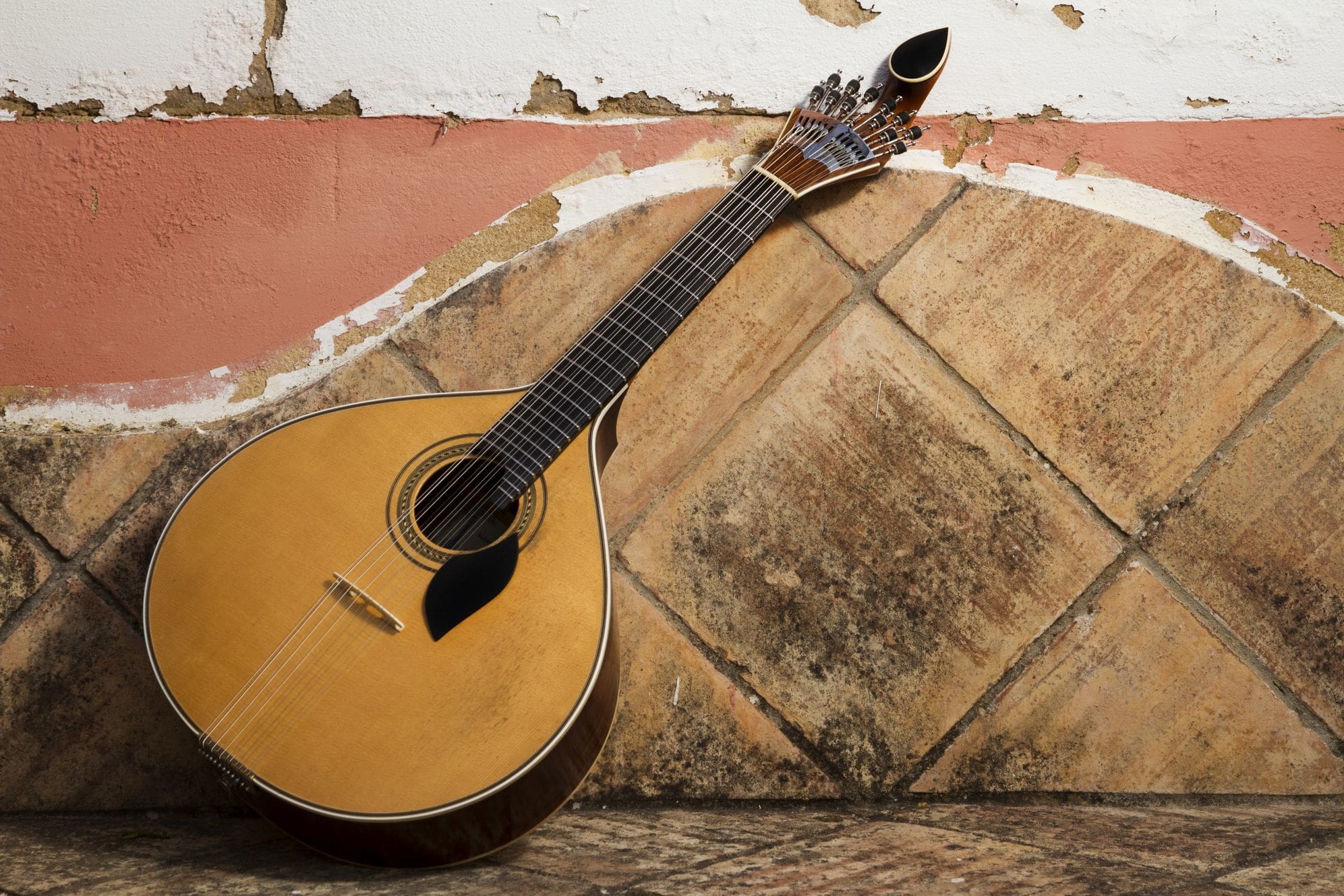
Portuguese guitar
The guitarra portuguesa is a pear-shaped wire-strung instrument with six courses of paired strings—12 strings in total. Its brilliant, ringing tone is one of the sounds most immediately associated with fado.
Classical guitar
Known in this context as the viola or viola de fado, the six-string classical-style guitar provides harmonic and rhythmic support beneath the voice and Portuguese guitar.
Bass and expanded ensembles
Traditional performances may add acoustic bass, a second Portuguese guitar or other instruments. Contemporary artists sometimes go further, incorporating piano, strings, percussion or influences from jazz and popular music.
The Portuguese guitar itself has different Lisbon and Coimbra traditions, with differences in construction, tuning and playing style. It also has an important instrumental repertoire beyond sung fado, most famously associated with musicians such as Artur Paredes and Carlos Paredes.
Lisbon Fado: Alfama, Mouraria and the Fado House
Lisbon is the central city in fado’s documented history. The music emerged from popular urban settings and became strongly connected to neighborhoods where social classes, maritime life, taverns, theater and street culture intersected.
Alfama
One of Lisbon’s oldest neighborhoods and today one of the most familiar places for visitors to hear fado. Its narrow streets contain numerous restaurants and traditional fado houses.
Mouraria
Closely connected to the mythology of Maria Severa and frequently described as a cradle of Lisbon fado. Rua do Capelão and Largo da Severa remain important locations in the city’s fado story.
Bairro Alto
Fado houses became especially concentrated here from the 1930s as the genre moved toward more formal, professional performance settings.
Lisbon fado ranges from highly polished professional performances to fado vadio, the amateur or spontaneous tradition in which singers may step forward from the community rather than from a fixed professional cast.
If fado is a major reason for your trip, allow time for the Museu do Fado in Alfama. The museum traces the genre’s history through recordings, instruments, performers, composers and archival material and is an excellent introduction before an evening performance.
Coimbra Fado and the Canção de Coimbra
Coimbra has a musical tradition closely associated with the University of Coimbra, but it should not simply be described as a copy of Lisbon fado. The university itself often uses the broader expression Canção de Coimbra—the Song of Coimbra—to describe a local tradition shaped by student culture, poetry, serenades and the city’s own musical history.
Traditionally, Coimbra singing is associated with male voices and the black academic dress of university students. Its repertoire is often linked to love, student life, departure, the city and the experience of leaving Coimbra after one’s university years.
The Portuguese guitar used in Coimbra also developed its own sound and technique. Artur Paredes and his son Carlos Paredes became towering figures in Portuguese guitar history, extending the instrument’s expressive possibilities far beyond accompaniment alone.
Planning to spend time in the city? See our Coimbra travel guide for the university, historic center and other places to include in your visit.
Amália Rodrigues and the International Rise of Fado
No individual is more closely associated with fado’s international image than Amália Rodrigues (1920–1999). Her career transformed the scale on which Portuguese fado could be heard, especially from the 1940s onward.
The Museu do Fado credits the international consolidation of fado in the 1950s particularly to Amália. Her repertoire also helped connect traditional fado performance with major Portuguese poets. Working with composer Alain Oulman, she sang texts by writers including David Mourão-Ferreira, Pedro Homem de Mello and others, widening the literary ambitions of the genre.
Amália’s international tours and recordings made her a cultural icon far beyond Portugal. After her death in 1999, she received a state funeral. Her remains were transferred to Lisbon’s National Pantheon in 2001.
Her importance should not obscure the many other major figures who shaped fado, including Alfredo Marceneiro, Ercília Costa, Hermínia Silva, Lucília do Carmo, Carlos do Carmo and generations of Portuguese guitarists, composers and poets.
Modern Fado: Tradition Without Standing Still
Fado did not end with Amália. From the 1980s and especially the 1990s onward, renewed interest in Portuguese musical heritage brought new singers to both domestic and international audiences.
Artists including Mísia, Cristina Branco, Camané, Mariza, Ana Moura, Carminho, Katia Guerreiro, António Zambujo, Gisela João and Ricardo Ribeiro have each approached the tradition differently. Some remain close to classic instrumentation and repertory; others combine fado with jazz, popular song, African and Brazilian influences, electronic production or broader singer-songwriter traditions.
This tension between inheritance and reinvention is not a weakness of fado—it is one reason the tradition remains alive. UNESCO’s recognition is about living heritage, not freezing the music at a single historical moment.
Where to Hear Fado in Portugal
Lisbon
For a first experience, Lisbon offers the greatest concentration of traditional fado houses. Look in Alfama, Mouraria and Bairro Alto. Some venues combine a full dinner with several short sets; others focus more heavily on the music. Reservations are advisable for well-known houses, particularly on weekends and during busy travel periods.
Rather than assuming one historic name will always offer the same experience, check the current performance format, cast, minimum spend and dinner requirements before booking. Fado houses change programs, and the singer you hear on a given night can matter as much as the venue.
Coimbra
Choose Coimbra if you want to hear the university-linked tradition and the distinctive sound of the Coimbra guitar. Performances can be shorter and more recital-like than a Lisbon dinner-and-fado evening. The University of Coimbra and local cultural venues publish current programs.
Elsewhere in Portugal
Fado can be heard across the country, and major singers perform in concert halls throughout Portugal. Porto also has dedicated fado venues. But for travelers trying to understand the tradition historically, Lisbon and Coimbra provide the clearest cultural context.
What to Expect at a Fado House
- Performances usually happen in sets. In restaurant-style houses, food service and conversation often pause while the singer performs.
- Keep quiet during the songs. Fado depends on the relationship between singer, musicians and listeners, and talking over a performance is considered discourteous.
- Be discreet with phones and photography. Follow the venue’s policy and avoid bright screens, flash or recording that distracts performers and other guests.
- You do not need to understand Portuguese. Knowing the lyrics adds depth, but voice, phrasing and guitar make the emotional structure of the performance accessible without translation.
- Allow time. A traditional Lisbon evening can unfold slowly across dinner and multiple sets rather than as one uninterrupted concert.
If your Portugal itinerary already includes Lisbon, a fado evening is one of the easiest cultural experiences to build into the trip. Travelers staying several nights can combine the Museu do Fado during the day with a live performance later in Alfama, Mouraria or Bairro Alto.
Fado Music FAQs
What does the word fado mean?
The Portuguese word fado is related to fate or destiny, from the Latin fatum. The musical tradition, however, covers a much wider range of themes than fate alone.
Is fado always sad?
No. Longing, loss and melancholy are important themes, but fado can also address love, humor, pride, social life, neighborhoods, politics and everyday experience.
What is saudade?
Saudade can describe longing, nostalgia or emotional attachment to someone or something absent. It is strongly associated with explanations of fado, although not every fado lyric is about saudade.
When did fado begin?
Its exact origins remain debated. The Museu do Fado documents fado in popular Lisbon settings during the 1800s, while UNESCO describes it as a multicultural synthesis incorporating influences from several musical traditions.
Why is fado important to Portugal?
Fado became one of Portugal’s most recognizable musical symbols and a vehicle for Portuguese poetry, urban history and cultural identity. UNESCO inscribed it as intangible cultural heritage in 2011.
What instrument is used in fado?
The most distinctive instrument is the Portuguese guitar, a pear-shaped wire-strung instrument with 12 strings arranged in six paired courses. It is normally joined by a six-string classical-style guitar and sometimes bass or additional instruments.
What is the difference between Lisbon fado and Coimbra fado?
Lisbon fado grew from urban popular culture and is sung by both women and men. Coimbra’s tradition is historically connected to university culture, male student singing, academic dress, serenades and a distinct style of Portuguese guitar.
Who is the most famous fado singer?
Amália Rodrigues is the most internationally influential historical figure in fado. Her recordings and tours helped turn the genre into a globally recognized symbol of Portuguese culture.
Who are important modern fado singers?
Mariza, Ana Moura, Camané, Carminho, Cristina Branco, Katia Guerreiro, Gisela João, António Zambujo and Ricardo Ribeiro are among the prominent artists associated with recent generations of fado.
Where is the best place to hear fado in Lisbon?
Alfama, Mouraria and Bairro Alto all have strong fado traditions and established houses. The best choice depends on whether you want a formal dinner, a music-focused performance or a smaller and more informal setting.
Is the Fado Museum worth visiting?
Yes, particularly if you are interested in music or Portuguese culture. The Museu do Fado in Alfama covers singers, musicians, instruments, recordings and the social history of the genre. It is a useful introduction before hearing fado live.
Do I need to book a fado show in advance?
For established Lisbon fado houses, advance reservations are sensible, especially on weekends and during busy travel periods. Check the venue’s current dinner and performance format before booking.
Build Fado into Your Portugal Trip
A fado evening fits naturally into a Lisbon stay, while Coimbra offers a different musical tradition tied to its historic university. PortugalOnline can help combine cultural experiences with hotels, transportation, guided touring and a wider Portugal itinerary.
Explore our Lisbon city break, browse Portugal vacation packages or contact a Portugal travel specialist to plan your trip.
Official Sources and Further Listening
- UNESCO — Fado, Urban Popular Song of Portugal
- Museu do Fado — History of Fado
- Museu do Fado — Official Site
- Visit Lisboa — Fado Route
- Visit Portugal — Fado or the Song of Coimbra
- University of Coimbra — Fado, Song and Guitar of Coimbra
Fado information last reviewed September 2026. Performance schedules, museum hours and individual venue programs can change; confirm current details before visiting.






I love Portuguese
W hat is the word that expresses the innate psyche of the portuguese state of mind dealing with the somewhat hopeless human existence ? This was expressed by writers, singers, and some in general society….?????? A lot of the old writers dove into this syndrome..
Saudade?
saudade
sau-da-duh
Dear sir,
I am intrigued by the words of a fado song that I have heard, recorded by Germano Rocha. It is called ‘Os Meus Olhos’. The words are as follows:
“Os teus olhos não são teus,
são duas ave Maria do rosário da amargura, que eu rezo todos os dias.
Os teus olhos não são teus, desde o dia que te vi.
Os teus olhos são os meus, que os meus cegaram por ti.”
I hope it isn’t impertinent but I would be most grateful if it is possible if you could direct me to a good and meaningful translation of these lyrics into english, or to somebody who could do this. I have studied the Portuguese language a little but this is very difficult to make sense of for me. The last line is particularly dramatic : ‘Os teus olhos são os meus, que os meus cegaram por ti.’. Is this a romantic song or is there some religious significance here?
Sorry if this is inappropriate but I can’t find any information on the web that explains this song to myself as an English person.
Hope you can help but, if not, I wish you well, and all the best to Portuguese people and hope that you benefit from your continued membership of the EU. I wish we in Britain had stayed in the EU with you and I hope we don’t regret our decision to leave (although I have not read or heard anything that gives me any reason be optimistic about the consequences of our decision)
Muitas felicidades,
Robert Done
Dear Mr. Done,
My version of the stanza you ask about:
Your eyes are not yours,
They are two Hail Marys on the rosary of bitterness that I pray each day.
Your eyes are not yours,
Ever since I laid eyes on you,
Your eyes are mine, since mine were blinded by you
Catholic religious imagery is used in a romantic context here–the flip side of using romantic/sensual imagery in religious devotional poetry.
I too wish the best for the EU. I hope (and I am under the impression) that, on balance, being in the EU has been good for Portugal.
Robert Anderson
Traditional student groups go around singing these fados. This has spread across european countries and they somtimes have festafals where they come together and sing. I think those student groups have a name but I cannot remember anymore. They used to go around in Portugal and sing to make a living.
I do not understand a WORD(for me not really important), even though the Words are PERHAPS the MOST IMPORTANT part of FADO, “BUT” the whole “Musical Experience” listening to FADO and Coimbra Fado is just WONDERFUL.The beautiful VOICES of women and men and the EXQUISITE instruments.JUST HEAVENLY and warm,like the Iberian Peninsala.
Robert Anderson’s elegant English translation of the Fado “Os Meus Olhos” beautifully captures the ‘saudade’ of the sting in the
heart expressed by o fadista Germano Rocha..
I visited Portugal in 1985 and discovered fado music.
I have acquired recordings by Amalia Rodrigues
and regularly listen to the beautiful and fateful
fado songs.
I never tire of listening to her beautiful rendition
of the fado songs of her native portugal
I first heard fado being sung in a tiny restaurant in Oporto, Portugal in 1962 when I attended the International Pediatric Congress (in Lisbon). I was captivated by the mournful melodious and expressive voice of the singer (a female). I have since learnt much more about fado, Amalia Rodrigues, and its resurgence. I have not been back to Portugal, but that fado I heard so many years ago still haunts me.
I write reviews ´all across the arts´ in English on Lanzarote Information web site to encourage new residents from abroad, like ourselves, to engage in the island´s arts and culture. Tomorrow night I am going to see Sara Correia in concert, singing Fado music, a genre I have not previously heard of. Tony´s article and some of the responses to it, like Paul speaking of how the music still haunts him after first hearing it years ago now have me greatly looking forward to the concert. The review will be published on the web site on either Friday22nd march or Friday 29th march and Tony will be acknowledged for his article here.
I heard Fado sung in a Lisbon restaurant in the 1960s. It was a moving
experience. You could feel the anguish of the singer and her sadness was
overwhelming. It is good to hear there are singers still keeping this important
art form alive. I am returning to Portugal this year and hope to hear another
Fado singer. Having lived in Hawaii for many years I find the Portuguese people
refreshingly happy for the most part.
Hi my name is Mimi, I am trying to find out this name of this song, I know the lyrics. Anyone know the name of this song and who was the singing? Greatly appreciated if anyone can find out for me please.
Voce me desprezou, porque sou pobre, e nao tenho nada, voce deziludio quando falou, que estava apaixonada, hoje eu chorei, porque noa suportei, eu bem que perder, o mundo da muintas voltas, amanha voce vai sofrer. Hoje eu chorei, porque nao suportei, eu bem que perder, o mundo das muintas valtas, amanha voce vai sofrer.
Regards Mimi Hamilton
i love this music it bings me much joy :D. mmmmm