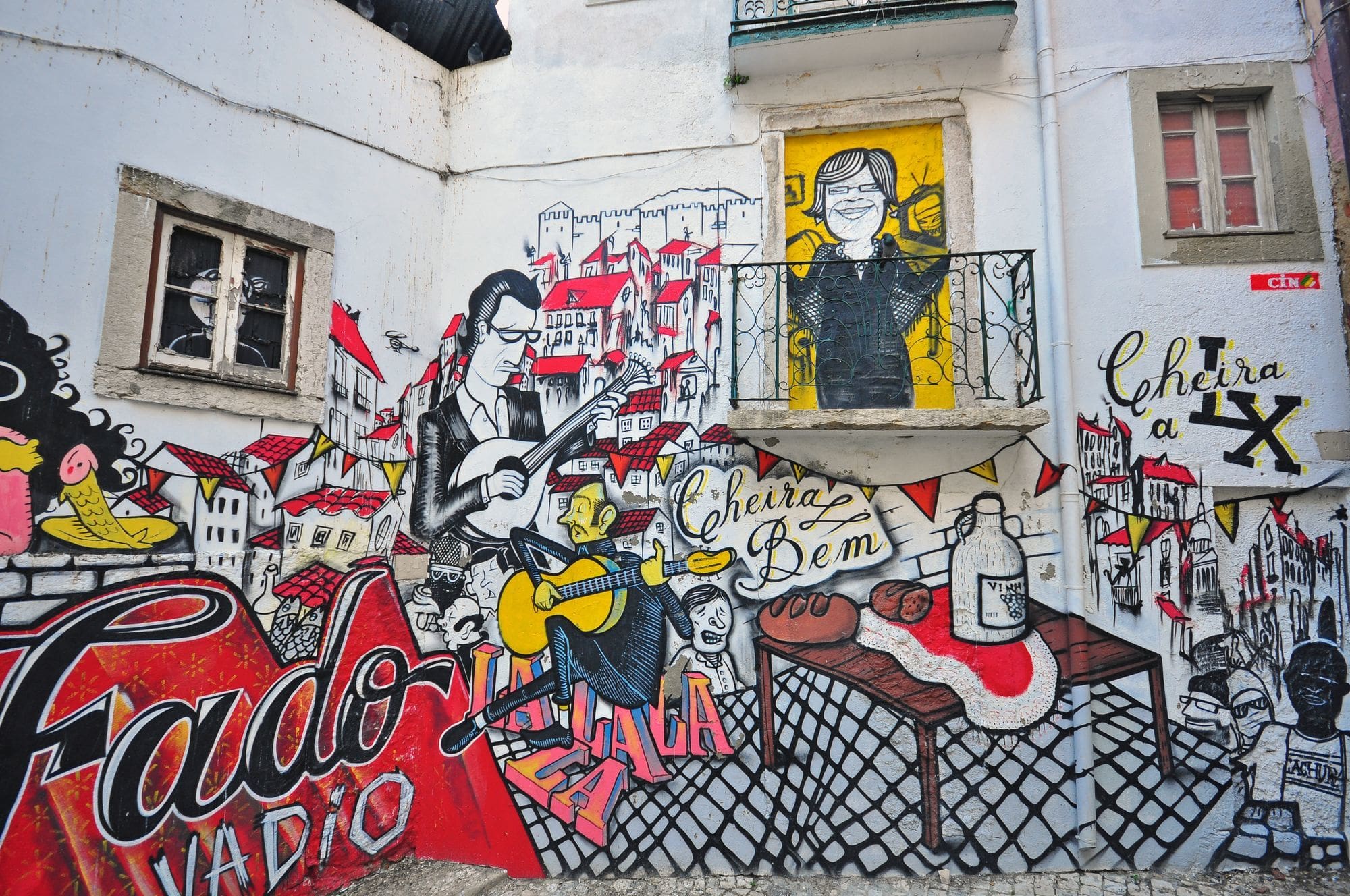
Fado is one of Portugal’s most distinctive musical traditions: a form of sung poetry shaped by powerful voices, the bright metallic sound of the Portuguese guitar and lyrics that often explore love, loss, memory, fate and saudade. Although it is closely associated with Lisbon, Fado has become an internationally recognized expression of Portuguese culture and identity.
In 2011, UNESCO inscribed Fado, urban popular song of Portugal on the Representative List of the Intangible Cultural Heritage of Humanity. UNESCO describes it as a performance genre combining music and poetry, traditionally sung by a solo performer and accompanied by the Portuguese guitarra, a pear-shaped instrument with twelve wire strings, together with acoustic guitar.
This guide introduces ten important voices associated with Fado across several generations. It is not intended as a strict ranking. Some of these singers are deeply rooted in traditional Fado, while others have expanded the music into world music, pop, jazz or broader Portuguese song. Together, they show how Fado has remained recognizable while continuing to evolve.
What Is Fado?
Fado developed as an urban musical tradition in Lisbon during the 19th century, although its origins reflect a mixture of influences rather than one single source. UNESCO describes the genre as a multicultural synthesis shaped by Afro-Brazilian song and dance traditions, Portuguese popular music, rural musical traditions brought into the city and the cosmopolitan urban song styles of the period.
A traditional Fado performance places the singer at the center. The accompaniment usually includes the Portuguese guitar and a classical-style acoustic guitar known in Fado circles as the viola de fado. Modern arrangements may also include bass guitar, piano or additional instruments, but the relationship between the voice, poetry and guitar remains fundamental.
Fado is frequently associated with saudade, a Portuguese word often translated as longing or nostalgia, but its emotional range is broader than sadness alone. Fado can be dramatic, romantic, ironic, proud, celebratory or deeply personal. What matters is the interpretation: the ability of the singer to make the words feel immediate.
Lisbon Fado and Coimbra Fado Are Not the Same
Travelers sometimes use the word Fado as though it refers to one uniform tradition, but Portugal has two especially important forms: Lisbon Fado and Coimbra Fado.
Lisbon Fado developed in the capital’s neighborhoods and became closely associated with small Fado houses, taverns and performance spaces in areas such as Alfama, Mouraria and Bairro Alto. Both women and men sing Lisbon Fado, and most of the singers in this article are associated primarily with this tradition.
Coimbra Fado, also known as the Song of Coimbra, is closely connected with the University of Coimbra and its academic traditions. Coimbra’s municipal cultural authorities describe it as essentially a tradition of serenades, shaped by university life, student poetry and street performance. Historically, singers have often performed in academic dress, particularly during student ceremonies and serenades.
If music and Portuguese culture are important to your trip, Lisbon and Coimbra offer two very different ways to encounter these traditions. You can read more about the capital in our Lisbon travel guide.
10 Fado Singers to Know
1. Amália Rodrigues
No introduction to Fado can begin anywhere else. Amália Rodrigues (1920–1999) became the most internationally famous Fado singer of the 20th century and remains the figure against whom later generations are inevitably measured.
She began singing professionally in Lisbon in 1939 and developed an international career during the 1940s and 1950s, performing across Europe, the Americas, Africa and beyond. Her influence went far beyond the strength of her voice. Amália expanded the literary possibilities of Fado by interpreting work by major Portuguese-language poets, including Luís de Camões, and her collaboration with composer Alain Oulman helped create some of the most sophisticated recordings in the genre.
Songs such as Estranha Forma de Vida, Povo Que Lavas no Rio, Com Que Voz and Foi Deus remain central to the Fado repertoire. Amália also worked extensively in film and theatre and became an international representative of Portuguese culture. After her death in Lisbon in 1999, her remains were transferred to Portugal’s National Pantheon in 2001.
For travelers who want to understand Fado historically, Amália is the essential starting point.
2. Carlos do Carmo
Carlos do Carmo (1939–2021) was one of the most important male voices in modern Fado. Born into a Fado family in Lisbon, he was the son of celebrated singer Lucília do Carmo and grew up around the family’s Fado house, O Faia.
His career combined respect for traditional Fado with a willingness to work with contemporary poets and composers. The landmark 1977 album Um Homem na Cidade, built around poems by Ary dos Santos, is particularly associated with his artistic identity and with Lisbon itself. Songs such as Lisboa, Menina e Moça, O Cacilheiro and Um Homem na Cidade helped make his voice part of the musical image of the capital.
Carlos do Carmo also played an important role in presenting Fado to international audiences and in supporting the genre’s recognition as cultural heritage. He received a Latin Grammy Lifetime Achievement Award and remained an influential elder statesman of Fado for later generations of singers.
3. Mariza
Mariza became one of the defining international Fado singers of the generation that followed Amália Rodrigues. Her breakthrough album, Fado em Mim, appeared in 2001 and quickly introduced her voice to audiences far beyond Portugal.
Her style is firmly rooted in Fado but has never been confined by it. Across albums such as Fado Curvo, Transparente, Terra, Fado Tradicional and Mariza Canta Amália, she has moved between traditional repertory and arrangements influenced by other Portuguese, African, Mediterranean and international musical traditions.
Mariza has performed at major concert halls around the world and served as one of the ambassadors for Fado’s successful UNESCO heritage candidacy. Her career helped demonstrate that Fado could retain its identity while functioning as contemporary world music on an international stage.
4. Ana Moura
Ana Moura is one of the most distinctive voices to emerge from contemporary Fado. She grew up hearing Fado and other Portuguese and Lusophone music, later developing her craft in Lisbon’s Fado houses, including the well-known Senhor Vinho.
Her early albums, beginning with Guarda-me a Vida na Mão in 2003, established her as a major Fado singer. Later recordings showed an increasing willingness to cross musical boundaries. The album Desfado became a major commercial and artistic success and reflected her ability to move between traditional Fado and more contemporary songwriting.
Ana Moura has also collaborated with musicians well outside the traditional Fado world, including members of the Rolling Stones and Prince. Those collaborations did not erase her Fado background; instead, they highlighted one of the genre’s enduring strengths: a powerful song can still sound like Fado when interpreted through a singer who understands its phrasing and emotional language.
5. Camané
Camané is widely regarded as one of the leading male Fado singers of his generation. His relationship with the music began in childhood, and after years of performing in Lisbon’s Fado circuit he released his first major album, Uma Noite de Fados, in 1995.
His long collaboration with musician and producer José Mário Branco helped develop a style that is unmistakably contemporary without abandoning the classic Fado framework. Camané is particularly admired for restraint, phrasing and the attention he gives to poetry. Rather than relying on theatrical excess, he often builds intensity gradually through precise interpretation.
Albums such as Na Linha da Vida, Esta Coisa da Alma and Infinito Presente helped establish him as a bridge between traditional Fado practice and a younger generation of Portuguese listeners.
6. Cristina Branco
Cristina Branco came to Fado through a somewhat different path. Raised in Almeirim, she initially listened to artists such as Ella Fitzgerald, Sarah Vaughan and Elis Regina. Her discovery of Amália Rodrigues as a young adult changed the direction of her musical life.
Branco’s international career developed early, particularly in the Netherlands and France, and she became known for an approach that places poetry at the center of the performance. Her repertoire has regularly moved beyond traditional Fado to include literary texts and influences from jazz, Portuguese singer-songwriters and music from other countries.
That breadth makes Cristina Branco especially useful for listeners who want to understand how Fado can be a foundation rather than a boundary. Her work remains closely connected to Portuguese musical tradition while continually exploring new composers, poets and arrangements.
7. Mísia
Mísia occupies a particularly important place in the renewal of Fado that began before the international boom of the early 2000s. Born in Porto, she spent part of her adult life in Barcelona before returning to Portugal in 1991 to build a highly personal repertoire.
Rather than simply repeating established standards, Mísia actively sought out contemporary Portuguese poets, writers and composers. The result was a modern vision of Fado that respected the traditional instrumental sound while giving new literary voices a place within it.
Her work helped prepare the ground for what became widely described as a new generation or “New Fado.” For listeners interested in the transition between late-20th-century traditional Fado and the international revival that followed, Mísia is a crucial artist to explore.
8. Gisela João
Gisela João represents a younger generation that returned to the emotional directness of traditional Fado while giving it a distinctly contemporary personality. Born in Barcelos, she later sang in Porto before moving to Lisbon and immersing herself in the capital’s Fado houses.
Her self-titled debut album, released in 2013, was widely recognized as a significant moment in contemporary Fado. Her performances are marked by a deep, forceful voice and an intense focus on the words of the song.
Later work has expanded her role beyond interpretation into writing and composition, but the traditional Fado background remains fundamental to her sound. She is a strong example of how younger singers can revisit old repertory without sounding like historical recreations.
9. Dulce Pontes
Dulce Pontes is best understood as a Portuguese singer whose career crosses Fado, folk music, popular song, classical influences and world music rather than as a traditional Fado singer alone.
Her dramatic voice and international career contributed to renewed interest in Portuguese music during the 1990s, a period when a new generation of listeners outside Portugal was rediscovering Fado and related Portuguese traditions. Songs such as Canção do Mar became internationally recognizable and helped associate her voice with Portugal’s musical identity.
Including Dulce Pontes in a Fado overview therefore illustrates how porous the boundaries around the genre can be. Her repertoire moves well beyond Fado, but her interpretations and international profile contributed to the broader revival of interest in Portuguese song.
10. Teresa Salgueiro
Teresa Salgueiro is another artist whose relationship with Fado requires some context. She is most famous as the longtime lead singer of Madredeus, the Portuguese group she joined as a founding member in 1986 at the age of 17.
Madredeus was not a Fado group in the strict sense. Its music created an original sound drawing from Portuguese musical sensibility, acoustic instrumentation and poetic songwriting. Salgueiro’s clear, controlled voice became internationally associated with Portugal through more than two decades of touring and recording with the group.
She belongs in a broader discussion of Fado-era Portuguese voices because her career helped carry Portuguese-language music to international audiences in the years between Amália’s global prominence and the new international wave represented by Mariza, Ana Moura and others. Travelers looking specifically for traditional Fado should begin with Amália, Carlos do Carmo, Camané or Gisela João; listeners interested in the wider landscape of Portuguese song should also know Teresa Salgueiro.
Other Fado Singers Worth Discovering
No list of ten singers can represent the entire tradition. Depending on the period and style that interests you, other important names include Alfredo Marceneiro, Lucília do Carmo, Fernando Maurício, Maria Teresa de Noronha, Maria da Fé, Argentina Santos, Carminho, Kátia Guerreiro, Aldina Duarte, Ricardo Ribeiro, António Zambujo, Ana Sofia Varela and many others.
Fado remains a living musical culture rather than a museum piece. New singers continue to interpret classic melodies, commission new poetry and work with musicians from outside the traditional Fado world.
Why Amália Rodrigues Changed Fado
Amália’s importance is not simply that she became famous. She changed what audiences believed Fado could contain.
Traditional Fado already had a strong relationship with poetry, but Amália expanded that relationship by singing works by major literary figures and by working with composers such as Alain Oulman. Her repertoire brought sophisticated poetry into a popular musical form without removing the emotional immediacy that made Fado compelling.
She also carried the Portuguese language onto international stages at a scale no previous Fado singer had achieved. Her success in Europe, the Americas, Africa and Asia helped establish the image of the solitary black-clad singer accompanied by Portuguese guitar as one of the visual and musical symbols of Portugal.
Later singers did not simply copy Amália. The most successful found different ways to respond to the standard she established: Carlos do Carmo modernized the male Fado repertoire, Mísia brought contemporary poets into a new artistic framework, Mariza internationalized a new generation, and singers such as Ana Moura and Cristina Branco pushed the borders of the genre further outward.
Where to Experience Fado in Portugal
For travelers, hearing Fado live provides a very different experience from listening to a recording. The traditional setting is intimate, with the audience close to the singer and the guitars. During a performance, conversation typically stops so attention remains on the voice and lyrics.
Fado in Lisbon
Lisbon is the best-known place to experience traditional Fado. Alfama, Mouraria and Bairro Alto have long associations with the music, and the capital offers everything from small neighborhood venues to established Fado restaurants and formal concert performances.
The Museu do Fado in Alfama is also valuable for visitors who want historical context before attending a performance. Its collections explore singers, musicians, recordings, Portuguese-guitar makers and the development of the genre.
Fado in Coimbra
Coimbra offers a very different tradition. Its music is closely linked to the university, student life and the serenade. The city’s Núcleo da Guitarra e do Fado de Coimbra at the Torre de Anto explores the history of the local guitar and song tradition, while live performances around the city introduce visitors to the distinctive Coimbra style.
If you are traveling between Lisbon and Porto, Coimbra is a natural stop and gives you the opportunity to compare two Portuguese musical traditions within the same trip.
Planning a Portugal Trip Around Fado and Culture
Fado fits naturally into a Portugal itinerary focused on culture, food, historic neighborhoods and regional traditions. A stay in Lisbon gives you time to explore Alfama and Mouraria, visit the Museu do Fado and attend an evening performance without rushing the experience.
For travelers who want Fado included as part of a prearranged itinerary, the 9-Day Private Portugal Pousadas Tour includes a traditional Fado dinner and show in Lisbon while also visiting the Alentejo, Douro Valley, Porto, Coimbra and several historic towns.
Another option is the Lisbon & Algarve by First-Class Train itinerary, which includes a Fado dinner show in Lisbon as part of a rail-based Portugal vacation.
If you prefer a wider escorted itinerary, browse our guided Portugal tours. Travelers who want to build a trip around music, history, food, wine or other cultural interests can also use the Portugal Vacation Planner to ask a Portugal travel specialist to shape an itinerary around their priorities.
Frequently Asked Questions About Fado
What does the word Fado mean?
The Portuguese word fado is connected with the idea of fate or destiny. In musical use, however, Fado describes the performance tradition itself rather than one specific lyrical theme.
Is all Fado sad?
No. Longing, separation and saudade are important themes, but Fado can also express love, humor, pride, jealousy, everyday life and celebration. The emotional delivery of the poem is more defining than sadness alone.
What instrument gives Fado its distinctive sound?
The most recognizable instrument is the Portuguese guitar, a pear-shaped, wire-strung instrument with twelve strings arranged in six courses. It is normally joined by acoustic guitar and, in some modern arrangements, bass or other instruments.
Who is the most famous Fado singer?
Amália Rodrigues remains the most famous and historically influential Fado singer. Her international career and artistic innovations transformed both Fado and the global image of Portuguese music.
Who are some major modern Fado singers?
Mariza, Ana Moura, Camané, Cristina Branco, Gisela João, Carminho, Kátia Guerreiro, Ricardo Ribeiro and Aldina Duarte are among the important contemporary or recent voices associated with the genre.
What is the difference between Lisbon and Coimbra Fado?
Lisbon Fado is associated with the capital’s urban neighborhoods and Fado houses and is sung by both women and men. Coimbra Fado developed around the university and student-serenade tradition and has its own repertoire, performance customs and guitar style.
Where should a first-time visitor hear Fado?
Lisbon is the easiest place for a first experience because it offers the widest range of venues, particularly in Alfama, Mouraria and Bairro Alto. Coimbra is worth adding if you want to understand the distinct university-song tradition as well.
Fado as a Living Portuguese Tradition
The strongest reason to explore Fado is that it connects several layers of Portuguese culture at once: language, poetry, neighborhood life, craftsmanship, history and performance. The Portuguese guitar has its own centuries-old craft tradition, while singers continually reinterpret poems and melodies for new audiences.
UNESCO recognition in 2011 confirmed Fado’s international cultural importance, but its real vitality comes from the singers, guitarists, composers, poets, instrument makers, Fado houses and audiences who continue to keep the tradition active.
Start with Amália Rodrigues to hear the voice that transformed the genre, then move through Carlos do Carmo, Mísia, Camané, Mariza, Ana Moura, Cristina Branco and Gisela João to hear how later generations preserved and reshaped it. From there, the world of Portuguese music becomes much larger than any top-ten list.