
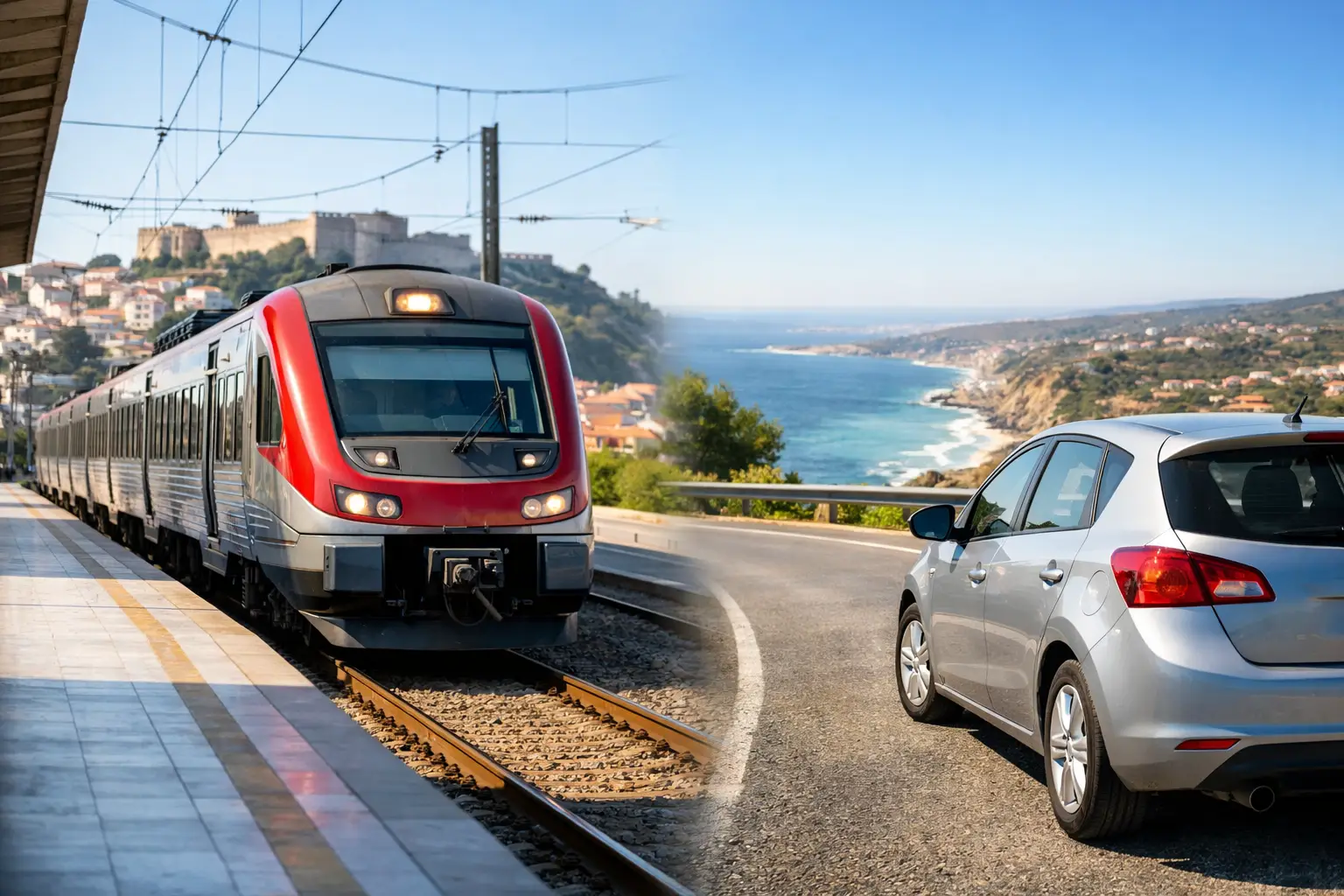
Landing in Lisbon and planning to continue north to Porto, east to the Douro Valley, or south to the Algarve? Your transportation choice will shape far more than your travel time. Portugal rail versus driving is not a simple question of convenience. It determines which towns you can reach easily, how much of the scenery you see, where you can stay, and how relaxed the trip feels.
Portugal is compact by US standards, but its geography rewards thoughtful planning. High-quality rail service connects its major cities very well, while a rental car opens the door to vineyards, hill towns, beaches, and rural regions that lie beyond the tracks. For many visitors, the best answer is a combination of both.
Portugal Rail Versus Driving at a Glance
Choose rail when your itinerary centers on Lisbon, Porto, Coimbra, Braga, Aveiro, or Faro, and you prefer city hotels, guided excursions, and a lighter travel day. Trains are comfortable, generally reliable, and a welcome alternative to navigating unfamiliar streets after an overnight flight. They also eliminate parking concerns in historic centers, where narrow lanes and limited garages can turn a simple arrival into a stressful one.
Choose driving when the experiences on your wish list are spread across the countryside. A car is especially valuable in the Douro Valley, Alentejo, central Portugal, and many parts of the Algarve. It gives you the freedom to pause at a family-run winery, take the scenic road to a whitewashed village, or spend a night at a country estate without building your day around a train schedule.
The right choice depends on the route, the season, your comfort behind the wheel, and how much you value flexibility over simplicity. It also depends on who is traveling. Couples on a first Portugal vacation may enjoy a rail-focused city journey, while families and multigenerational groups often appreciate the space and door-to-door convenience of a car.
When rail is the smarter choice
Portugal’s intercity rail network works particularly well on the Lisbon-Porto corridor. Fast trains make it easy to travel between the country’s two largest cities without airport-style procedures, highway tolls, or the challenge of parking at either end. Coimbra, a historic university city, also fits naturally into this route.
Rail is an excellent choice for travelers who want to settle into a destination rather than change hotels every night. Stay several nights in Lisbon, take organized day tours to Sintra, Cascais, or Óbidos, then continue by train to Porto. From there, a planned Douro excursion can provide the vineyard views without requiring you to drive winding roads or limit wine tasting.
Train travel can also be preferable for mature travelers who would rather avoid the concentration required by a new driving environment. Stations in major cities are centrally located, and a well-planned itinerary includes transfers and accommodations that make arrivals straightforward.
When driving makes the trip better
A rental car changes what is possible outside Portugal’s main urban centers. The Alentejo is a clear example. Its cork forests, medieval towns, vineyards, and wide-open plains are best experienced at your own pace. Évora has rail access from Lisbon, but once you want to continue to Monsaraz, Marvão, Vila Viçosa, or a rural wine hotel, driving becomes far more practical.
The Douro Valley also rewards travelers with a car, particularly those staying overnight in Pinhão, Lamego, or a vineyard property. There is a rail line along the Douro River, and the journey is beautiful, but it does not reach every quinta, viewpoint, or small village. A self-drive route allows more time for the region’s backroads, tastings, and river landscapes.
In the Algarve, rail service connects larger coastal towns, but a car offers much greater access to quieter beaches, cliffside walks, inland villages, and golf resorts. Travelers who want a resort-based stay in Lagos, Albufeira, or Faro may not need one. Those hoping to explore from Sagres to Tavira will usually find driving worthwhile.
The Best Choice by Portugal Region
The Lisbon and Porto city centers are places to enjoy on foot, by taxi, or with local transportation. Picking up a car immediately after arrival is rarely the best use of a first day in Portugal. Traffic, one-way streets, and parking restrictions can make city driving more effort than freedom.
For Lisbon, rail and guided touring cover many popular day trips. Sintra is easy to visit without a car, and driving there can be inconvenient due to traffic and limited parking near the palaces. Cascais is also well connected by train. If you want to include villages such as Azeitão, Arrábida, Mafra, or Ericeira, a private tour or rental car becomes more appealing.
Porto is similarly rail-friendly. The city itself is walkable in parts, although its hills are real. A car is unnecessary for a Porto stay and can become a burden near the historic center. Yet it is useful once you leave the city for the Minho, the Douro Valley, or the northern borderlands around Peneda-Gerês National Park.
Central Portugal sits between the two approaches. Coimbra works well by train, while smaller destinations such as Tomar, the Schist Villages, Batalha, Alcobaça, and the Serra da Estrela are easier to combine with a car or a guided itinerary. This is an area where travelers often underestimate distances between individual sights, even though Portugal looks small on a map.
Costs, Tolls, and the Details That Matter
Rail tickets can offer strong value, especially when booked in advance, but the lowest fare is not always the lowest overall cost. Consider station transfers, hotel location, luggage handling, and day tours that may be needed to reach places outside the network. For two travelers moving only between major cities, rail is often economical and pleasantly straightforward.
A car brings its own costs: rental charges, fuel, parking, tolls, and sometimes an automatic toll-service fee. Portugal’s highways are excellent, but tolls can add up on longer routes. Your itinerary should account for them rather than treating them as a surprise. A destination specialist can also help confirm whether your rental arrangement is set up for electronic toll collection.
Manual transmission vehicles are common, although automatic cars are available and should be reserved early, particularly for summer travel. Roads are generally well maintained, but village lanes can be narrow, roundabouts are frequent, and parking garages may be tight. Drivers should be comfortable with these conditions and avoid assuming that a US-size vehicle is the best choice.
One essential consideration is wine. Portugal’s food and wine regions are among the country’s great pleasures, but a designated driver still has responsibilities. If your vacation is centered on tastings in the Douro, Alentejo, or Vinho Verde country, a private guide, small group tour, or rail-based stay may offer a more carefree experience.
A Mixed Itinerary Often Delivers the Best Vacation
For many US visitors, the most satisfying Portugal itinerary is neither rail-only nor self-drive from start to finish. Begin with several nights in Lisbon without a car. Travel north by rail to Porto, where you can again enjoy the city on foot. Then pick up a rental car for a few days in the Douro Valley, Minho, or Alentejo, returning it before your final city stay or departure.
Another strong option is a rail-focused route between Lisbon, Coimbra, and Porto, paired with guided day tours in each destination. This approach keeps logistics simple while still adding regional experiences such as wine country, medieval towns, coastal scenery, and local food traditions.
For travelers who prefer complete flexibility, a self-drive holiday can be designed around country hotels and distinctive regional stops, with city parking and car access planned in advance. The key is not to force a car into every part of the trip. A better route uses it where it adds real value.
Portugal Online can arrange rail journeys, self-drive holidays, guided touring, hotels, and transfers as one coordinated itinerary. That means transportation decisions are made around your actual interests, not around a one-size-fits-all route.
Plan for the Portugal You Want to Experience
If your ideal vacation means city cafés, historic neighborhoods, and a few effortless train rides, let rail carry the journey. If it means stopping for a long lunch in a vineyard village, following a coastal road, and staying where the train does not go, choose a car for that portion of the route. The most memorable Portugal vacations leave room for both the destinations you planned and the moments you did not expect to find.