

The biggest mistake travelers make when planning a Portugal driving vacation is trying to see the entire country in one loop. Portugal looks compact on a map, but the pace of a good trip is shaped less by mileage than by road type, hotel changes, parking, scenic stops, and how much time you actually want to spend once you arrive.
If you are wondering how to build a Portugal road trip that feels relaxed rather than rushed, start by choosing a route that fits your available nights and travel style. Then decide where a rental car genuinely improves the trip and where trains, transfers, or simply staying put make more sense.
Portugal is an excellent self-drive destination for travelers who want to combine historic cities, vineyard landscapes, Atlantic beaches, medieval towns and quieter countryside. The challenge is not finding enough places to visit. It is deciding which places belong together in the same vacation.
Travelers who want the freedom of driving without having to build every hotel stop and rental arrangement themselves can begin with Portugal Online’s Portugal self-drive vacations. These itineraries combine a planned route, reserved hotels and rental-car arrangements while leaving daily sightseeing largely up to you.
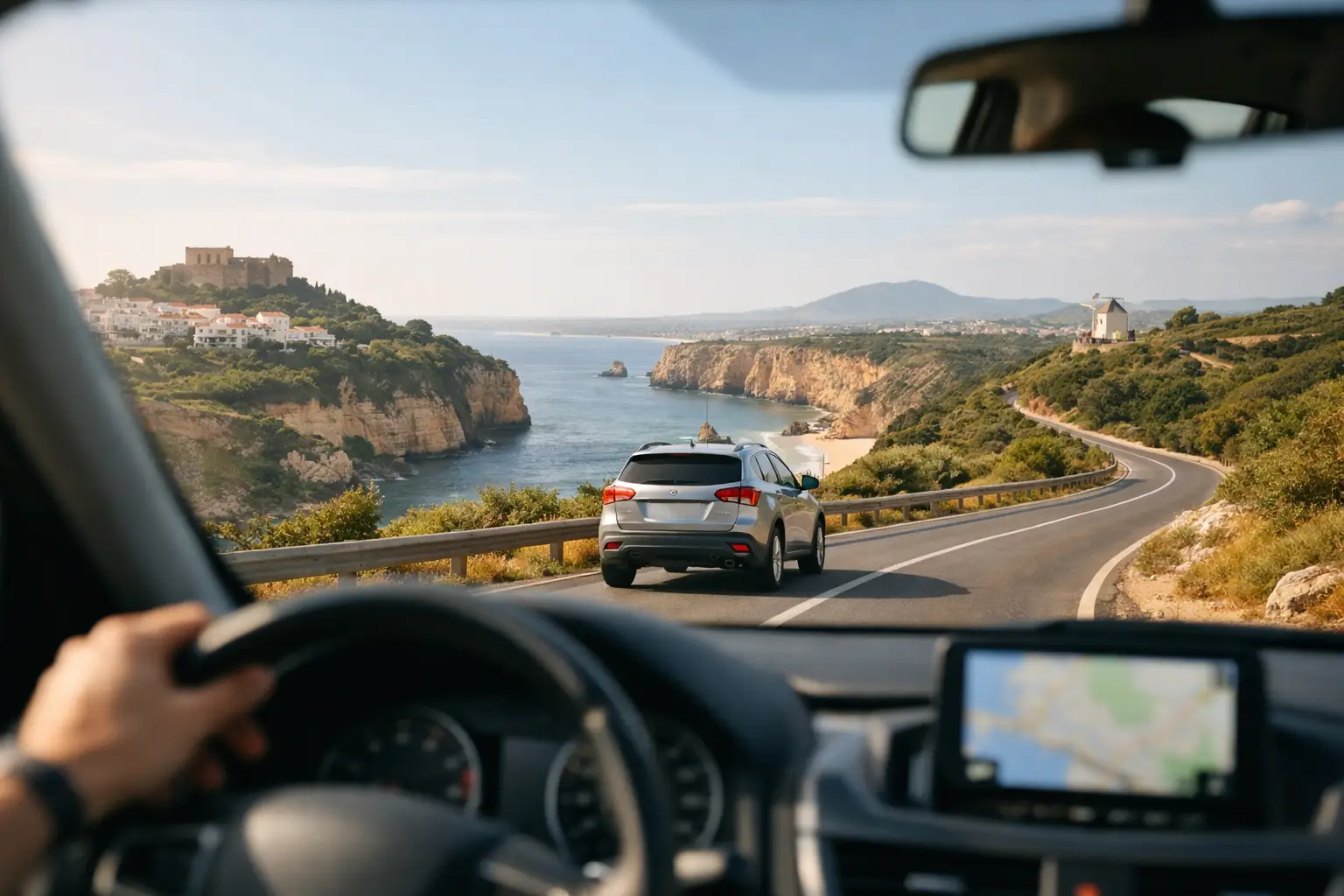
Portugal Road Trip Planning: The Quick Answer
For most first-time visitors, a successful Portugal road trip focuses on two or three regions rather than the entire mainland. Seven nights usually works best with two principal bases or a compact regional route. Ten nights gives you room for two or three regions. Around two weeks allows a broader journey through northern, central and southern Portugal without changing hotels every night.
It is also usually better to spend your first nights in Lisbon or Porto without a rental car. Explore the city first, then collect the vehicle when you are ready to leave for the countryside. Historic centers can mean narrow streets, restricted access, expensive parking and little benefit from having a car sitting unused.
For a realistic comparison of routes, see Portugal Online’s Portugal driving distances and travel-time guide. Driving time should be treated as only one part of a travel day; parking, sightseeing stops, meals and hotel check-in can turn a short transfer into a substantial portion of the day.
How Many Days Do You Need for a Portugal Road Trip?
The first planning decision is not where to start driving. It is how many nights you actually have in Portugal.
About 7 Nights: Keep the Route Focused
With approximately one week, resist the temptation to drive from one end of Portugal to the other. A compact itinerary generally produces a better vacation.
You might combine Lisbon with Évora and the Alentejo, or Lisbon with the Algarve. In the north, Porto can be paired with the Douro Valley and selected northern towns. Another option is a Lisbon-to-Porto route through Central Portugal with one or two carefully chosen intermediate stops.
A seven-night trip becomes tiring when Porto, Lisbon, the Douro Valley, the Alentejo and Algarve are all treated as mandatory stops. The distances may look possible, but the repeated packing, parking, checking in and checking out quickly begins to dominate the vacation.
About 10 Nights: Add a Third Region
Ten nights creates much more flexibility. A route could connect Lisbon, the Alentejo and Algarve, or Lisbon, Central Portugal and Porto. Another possibility is Porto, the Douro Valley, Central Portugal and Lisbon, provided the overnight sequence remains sensible.
This is also where mixing two- and three-night stays becomes useful. Longer stays in major destinations provide breathing room while one-night stops can connect regions when the stop itself is worthwhile.
12 to 14 Nights: Consider a Broader Mainland Journey
With approximately two weeks, a wider mainland road trip becomes much more practical. You can combine southern, central and northern Portugal while still allowing proper time in major destinations.
Portugal Online’s 12-Day Grand Driving Tour of Portugal is an example of a broader self-drive route. It links Lisbon, the Algarve, Alentejo, northern Portugal, Porto and Central Portugal with hotels and a rental car arranged around the route.
The practical rule is simple: the more regions you add, the more selective you must become within each region. Portugal rewards depth. Two or three nights in the Douro, Évora or the Algarve will usually create a more satisfying vacation than touching six destinations for a few hours each.
Start With Portugal’s Regions, Not a List of Towns
When travelers start planning a Portugal road trip, they often begin with a list: Lisbon, Sintra, Óbidos, Nazaré, Coimbra, Porto, the Douro, Évora, Lagos. A better approach is to organize the trip by region first.
For road-trip purposes, mainland Portugal can be divided into several natural travel zones:
Lisbon and the Tagus Valley combine the capital with Sintra, Cascais, Setúbal and easy connections into Central Portugal and the Alentejo.
Central Portugal includes historic cities and towns such as Coimbra, Tomar, Óbidos, Nazaré and the great monastery sites. It fits naturally between Lisbon and Porto.
Porto and Northern Portugal bring together Porto, Minho, historic Braga and Guimarães, Atlantic towns and access to the Douro Valley.
The Douro Valley deserves special consideration because the roads, vineyards, winery visits and scenery encourage a slower pace than the mileage suggests.
The Alentejo is ideal for independent driving, with open landscapes, whitewashed towns, wine estates and destinations such as Évora, Monsaraz, Estremoz and Marvão.
The Algarve combines historic towns and resort areas with beaches, cliffs and a long coast that rewards having a vehicle. See Portugal Online’s guide to the Algarve’s best-known beaches when deciding where to base yourself.
Thinking regionally creates natural combinations. Lisbon, the Alentejo and Algarve work together geographically. Porto, the Douro and northern Portugal form another natural group. Lisbon, Central Portugal and Porto create a straightforward north-south cultural route.
Choose the Right Portugal Road Trip Route
There is no single best Portugal driving itinerary. The strongest route depends on your interests, trip length and whether this is your first visit.
Lisbon to Porto Through Central Portugal
This is one of the most practical routes for first-time visitors. Begin with Lisbon, then travel north through selected destinations such as Óbidos, Nazaré, Tomar, Coimbra or Aveiro before finishing in Porto.
The advantage is variety without extreme distances. Historic towns, Atlantic scenery, university heritage and Portugal’s two principal cities fit into a logical route.
Portugal Online’s 8-Day Classic Portugal Self-Drive Tour is built around this concept, combining Lisbon and Porto with Évora, Fátima and selected historic towns.
Lisbon, Alentejo and Algarve
This is an excellent route for travelers who want city time followed by countryside and coast. Spend several nights in Lisbon without a car, collect the rental when leaving the city, then travel east or southeast through the Alentejo before continuing to the Algarve.
Évora provides the natural cultural anchor. From there, travelers with more time can add Monsaraz, Estremoz, Marvão, a countryside hotel or wine estate before turning south.
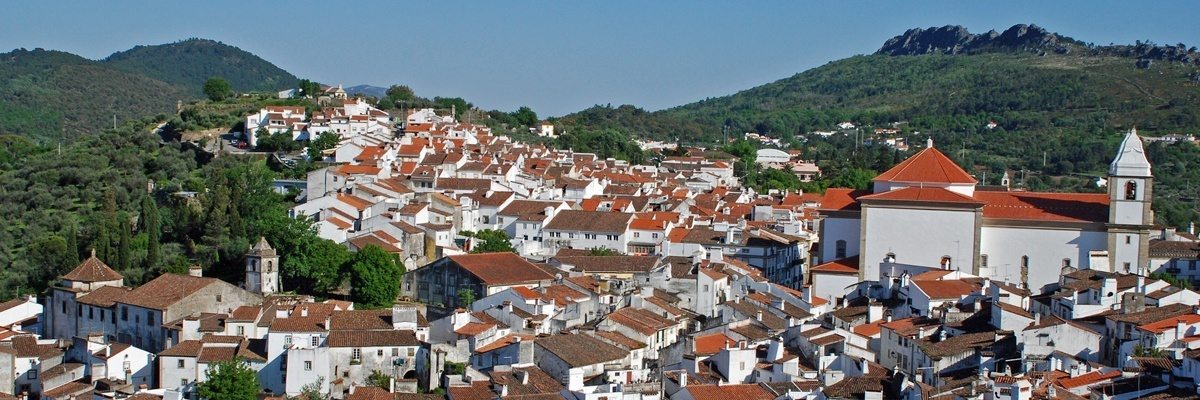
Once in the Algarve, avoid changing hotels simply to see every section of the coast. Choose a base that matches your interests and use the car for day trips to beaches, historic towns and coastal viewpoints.
Porto and the Douro Valley
Travelers focused on food, wine and scenery can build an entire road trip around Porto and northern Portugal. Spend several nights exploring Porto without a vehicle, then collect a car when leaving the city for the Douro Valley.
The Douro is a perfect example of why road-trip planning should not rely on mileage alone. Distances may appear short, but winding roads, viewpoints, winery appointments and long lunches can fill an entire day.
If wine is central to the trip, read Portugal Online’s Lisbon, Porto and Douro itinerary for another way to structure the region. Travelers who want wine country without being responsible for driving can instead consider a private Lisbon, Porto and Douro wine tour.
Consider an Open-Jaw Road Trip
The smartest Portugal road trips are not necessarily loops.
An open-jaw itinerary means arriving through one airport and departing through another. This can reduce backtracking and turn what would otherwise be a long final driving day into additional vacation time.
Flying into Porto and departing from Lisbon can work well for a northern and central itinerary. For a southbound vacation, arriving through Lisbon and departing from Faro may make sense if your international flight options and rental-car arrangements cooperate.
A round trip can still be perfectly practical. Lisbon is Portugal’s principal international gateway, and many self-drive itineraries begin and end there. The point is to compare both possibilities before assuming you need to return to your arrival city.
Do Not Rent the Car Until You Need It
One of the simplest improvements you can make to a Portugal road trip is separating city time from driving time.
A rental car is generally unnecessary for ordinary sightseeing in Lisbon. The same is true for central Porto. Both cities are better explored on foot and with public transportation, taxis or organized sightseeing.
Instead, spend the first two or three nights enjoying the city and collect the rental vehicle on the morning you leave. At the other end of the trip, consider returning the car when you enter your final major city rather than paying for parking while it sits unused.
If you are deciding whether driving makes sense at all, Portugal Online’s car rental versus train guide explains which types of Portugal itineraries work particularly well by rail and where a car adds meaningful flexibility.
Build the Itinerary Around Stay Lengths, Not Just Driving Distances
A route that looks short on a map may include scenic detours, winery visits, historic centers with limited parking, lunch stops and smaller roads where the journey itself is part of the experience.
This is why the overnight structure matters so much.
A good Portugal road trip often includes two or three anchor stays of several nights each rather than a continuous string of one-night hotels. For example, three nights in Lisbon, two nights in the Alentejo and three or four nights in the Algarve creates a very different experience from changing hotels almost every night.
In northern Portugal, you might spend three nights in Porto, two nights in the Douro and another two or three nights exploring Central Portugal or the Minho.
Longer stays also provide insurance against travel fatigue. Travelers arriving from the United States may need a day to adjust to the time difference, and repeated unpacking becomes increasingly tiresome as a trip continues.
Allow More Time Than the Navigation App Suggests
Navigation apps are useful for estimating basic driving times, but they do not measure the kind of travel day most vacationers actually have.
A two-hour transfer can easily become four or five hours once you stop at a town, find parking, have lunch and explore a viewpoint along the way. That is not lost time. On a self-drive vacation, those stops are part of the reason for having the car.
Portugal Online’s Portugal travel distances guide includes practical estimates between major destinations and explains why scenic roads, historic-center access and parking need to be included in route planning.
In particular, allow extra time in the Douro Valley, mountainous northern areas, coastal routes and historic towns. Motorway driving and a scenic regional road are very different experiences even when the mileage is similar.
Understand Portugal’s Toll Roads Before You Drive
Portugal has an extensive motorway network, and some routes use conventional toll booths while others rely on electronic collection. The easiest solution for most rental-car travelers is to understand the vehicle’s toll arrangement before leaving the rental counter.
Ask whether the car has an electronic toll device, how toll charges will be billed, and whether there are additional service or administration fees.
Portugal’s motorway toll system has changed in recent years, so avoid relying on old forum posts or outdated travel articles. Portugal Online maintains a current guide to Portugal’s toll roads and payment methods.
How to Pace a Portugal Self-Drive Vacation
Pacing is where thoughtful itinerary planning makes the biggest difference. Driving in Portugal is generally manageable, but urban driving in Lisbon or Porto is very different from cruising through the Alentejo or following the curves of the Douro Valley.
Do not assume every day needs a major sightseeing program. The best Portugal road trips leave room for a long lunch, a slower morning at a countryside hotel, a winery visit that lasts longer than expected, or an unplanned afternoon at the beach.
If every day has a checklist of six towns, three monuments and another hotel at the end, the flexibility that makes a road trip appealing begins to disappear.
Portugal Online’s guide to seven self-drive Portugal routes provides additional ideas for matching the driving route to the type of vacation you want.
Choose Hotels That Support the Driving Route
Hotel selection is part of route planning, not a separate decision.
In Lisbon and Porto, a central hotel can be worth paying more for because you can walk to restaurants, neighborhoods and major sights. Once you move into rural Portugal, the equation changes. A vineyard hotel, historic Pousada, manor house or countryside property may provide a much stronger travel experience even when it is outside town.
The question is whether the hotel’s location supports what you plan to do the following day.
Parking is equally important. A beautiful hotel in the middle of a medieval center can become inconvenient if you must repeatedly navigate narrow streets or leave the vehicle far away. When driving, always confirm where you can park and how luggage reaches the property.
Portugal Online’s self-drive packages are built around a planned sequence of hotels and rental-car arrangements, reducing the need to research each overnight stop independently.
Build the Road Trip Around Experiences, Not Just Stops
The purpose of having a car is not simply to move between famous places. It is to make experiences possible that would be awkward or time-consuming without one.
A wine-focused itinerary might combine the Douro, Alentejo wine country and carefully selected countryside hotels. A cultural route could connect Évora, Marvão, Tomar, Coimbra and smaller historic towns. A coastal itinerary might combine Lisbon, the Alentejo coast and Algarve with more time for beaches and scenic drives.
Travelers interested primarily in cities may discover that they do not need a road trip at all. Portugal Online’s Portugal city breaks and train vacations are designed for travelers who prefer to connect major destinations without managing a rental car.
Likewise, travelers who like a road-trip-style itinerary but do not want to drive can compare private Portugal tours, which provide private transportation along a planned multi-region route.
Leave Time for the Algarve Rather Than Simply Reaching It
The Algarve should not be treated as the finish line of a long Portugal road trip. If you drive all the way south, leave enough time to enjoy being there.
Lagos and the western Algarve appeal to travelers interested in cliffs, beaches, historic streets and nearby Sagres. Central Algarve combines beaches with a broader range of resorts and services, while towns such as Tavira offer a different atmosphere in the east.
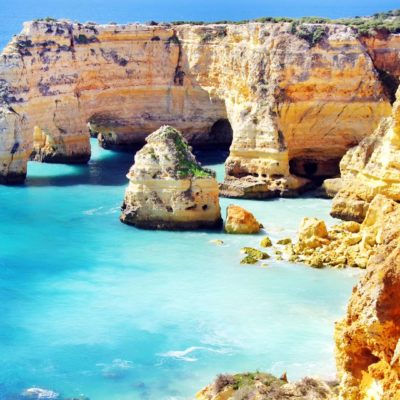
Choose one base or, on a longer stay, two complementary bases rather than changing hotels simply to cover the coastline. The car makes beaches and day trips accessible without requiring another overnight stop every day.
Know What to Leave Out
One of the most valuable Portugal road-trip decisions is deciding what not to include.
Sintra, Óbidos, Nazaré, Coimbra, Aveiro, Porto, the Douro, Évora, Marvão and Lagos are all worthwhile. That does not mean they belong in the same eight-day trip.
If this is your first Portugal vacation, two or three well-chosen regions can provide enormous variety. A second visit can then explore Northern Portugal, the Alentejo, the Atlantic coast or another part of the country in greater depth.
Portugal’s compact geography should be treated as an advantage. It makes it possible to combine very different experiences without enormous transfer distances. It should not become an excuse to schedule every place you have ever heard of.
Portugal Road Trip Examples by Trip Length
7 Nights: Lisbon and Alentejo
Spend three nights in Lisbon without a rental car. Collect the car when leaving the city, spend two nights in Évora or the surrounding countryside, and use the final two nights for another Alentejo destination or a relaxed return toward Lisbon.
8 Nights: Lisbon to Porto
Combine Lisbon with selected Central Portugal stops and Porto. Portugal Online’s Classic Portugal Self-Drive Tour provides one example of how the country’s two major cities can be connected through smaller historic destinations.
9 Nights: Inland Portugal and the North
The Driving the Heart of Portugal itinerary follows a broader inland route through the Alentejo, Beiras, northern Portugal, Porto and Central Portugal. It is suited to travelers who value historic towns and countryside as much as the major cities.
12 Nights: A Broader Mainland Portugal Road Trip
With nearly two weeks, consider the Grand Driving Tour of Portugal, which combines southern, central and northern Portugal in one planned self-drive vacation.
Portugal Road Trip Frequently Asked Questions
Is Portugal good for a road trip?
Yes. Portugal’s relatively compact mainland, good road connections and variety of cities, countryside, wine regions, villages and beaches make it particularly suitable for self-drive travel. A rental car is most useful outside Lisbon and Porto and in regions such as the Alentejo, Douro, Algarve and rural north.
How many days do you need for a Portugal road trip?
Seven nights is enough for a focused route involving approximately two main regions. Ten nights allows two or three regions comfortably. Twelve to fourteen nights is better for travelers who want to combine northern, central and southern Portugal.
Should I rent a car in Lisbon?
Usually not for sightseeing within Lisbon itself. Public transportation, walking and taxis are more convenient in the city center. A common strategy is to stay in Lisbon first and collect the rental car when leaving for the next region.
Should I rent a car in Porto?
A car is unnecessary for central Porto. It becomes much more useful when continuing into the Douro Valley, Minho, smaller northern towns or rural areas.
What is the best Portugal road trip for a first-time visitor?
A Lisbon-to-Porto route through selected destinations in Central Portugal is one of the easiest first self-drive journeys. Lisbon, the Alentejo and Algarve also work naturally together for travelers who prefer countryside and beaches.
Is it better to drive north to south or make a loop?
Both can work. An open-jaw trip using different arrival and departure airports can reduce backtracking, while a Lisbon round trip may provide better flight choices. Compare airfare, rental-car drop charges and the overall route before deciding.
Do I need an automatic rental car in Portugal?
Manual-transmission vehicles are common. Travelers who require an automatic should request one well in advance, particularly during high-demand travel periods.
How do toll roads work in Portugal?
Portugal uses a mixture of traditional and electronic toll collection. Rental-car travelers should confirm exactly how toll payments are handled before leaving the rental counter and use current information rather than older online advice.
Planning Your Portugal Self-Drive Vacation
A successful Portugal road trip should feel as though one region naturally leads into the next. The hotels should support the route, driving days should leave time for worthwhile stops, and the rental car should provide freedom rather than become something you spend the vacation managing.
Start by comparing Portugal Online’s Portugal self-drive tours and vacations. Current mainland options range from shorter Lisbon-to-Porto itineraries to longer driving vacations through the Algarve, Alentejo, Central Portugal and the north.
If you like the destinations but would rather not drive, compare private guided Portugal tours. If your trip is mainly Lisbon, Porto and other rail-connected cities, the Portugal city-break and train itineraries may be a better fit.
If none of the published routes matches exactly what you have in mind, use the Portugal Vacation Planner. Share your dates, preferred regions, hotel category, interests and desired pace, and a Portugal Online travel specialist can help coordinate the route, accommodations, rental car and selected experiences into one trip.
The best Portugal road trip is not the one that covers the most miles. It is the one that gives you enough structure to travel smoothly and enough freedom to stop when a vineyard, village, beach or viewpoint makes you want to stay a little longer.