Religion has shaped Portuguese culture, politics, architecture, festivals and ideas about national identity for many centuries. Roman Catholicism remains the country’s largest religious tradition, but the history of religion in Portugal is much more complex than a simple story of a uniformly Catholic nation.
Christian communities existed in the Iberian Peninsula long before Portugal became a kingdom. Medieval Portugal also included important Jewish and Muslim communities. Later centuries brought forced conversion, the Portuguese Inquisition, anticlerical republican reforms, the Fátima apparitions, the Catholic revival associated with the Estado Novo and, eventually, the modern constitutional separation of church and state.
Christianity Before the Kingdom of Portugal
Christianity reached the western Iberian Peninsula during the Roman period and became deeply established during late antiquity. After the collapse of Roman rule, Christian institutions continued under the Suebi and Visigoths.
Muslim armies entered Iberia in 711 and rapidly conquered most of the peninsula. The territory that later became Portugal was divided for centuries between Muslim-ruled regions and Christian-controlled areas in the north. Christianity did not disappear from Muslim-ruled southern Iberia; Christian communities continued to exist there, while Islam and Judaism also became important parts of urban and intellectual life.

Braga – S. Marcos church. Photo Turismo de Portugal – Jose Manuel.
The Medieval Kingdom, the Church and Religious Diversity
As the Portuguese kingdom emerged in the 12th century, its rulers sought recognition from both neighboring Christian monarchs and the papacy. Afonso Henriques presented Portugal as an independent Christian kingdom, and Pope Alexander III formally recognized him as king in the papal bull Manifestis Probatum in 1179.
The medieval Church became one of Portugal’s major institutions. Monasteries, cathedral chapters and religious orders owned land, provided education and charity, and helped settle newly conquered areas. Orders such as the Templars — later reorganized in Portugal as the Order of Christ — became deeply connected to both the Reconquista and later overseas expansion.
Yet medieval Portugal was not religiously homogeneous. Jewish communities lived in many Portuguese towns and cities, working as merchants, physicians, craftsmen, scholars and royal officials. Muslim communities also remained after Christian conquest, particularly in southern Portugal, where some lived in designated mourarias.
1496–1497: Expulsion, Forced Conversion and the “New Christians”
The late 15th century marked a severe rupture in Portugal’s religious diversity. King Manuel I ordered Jews and Muslims to leave the kingdom in 1496. The following year, many Portuguese Jews who had expected to depart were instead forcibly converted to Christianity.
These converts and their descendants became known as New Christians. Although legally Christian, many faced suspicion that they continued to practice Judaism privately. The Lisbon Massacre of 1506, in which a mob killed large numbers of New Christians, became one of the darkest episodes of this period.
The Portuguese Inquisition
The Portuguese Inquisition was formally established in 1536. It investigated offenses against Catholic orthodoxy, but New Christians accused of secretly practicing Judaism became a major target. Other cases involved Protestantism, alleged heresy, bigamy, prohibited books, religious practices considered superstitious and other offenses defined by inquisitorial law.
Trials, confiscations of property, imprisonment and public autos-da-fé made the Inquisition a powerful institution in Portuguese society and in parts of the empire. Its impact also encouraged the migration of many Portuguese Jews and New Christian families to other parts of Europe, the Mediterranean, the Atlantic world and beyond.
Catholic Missions and the Portuguese Empire
Religion and empire became closely connected as Portugal expanded overseas. The Portuguese crown received extensive rights and responsibilities from the papacy through arrangements collectively associated with the Padroado, linking royal power with Catholic missionary activity.
Franciscans, Dominicans, Jesuits and other religious orders established missions in Africa, Brazil and Asia. Some missionaries learned local languages, produced dictionaries and participated in education and scholarship. Others worked within colonial systems that disrupted local religions and cultures. As with the empire itself, missionary history includes both cultural exchange and coercion.
For the broader political and economic context, see Part 1: The Portuguese Empire.
Pombal and the Reduction of Church Power
During the reign of King José I, the powerful minister Sebastião José de Carvalho e Melo, the Marquis of Pombal, sought to strengthen royal authority and reduce institutions that competed with the crown.
Pombal was not simply “anti-religious.” His policies were aimed particularly at controlling ecclesiastical power and bringing education and administration more firmly under state authority. In 1759, he expelled the Jesuits from Portugal and its empire and confiscated their property.
The Inquisition continued, but Pombal subordinated it more closely to the crown and abolished the legal distinction between Old Christians and New Christians in the 1770s.
Liberalism, the End of the Inquisition and Religious Orders
The Liberal Revolution of 1820 began a new era in Portuguese politics. The Inquisition was abolished in 1821. During the Liberal Wars and their aftermath, church-state relations became increasingly contentious.
In 1834, after the liberal victory in the civil war, male religious orders were suppressed and much of their property was nationalized. These measures dramatically reduced the institutional and economic power of monasteries and convents, although Catholicism remained deeply embedded in Portuguese society.
The First Republic and the Separation of Church and State
The monarchy was overthrown on October 5, 1910. Leaders of the new First Republic pursued an aggressive program of secularization. Religious orders were again suppressed, religious instruction was removed from public schools, civil marriage and divorce were expanded, and church property was inventoried or nationalized.
The Law of Separation of Church and State, enacted on April 20, 1911, declared that Catholicism was no longer the state religion and formally guaranteed freedom of conscience and worship. At the same time, many of its provisions were strongly anticlerical and intensified conflict between republican authorities and the Catholic hierarchy.
The political instability that followed cannot be explained by religion alone. Portugal’s First Republic faced military conflict, economic problems, factional politics and social unrest as well as church-state tensions.
Our Lady of Fátima and the 1917 Apparitions
Fátima.
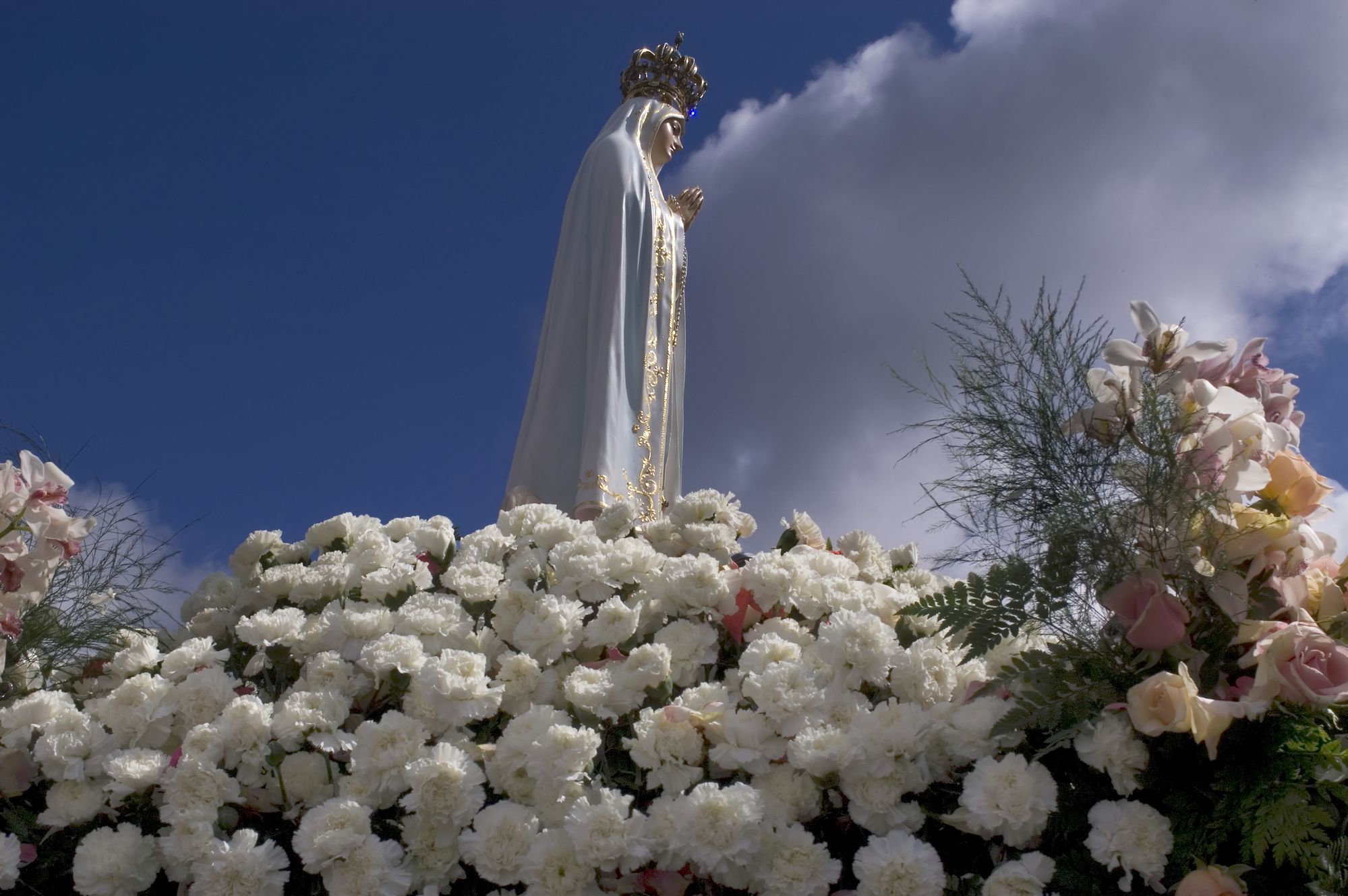
In 1917, three shepherd children — Lúcia dos Santos and her cousins Francisco and Jacinta Marto — reported a series of apparitions of the Virgin Mary near Fátima.
The final reported apparition took place on October 13 before a very large crowd. Many witnesses described unusual solar phenomena in an event that became known as the Miracle of the Sun. The Catholic Church investigated the events, and in 1930 the Bishop of Leiria declared the apparitions worthy of belief and authorized the devotion to Our Lady of Fátima.
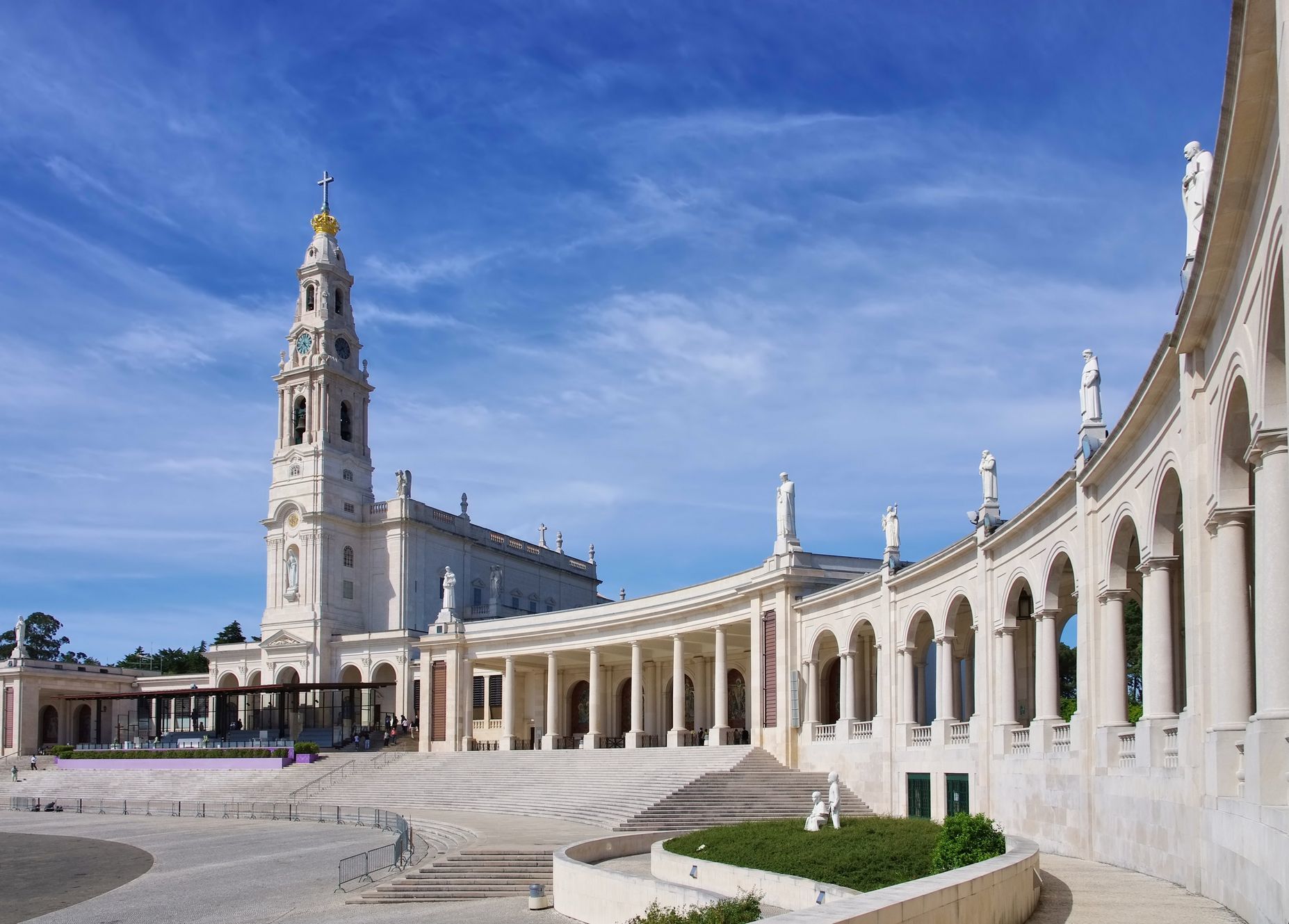
Fátima grew into one of the world’s major Catholic pilgrimage destinations. Today the sanctuary includes the Chapel of the Apparitions, the Basilica of Our Lady of the Rosary and the Basilica of the Most Holy Trinity. See our detailed Sanctuary of Fátima visitor guide.
Salazar, the Estado Novo and the Catholic Church
António de Oliveira Salazar did not seize power in 1928. He became finance minister that year, became prime minister in 1932, and established the authoritarian Estado Novo constitutional system in 1933.
Salazar was personally Catholic and his regime promoted conservative ideas about family, social order and morality that overlapped with Catholic teaching. But the Catholic Church was not formally merged with the state, and relations were more complicated than simple church control of the dictatorship.
In 1940, Portugal and the Holy See signed a Concordat that established a new legal framework for the Catholic Church. A separate missionary agreement also addressed Catholic missions in Portugal’s overseas territories.
The Church itself was never politically monolithic. Some clergy and Catholic activists supported the regime, while others criticized political repression, poverty and the colonial wars. By the 1960s and early 1970s, parts of Portuguese Catholicism were increasingly influenced by social reform, the Second Vatican Council and opposition to authoritarian rule.
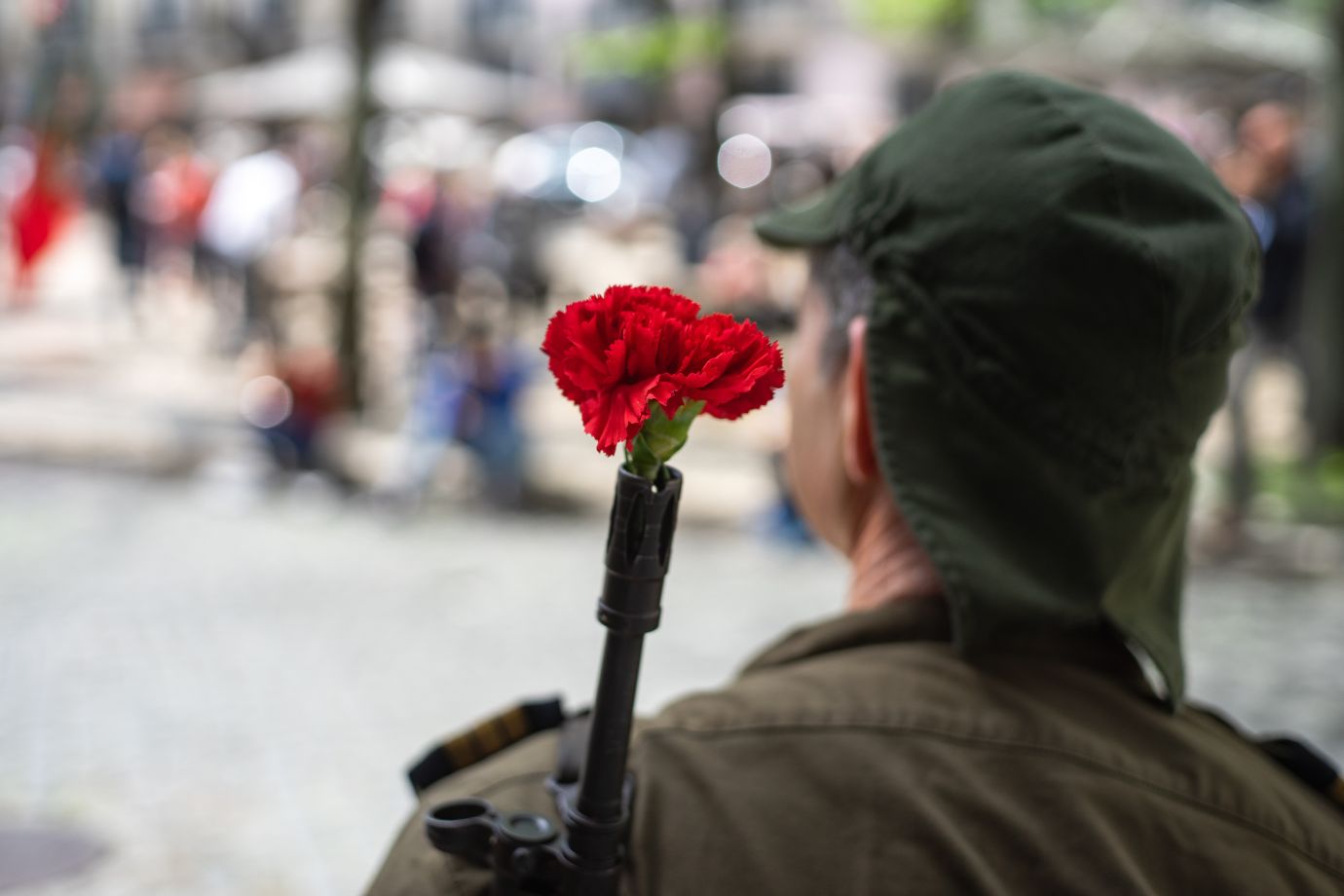
Carnation Revolution – April 25, 1974.
Democracy, Religious Freedom and the Constitution
The Carnation Revolution of April 25, 1974 ended the Estado Novo. Portugal’s democratic Constitution, adopted in 1976, guarantees freedom of conscience, religion and worship. It also states explicitly that churches and religious communities are separate from the state and free to organize and practice their faith.
The modern legal framework was further developed by the Religious Freedom Law of 2001. Portugal also signed a new Concordat with the Holy See in 2004, replacing the 1940 agreement and defining specific areas of cooperation between the Portuguese state and the Catholic Church.
Religion in Portugal Today
Portugal remains predominantly Catholic by self-identification, but contemporary society is more religiously diverse and more secular than it was in the 20th century.
According to Portugal’s 2021 census, approximately 80% of residents age 15 and older identified as Roman Catholic. Evangelical Protestants accounted for about 2%, while other Christian denominations together represented roughly 3%. About 14% reported no religious affiliation, and approximately 3% did not answer the religion question.
Portugal also has Muslim, Hindu, Jewish, Buddhist, Sikh, Bahá’í and other religious communities. Immigration has increased the visibility and diversity of several of these traditions, especially in Lisbon and other urban areas.
Census identification does not necessarily measure regular religious practice. Many Portuguese people who identify culturally as Catholic attend Mass infrequently, while Catholic rituals, saints’ festivals and family traditions remain important even for some people who are otherwise secular.
Folk Religion, Saints and Popular Devotion
Portuguese religious culture also extends beyond formal church attendance. Local festas, processions, pilgrimages and patron-saint celebrations remain central to community life in many towns and villages.
Popular Catholic devotion has historically existed alongside older folk beliefs involving protection, luck, healing and the mau-olhado, or evil eye. Practices differ greatly by region and family, so it is more accurate to describe these as elements of Portuguese folk culture than to characterize Portugal as uniformly “superstitious.”
Religious heritage is also visible in Portugal’s landscape: Romanesque monasteries in the north, Gothic foundations such as Batalha, Manueline architecture in Lisbon and Tomar, Baroque churches in Braga and Porto, and the modern pilgrimage complex at Fátima.
Exploring Portugal’s Religious Heritage
Travelers interested in religious history can combine the Fátima travel guide with destinations such as Tomar, Braga, Batalha, Alcobaça and Lisbon. These places help show how religion, monarchy, military orders, architecture and national history developed together across different periods.