
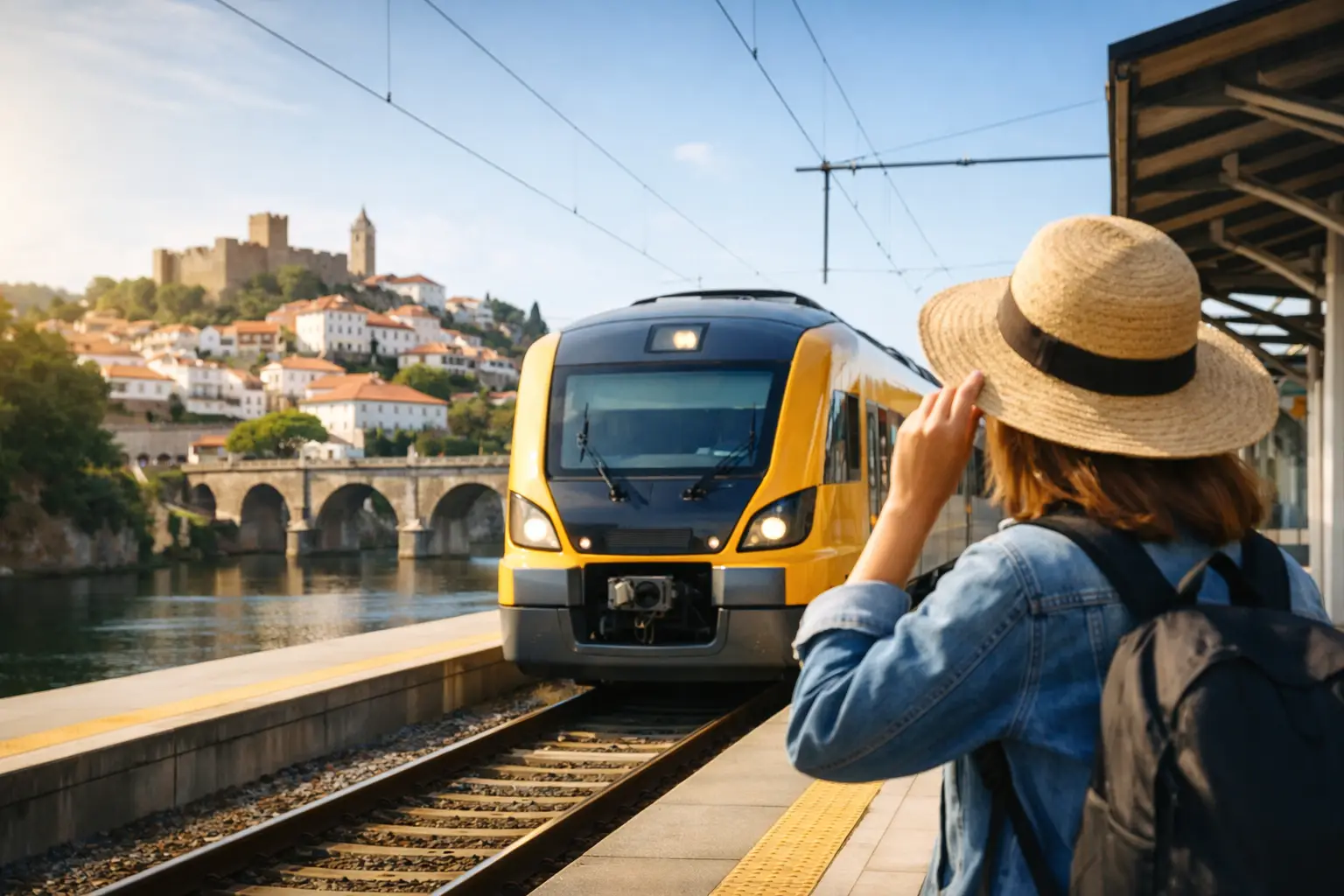
You notice it somewhere north of Lisbon, when the city gives way to rolling fields, tiled stations, and towns that seem to arrive with perfect timing. That is part of the appeal of train travel across Portugal. It is not only about getting from one stop to the next. It is about seeing the country unfold at a comfortable pace, without the stress of driving, parking, or sorting out unfamiliar roads.
For many US travelers, Portugal’s rail network hits an ideal middle ground. It is practical, scenic, and easy to combine with city stays, guided touring, and longer regional itineraries. It also works especially well for travelers who want structure without feeling overplanned. If you are considering a Portugal vacation built around rail, the key question is not whether trains are a good idea. It is where they fit best, and where another transport option may serve you better.
Why train travel across Portugal works so well
Portugal is a manageable country for rail travel because many of its most popular destinations sit on logical north-south corridors. Lisbon, Coimbra, Porto, and Braga are straightforward train-connected cities, and that makes itinerary planning much easier than in destinations where rail is fragmented or slow.
The experience itself is also traveler-friendly. Major stations are generally central, which means you can step off the train and begin exploring without losing hours to transfers. For couples, mature travelers, and families who do not want every day to revolve around driving logistics, that convenience matters. A rail-based vacation often feels calmer from the first day.
There is also a strong value argument. When you compare train tickets with the cost of rental cars, tolls, fuel, parking, and the occasional wrong turn, rail can be very competitive on the right routes. That said, it depends on your itinerary. Trains are excellent between major cities, but they are not the best solution for every rural region or village-based stay.
The main train routes travelers use most
If your goal is to see Portugal’s headline destinations efficiently, the backbone of the trip is usually the Lisbon to Porto corridor. This is the route that gives many visitors confidence in rail travel. Service is frequent, stations are easy to use, and the journey is comfortable enough to make city-hopping feel simple rather than rushed.
Coimbra fits naturally between Lisbon and Porto and is one of the easiest additions to a rail itinerary. It works well for travelers interested in history, university culture, and a smaller-scale city experience. Braga is another strong option farther north, especially for those who want to pair Porto with a city known for churches, plazas, and access to the Minho region.
The Algarve is also reachable by train, though this is where expectations matter. From Lisbon, rail can get you south without much trouble, but once you are in the Algarve, the line serves some towns better than others. If your plan centers on a resort stay or a beach town that is not directly convenient from the station, private transfers can make the journey much smoother.
This is often where professional itinerary design adds real value. A route may look simple on a map, but the difference between a relaxed travel day and a frustrating one can come down to station location, hotel transfer time, and whether your schedule leaves enough room between connections.
High-speed or regional? What to expect onboard
Portugal’s long-distance trains are generally comfortable, clean, and well suited to leisure travel. On major intercity routes, travelers often choose between faster premium services and slightly slower options that still provide a very good experience. The faster trains are ideal when you want to maximize sightseeing time in each destination, while standard intercity service may be perfectly sufficient if your schedule is more relaxed.
First class can be worthwhile for longer journeys, especially for travelers who prioritize quieter cars and extra comfort. For a short trip, standard class may be all you need. There is no one right answer. A couple celebrating a special trip may value the upgraded experience, while a family balancing comfort and budget may prefer to invest elsewhere, such as a better-located hotel or private touring day.
Regional trains are a different category. They can be useful, but they are less about speed and more about access. If your vacation includes smaller towns, a regional segment may be part of the route, although in some cases a private driver or organized transfer is simply more efficient.
When rail is the best choice – and when it is not
Train travel across Portugal is strongest when your trip focuses on cities and established visitor destinations. Lisbon, Porto, Coimbra, and Braga are the classic examples. In these places, rail reduces friction and helps travelers move through the country without sacrificing comfort.
It becomes less ideal when your plans include remote countryside properties, vineyard stays, tiny historic villages, or multi-stop exploration in areas with limited train frequency. The Douro Valley is a good example of a place where trains can be scenic and enjoyable, but not always the most complete solution. If you want to visit quintas, small villages, or viewpoints on your own schedule, a guided day trip, private driver, or self-drive extension may make more sense.
The same logic applies to the Alentejo and parts of the Algarve. Rail can get you part of the way, but not always all the way in the most efficient manner. For some travelers, a blended itinerary works best: rail for the major city legs, then a car or transfer where flexibility matters most.
How to plan a realistic rail itinerary
A good Portugal rail trip usually starts with fewer hotel changes than travelers first imagine. It is tempting to fit in every major stop, but the best vacations leave room to enjoy each place. Two or three nights in Lisbon, one or two in Coimbra, and three in Porto can feel far more satisfying than racing through five destinations in a week.
Arrival timing matters too, especially for US travelers landing after overnight flights. If you are arriving in Lisbon and continuing immediately by train, the day can feel longer than expected. Many travelers do better with a first-night Lisbon stay before moving on. It keeps the trip feeling polished rather than exhausting.
Luggage is another practical consideration. Trains are manageable with normal vacation baggage, but if you are carrying multiple large suitcases, station stairs and boarding can become less pleasant. Packing a little lighter makes rail feel much easier. So does arranging station transfers in advance, particularly if your hotel is on a steep street or in a historic district with limited vehicle access.
For travelers who want the ease of rail without the work of coordinating every segment, a self-guided rail package can be especially appealing. You still get the freedom of independent travel, but the hotels, train logistics, and destination flow are professionally arranged. That combination often suits first-time Portugal visitors very well.
Scenic moments that make the journey memorable
Rail travel in Portugal is not only functional. Certain stretches add genuine sightseeing value to the trip. The approach into Porto has its own energy, while the ride through central Portugal offers a changing sense of landscape that many travelers miss when they fly or drive straight through.
The Douro route is often the segment that people remember most vividly. Even travelers who do not build their entire vacation around rail often try to include this journey because the river scenery and terraced hillsides give the train ride a purpose beyond transportation. Still, it works best when timed thoughtfully. A scenic train day sounds romantic, but if it is packed between too many hotel check-ins and early departures, the experience can feel compressed.
That is one reason itinerary balance matters so much. Scenic rail is at its best when it supports the vacation, not when it turns into a checklist item.
Booking train travel across Portugal with confidence
If you are comfortable planning every train, hotel, and transfer yourself, Portugal is one of Europe’s more approachable countries for independent travel. But many travelers do not want to spend their vacation worrying about ticket classes, station timing, and whether an onward connection leaves enough margin for delays.
That is where expert planning becomes worthwhile. A well-built rail itinerary considers more than the train schedule. It factors in hotel location, arrival ease, the pace of the trip, and what kind of experience you actually want once you get there. For some travelers, that means a fully guided vacation. For others, it means a self-guided rail journey with local support in place. Portugal Online has long specialized in exactly this kind of tailored planning for US travelers who want to book safely and confidently.
The best rail vacations in Portugal are not the ones with the most stops. They are the ones where the journey feels effortless, the scenery has room to register, and every connection supports the kind of trip you actually came to enjoy.