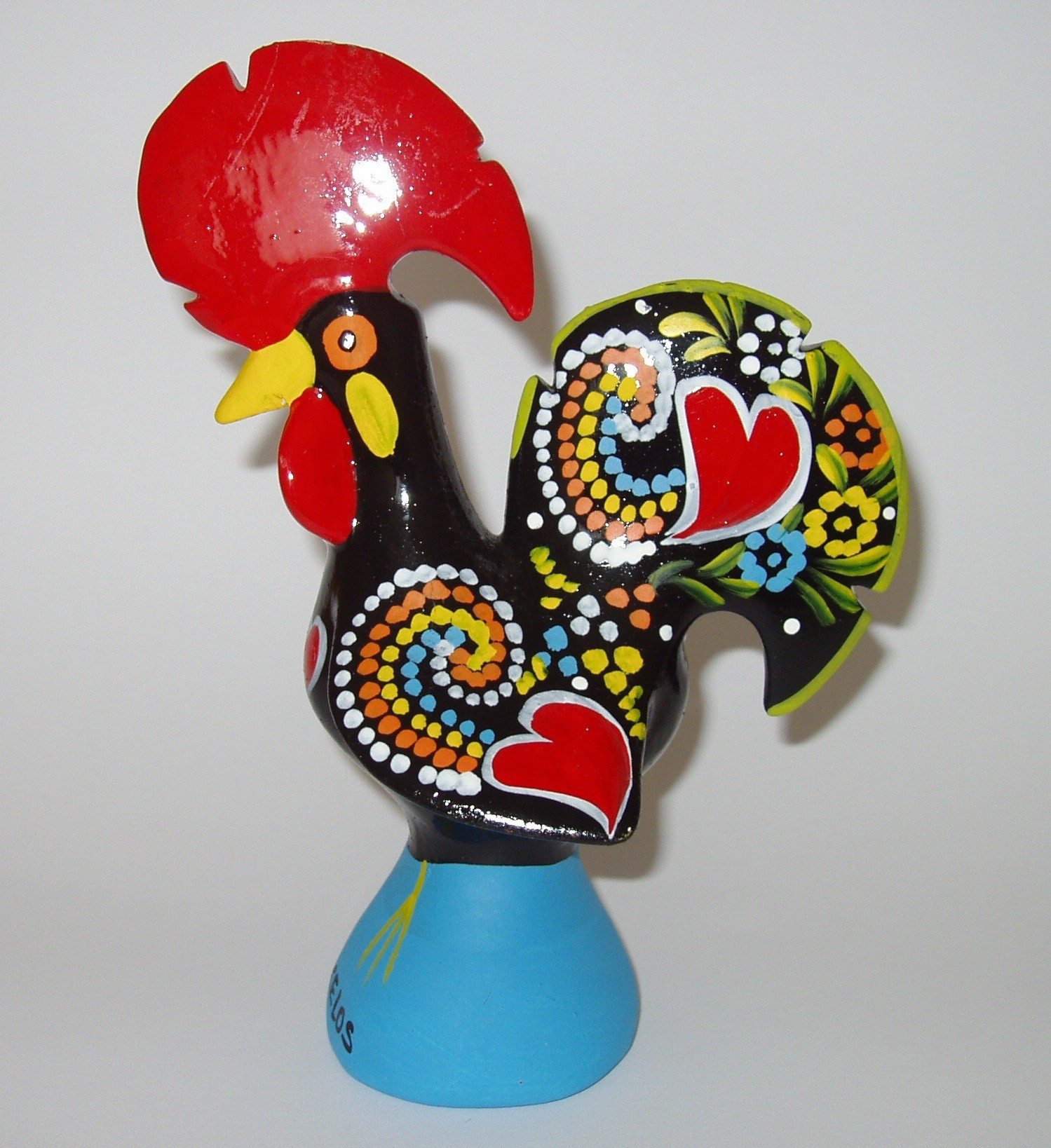
Barcelos Rooster
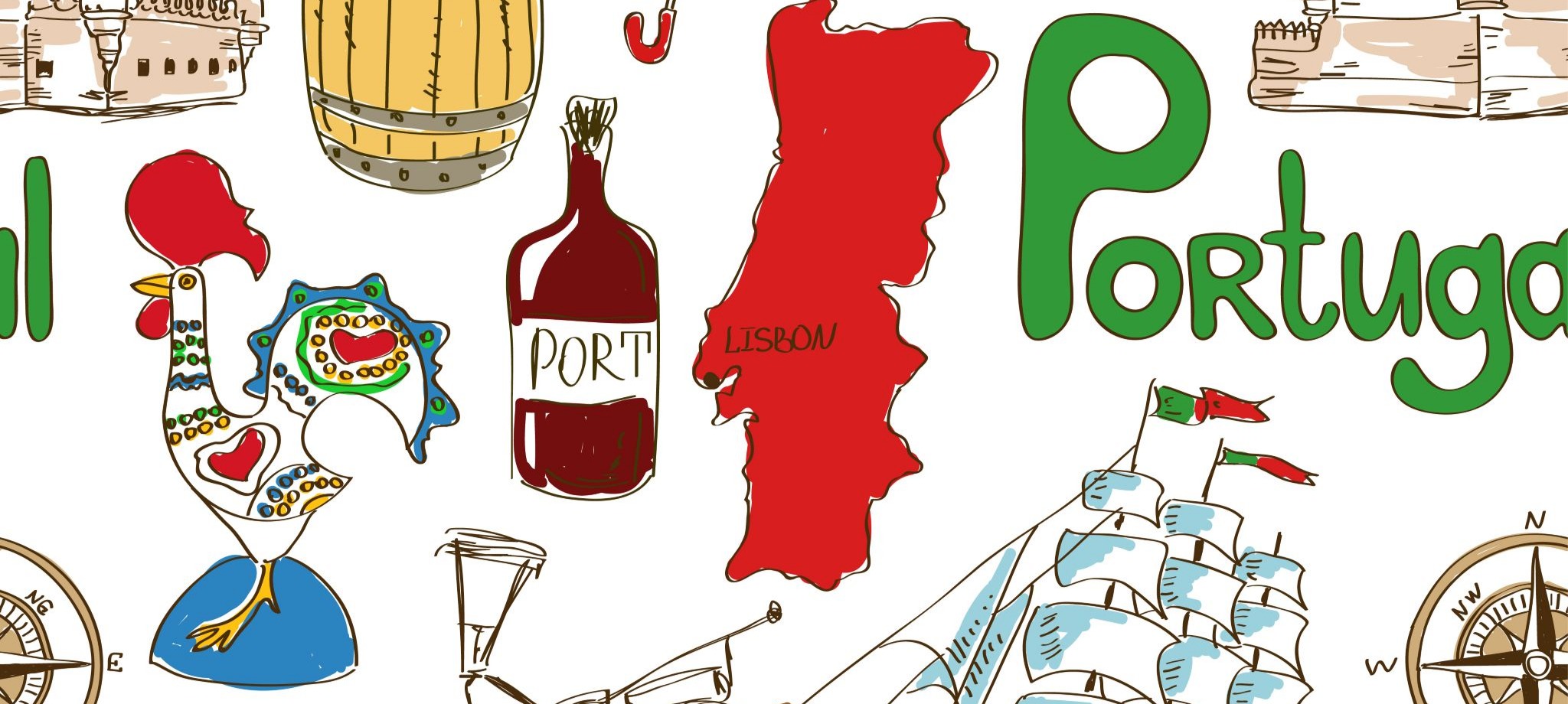
The Barcelos Rooster, or Galo de Barcelos, is one of the most recognizable symbols of Portugal. The brightly painted rooster appears on ceramics, textiles, signs and souvenirs throughout the country, but its story begins in the northern town of Barcelos, in Portugal’s Minho region.
Behind the familiar image is a medieval legend about a pilgrim, a wrongful conviction and a roasted rooster that miraculously crowed. Over time, that local story became closely connected with Barcelos pottery and folk art. By the 20th century, the colorful rooster had moved far beyond the town that gave it its name and became an international image of Portuguese culture.
Travelers interested in seeing the place behind the legend can include Barcelos while exploring Porto and Northern Portugal, where historic cities, pilgrimage routes, traditional crafts and the green landscapes of the Minho are all part of the experience.
The Legend of the Barcelos Rooster
Like many old folk stories, the Legend of the Barcelos Rooster has been told in several forms. The version preserved by Portuguese tourism authorities and the Municipality of Barcelos centers on a Galician pilgrim who was traveling through Barcelos on his way to Santiago de Compostela.
The people of Barcelos had been alarmed by a crime whose perpetrator had not been found. When the traveler arrived in town, suspicion fell on him. Although he insisted that he was innocent and explained that he was making a pilgrimage to Santiago de Compostela in fulfillment of a vow, he was arrested, convicted and sentenced to hang.
Before the execution, the pilgrim asked to see the judge who had condemned him. His request was granted, and he was taken to the magistrate’s home, where the judge was dining with friends.
Once again the pilgrim declared his innocence. He then pointed to a roasted rooster on the table and said, in effect, that the rooster would crow as proof of his innocence when he was hanged. The claim sounded impossible, and the people around the table laughed at him.
According to the legend, however, the impossible happened. As the execution was taking place, the roasted rooster rose and crowed. Realizing that a terrible mistake might have been made, the judge rushed to the gallows. There he found that the knot around the pilgrim’s neck had not tightened sufficiently to kill him. The traveler was released and allowed to continue on his way.
Years later, the pilgrim is said to have returned to Barcelos and erected a monument in gratitude to Santiago and the Virgin Mary. A medieval stone cross associated with the legend, known as the Cruzeiro do Senhor do Galo, remains part of Barcelos’s historic heritage.
What Does the Barcelos Rooster Symbolize?
The meaning of the Galo de Barcelos goes beyond the miracle in the legend. The Municipality of Barcelos describes the rooster as a symbol associated with faith, justice and hope—themes that follow naturally from the story of an innocent pilgrim saved at the last moment.
It also represents something broader: the creativity of Barcelos artisans and the survival of Portuguese folk traditions. For many Portuguese people and visitors, the colorful rooster has come to evoke Portugal itself—its regional craftsmanship, popular culture, strong visual traditions and connection between local history and national identity.
That helps explain why the rooster is seen far beyond Barcelos. It can be found in homes, restaurants, markets and Portuguese communities around the world, sometimes as a traditional ceramic figure and sometimes reinterpreted in modern colors and designs.
How the Barcelos Rooster Became a Symbol of Portugal
The rooster did not become a national symbol simply because the legend was well known. Its rise was closely connected with the pottery and clay-figure traditions of Barcelos.
Barcelos has long been an important center for pottery and figurado, a form of popular clay sculpture in which artisans create expressive figures inspired by daily life, religion, animals, rural traditions and the imagination. The Galo de Barcelos emerged from this wider artistic tradition.
The Municipality of Barcelos traces an important step in the rooster’s international visibility to 1935, when Barcelos pottery and folk figures were presented at the Portuguese Popular Art Exhibition in Geneva. The following year, a related exhibition in Lisbon further promoted Portuguese popular art.
During the 1950s and 1960s, the colorful rooster became increasingly associated with the promotion of Portugal as a travel destination. It appeared in tourism imagery and international presentations of Portuguese culture, helping transform a local folk-art figure into a recognizable national icon.
By the late 20th century, the rooster’s popularity had outgrown its original tourism role. It had become a symbol that could be traditional or modern, rural or urban, decorative or artistic, while remaining unmistakably Portuguese.
Its cultural importance is still actively protected. In 2021, the Municipality of Barcelos announced the national registration of the “Galo de Barcelos” trademark, a measure intended to help preserve the identity of the characteristic ceramic figure and the creative work associated with Barcelos artisans.
The Barcelos Rooster and Portuguese Folk Art
To understand the rooster properly, it helps to look beyond the souvenir shops and consider the craft tradition that created it.
Figurado de Barcelos developed from the region’s pottery culture. Artisans modeled clay into people, animals, religious scenes and imaginative characters, often painting them in bold colors. These works were not originally conceived as luxury art objects; many reflected ordinary life, popular beliefs, humor and local customs.
Over generations, individual artisans developed distinctive styles. Barcelos became particularly well known for expressive clay figures, and the rooster emerged as the most famous of them all.
That is why an authentic visit to Barcelos is more interesting than simply buying a rooster elsewhere in Portugal. In the town itself, the symbol can be understood as part of a living regional craft tradition rather than just a national logo.
Different Versions of the Portuguese Rooster Legend
Folk legends change as they are retold, and the Barcelos story is no exception. The central idea remains consistent: an innocent traveler faces execution, invokes a roasted rooster as proof of his innocence, and is saved when the bird miraculously crows.
Other details vary from one telling to another:
- Some versions identify the traveler specifically as a Galician pilgrim heading toward Santiago de Compostela.
- Some stories describe the crime only generally, while later retellings identify theft or stolen silver.
- In some versions, the accusation begins at an inn or a private home.
- Another variation tells of a father and son traveling together, with the son being accused and the father appealing for proof of his innocence.
- The details surrounding the judge, the banquet and the execution can also differ.
These differences are typical of oral tradition. The official versions preserved in Barcelos and by Portugal’s tourism authorities emphasize the Galician pilgrim, his journey toward Santiago de Compostela, the miraculous crowing of the roasted rooster and the later monument of gratitude.
Where Can You See the Barcelos Rooster in Barcelos?
Barcelos is more than the birthplace of a souvenir. Travelers interested in Portuguese history and folk culture can connect the legend with several places around town.
Cruzeiro do Senhor do Galo
The medieval stone cross associated with the rooster legend is preserved as part of the archaeological heritage of Barcelos. It links the familiar folk story with an actual historic object and is one of the most meaningful places to see if the legend is the reason for your visit.
Paço dos Condes de Barcelos
The ruins of the Palace of the Counts of Barcelos form one of the town’s important historic sites and house the archaeological collection associated with the area. The setting also reinforces Barcelos’s medieval character and its connection with the rooster story.
Museu de Olaria
The Pottery Museum of Barcelos is particularly worthwhile for travelers who want to understand the artistic side of the Galo de Barcelos. Its focus on pottery and ceramic traditions places the rooster within the broader world of northern Portuguese craftsmanship.
Barcelos Market and Local Craft Shops
Barcelos has a long market tradition, and local pottery and handicrafts remain part of the town’s identity. When purchasing a rooster, look beyond mass-produced versions and take time to compare pieces made by regional artisans. Shapes, colors and painted details vary, and that individuality is part of the appeal of Barcelos figurado.
Why Is the Barcelos Rooster So Colorful?
There is no single required color scheme for every Galo de Barcelos. Traditional interpretations are often highly decorative, using strong contrasts, floral or heart-shaped details, dots and other painted motifs. Different artisans have developed different styles, and contemporary versions may depart considerably from older designs.
The bright appearance is part of what made the rooster so effective as a cultural symbol: it is immediately recognizable, easy to reinterpret and closely associated with the expressive character of Portuguese popular art.
Is the Barcelos Rooster Portugal’s Official National Symbol?
The rooster is best described as a popular cultural symbol of Portugal, not an official national emblem in the same sense as the Portuguese flag or coat of arms. Its importance comes from folk tradition, craftsmanship, tourism history and widespread public recognition.
That distinction actually makes its story more interesting. The Galo de Barcelos was not created by the government as a national emblem. It grew from a local legend and a regional artistic tradition before being embraced across Portugal and recognized internationally.
A Small Rooster With a Much Larger Story
The Barcelos Rooster may be one of Portugal’s most familiar souvenirs, but its story reaches far beyond gift shops. It connects a medieval pilgrimage legend with the Camino de Santiago, the craft traditions of the Minho, generations of Barcelos potters and the development of Portugal’s international tourism identity.
Seeing the rooster in Barcelos adds context that a souvenir alone cannot provide. You can encounter the places associated with the legend, learn about the region’s pottery traditions and then continue through some of the most rewarding destinations in northern Portugal.
Is Barcelos Worth Visiting?
Yes, especially for travelers interested in folk art, traditional towns, religious routes or the Minho region. Barcelos works naturally as part of a broader northern Portugal itinerary rather than as an isolated destination.
The town can be combined with places such as Porto, Braga, Guimarães and Viana do Castelo. Our Porto and Northern Portugal travel guide provides a broader overview of the region and the destinations that fit naturally around Barcelos.
Travelers who want the flexibility to stop in smaller towns are particularly well suited to driving in this part of Portugal. Our Portugal self-drive vacations combine planned routes, hotels and rental cars while leaving room for independent exploration.
One option is the Driving the Heart of Portugal self-drive tour, which includes Porto and northern Portugal as part of a wider journey through the country. Barcelos can be considered as an additional Minho stop depending on your interests, available time and final route.
For travelers who want a more extensive road trip, the Grand Driving Tour of Portugal is another strong option. It combines northern Portugal with destinations farther south, making it a good fit for travelers who want Barcelos and the Minho to be part of a broader Portugal itinerary.
Travelers who prefer more structured arrangements can also compare our guided Portugal tours or use the Portugal Vacation Planner to ask a travel specialist to build northern Portugal into a customized itinerary.