Lourdes, in the foothills of the French Pyrenees, is one of the world’s best-known Catholic pilgrimage destinations. The Sanctuary of Our Lady of Lourdes developed around the Grotto of Massabielle, where 14-year-old Bernadette Soubirous reported a series of Marian apparitions in 1858.
Today the sanctuary welcomes more than three million pilgrims and visitors in a typical recent year. People come for many reasons: prayer, Mass, the Grotto, the spring water, the candlelight procession, the sacraments, healing, curiosity about Bernadette’s story, or simply to accompany a family member or pilgrimage group.
This guide explains what happened in 1858, what the Catholic Church officially recognized, what pilgrims actually do at Lourdes today, how the water and baths work, and how Lourdes compares with Fátima in Portugal.
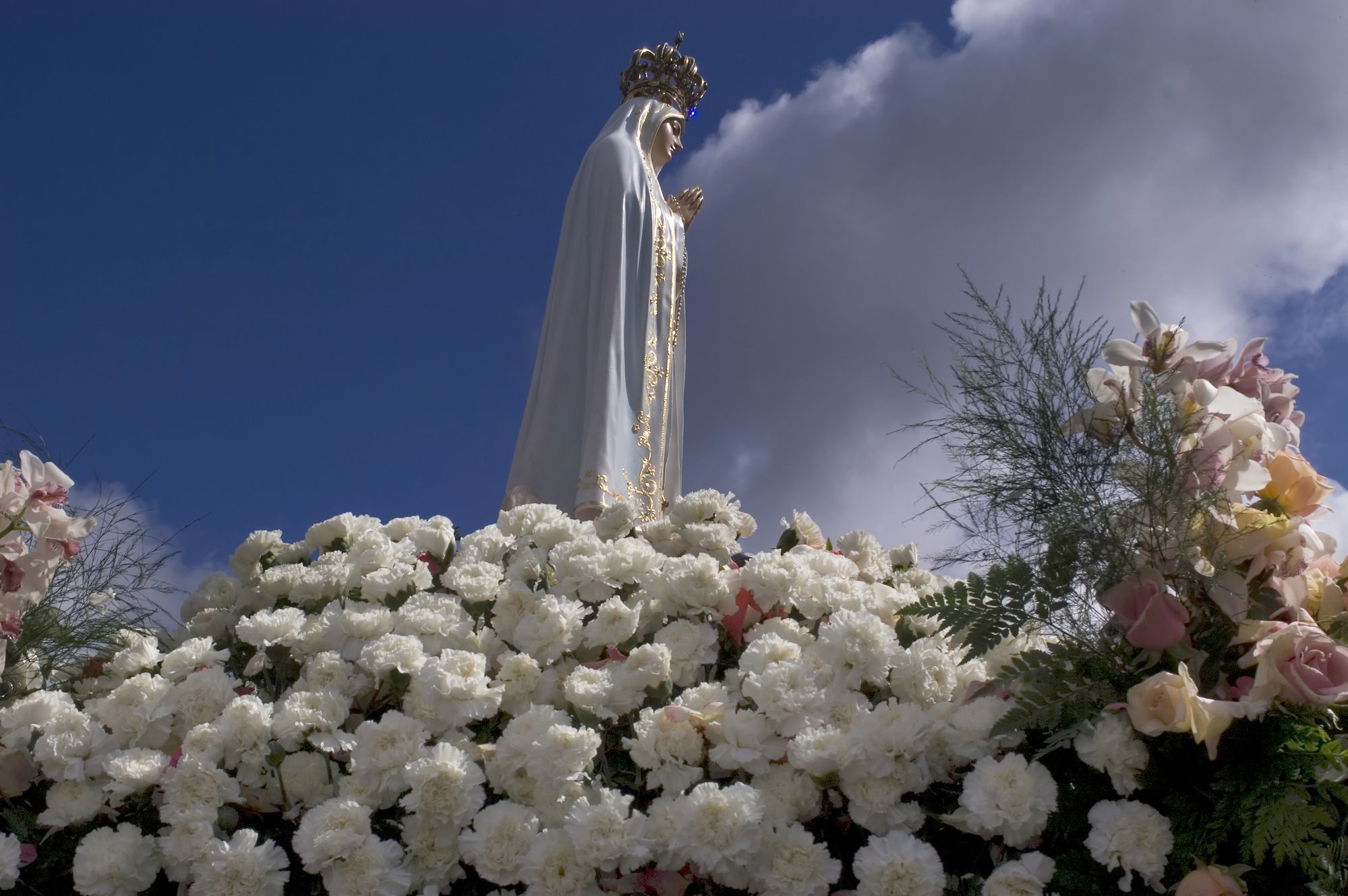
Our Lady of Lourdes is associated with the reported apparitions to Bernadette Soubirous in 1858.
The Story of Bernadette Soubirous and Lourdes
Bernadette Soubirous was born in Lourdes in 1844 into a family that had fallen into severe poverty. By 1858, the family was living in cramped conditions in a former jail cell known as the Cachot.
On February 11, 1858, Bernadette went with her sister and a friend to gather firewood near the Gave de Pau. At the rocky grotto known as Massabielle, Bernadette later said she saw a young woman dressed in white, with a blue sash and yellow roses on her feet.
Bernadette initially referred to the figure simply as Aquero — “that one” in the local dialect — rather than immediately identifying her as the Virgin Mary. Her family, local clergy and civil authorities were skeptical, and Bernadette underwent repeated questioning.
Despite opposition and public attention, she continued returning to the Grotto.
The 18 Reported Apparitions of 1858
The Sanctuary of Lourdes records 18 reported apparitions between February 11 and July 16, 1858.
Several moments became central to the Lourdes tradition:
- February 11: Bernadette reported the first apparition at Massabielle.
- February 14: after relatives feared the phenomenon might be deceptive or demonic, Bernadette brought holy water to the Grotto.
- February 18: Bernadette said the Lady asked her to return to the Grotto for fifteen days.
- February 25: Bernadette reported being told to drink from a spring and wash there. She dug into the ground, where water began to emerge.
- March 2: Bernadette reported a request that a chapel be built and that people come in procession.
- March 25: the figure identified herself to Bernadette with the words translated as “I am the Immaculate Conception.”
- July 16: Bernadette reported the final apparition.
The phrase “Immaculate Conception” was especially significant to Catholic observers because Pope Pius IX had formally defined the dogma only four years earlier, in 1854. Bernadette was a poorly educated teenager who said she did not understand the theological phrase when she first repeated it.
When Did the Catholic Church Recognize Lourdes?
The original article on this page gave the recognition date as 1860. The correct date is January 18, 1862.
In July 1858, Bishop Bertrand-Sévère Laurence of Tarbes created a commission to investigate the reported apparitions. The inquiry lasted almost four years and examined Bernadette’s testimony, witness accounts, spiritual effects and reported cures.
On January 18, 1862, Bishop Laurence issued a decree formally recognizing the apparitions as worthy of belief within the Catholic Church and authorizing devotion at Lourdes.
That distinction is important. Historical writing should say that Bernadette reported apparitions and that the Catholic Church subsequently recognized them, rather than presenting a supernatural event as something established by ordinary historical evidence.
What Should You See at the Sanctuary of Lourdes?
The Sanctuary is much larger than the Grotto alone. Official Sanctuary information describes a site of roughly 55 hectares with three basilicas and numerous churches and chapels.
Grotto of Massabielle
The spiritual center of Lourdes and the place associated with the 1858 apparitions. Pilgrims spend time in silence, pray, attend Mass and pass through the Grotto close to the spring.
Basilica of the Immaculate Conception
Built above the Grotto in response to the request Bernadette said she received for a chapel. Inside is the text connected with Bishop Laurence’s 1862 recognition of the apparitions.
Basilica of Our Lady of the Rosary
The lower basilica faces the great Rosary Square and is known for mosaics representing the mysteries of the Rosary.
Basilica of Saint Pius X
A vast underground basilica built to accommodate very large pilgrimage celebrations and international Masses.
The Baths and Water Gesture
Pilgrims can take part in the traditional water devotion associated with the spring. Today the Sanctuary distinguishes between immersion in the Baths and the simpler Water Gesture.
Ways of the Cross
Lourdes has devotional routes representing Christ’s Passion, giving pilgrims an opportunity for prayer away from the busiest parts of the sanctuary.
Boly Mill
Bernadette’s birthplace and childhood home. It gives useful context for understanding her family before their descent into poverty.
The Cachot
The former jail cell where the Soubirous family lived during the period of the apparitions. It is one of the most moving places connected with Bernadette’s life.
A Simple Lourdes Pilgrimage Route for First-Time Visitors
- Begin at the Grotto. Spend time quietly at Massabielle before trying to see everything else.
- Follow the Water Gesture. Drink from the fountains or wash your face and hands as part of the devotion associated with the spring.
- Visit the basilicas. The Immaculate Conception Basilica, Rosary Basilica and underground Saint Pius X Basilica each express a different part of Lourdes’ pilgrimage history.
- Attend Mass or pray the Rosary. The Sanctuary offers liturgies in multiple languages throughout the pilgrimage season.
- Walk in Bernadette’s footsteps. Visit Boly Mill and the Cachot in the town of Lourdes.
- Make the Way of the Cross. Allow enough time if this is an important part of your pilgrimage.
- Join an evening procession. The candlelight Marian procession is one of the most memorable communal experiences at Lourdes.
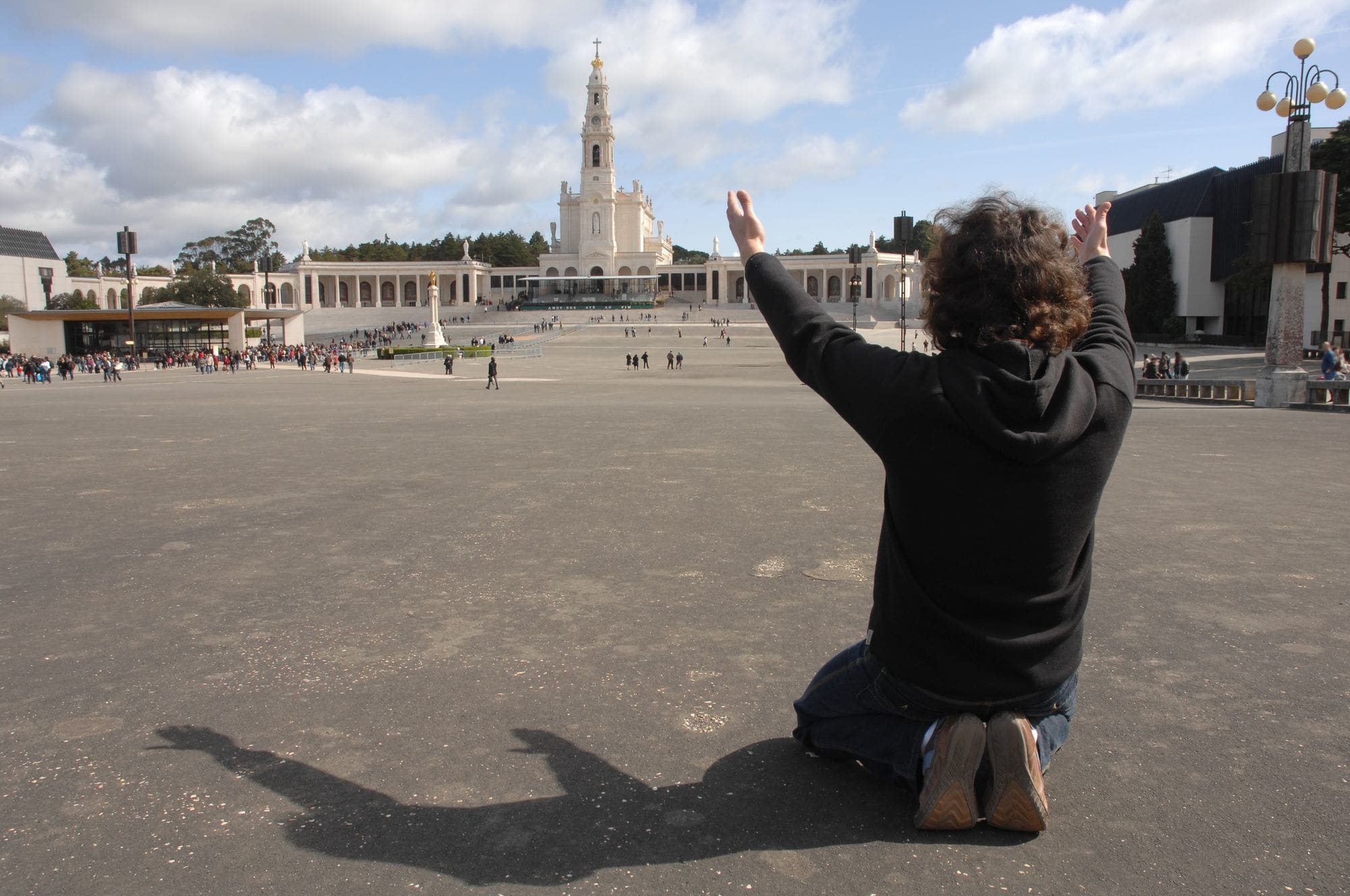
Many visitors come to Lourdes primarily for prayer, reflection and participation in the sacraments.
The Lourdes Spring, Water Gesture and Baths
The water of Lourdes is closely connected with the reported apparition of February 25, 1858, when Bernadette said she was directed to drink from the spring and wash there.
Pilgrims today can drink from fountains near the Grotto and wash their face and hands. The Sanctuary calls this the Water Gesture. The water is provided without charge.
Immersion in the traditional Baths is a separate practice. As of September 2026, the official Sanctuary schedule lists the Baths from 9:00 a.m. to 11:00 a.m. from April to November, with the Water Gesture available for additional periods during the day. These schedules can change, so always check the official Sanctuary timetable shortly before your visit.
The current experience is therefore more flexible than the older description on this page, which suggested that every pilgrim entering the Baths would necessarily undress and be submerged in the same way. Procedures have changed over time, and visitors should follow the current instructions given by Sanctuary volunteers.
The Torchlight Procession and Other Devotions
The Marian Torchlight Procession is one of the iconic experiences of Lourdes. Pilgrims gather with candles, pray the Rosary and sing the Lourdes Ave Maria in an international procession.
As of 2026, the Sanctuary lists the main Torchlight Procession at 9:00 p.m. from April to November, with different winter arrangements. The exact schedule should always be verified before travel.
The Sanctuary also regularly offers:
- Mass at the Grotto and in the basilicas
- Rosary prayer in multiple languages
- Eucharistic procession and blessing of the sick
- Confession and individual prayer
- Ways of the Cross
- Special programs on major Marian feast days and apparition anniversaries
For many pilgrims, the processions are as important as the monuments. Lourdes is designed around communal prayer, not simply sightseeing.
What About the Reported Miraculous Healings?
Lourdes has long been associated with reports of healing, but the Church’s process for recognizing a miracle is far more restrictive than the casual phrase “miraculously cured” suggests.
The Lourdes Medical Bureau was established in 1883 to examine reported cures. Medical cases can be reviewed over long periods and require extensive documentation. The medical process is distinct from the later theological judgment about whether a cure should be recognized by the Church as miraculous.
The Sanctuary currently states that more than 7,000 healings have been reported since the apparitions, but only 72 have been officially recognized as miraculous by the Catholic Church.
This is an important distinction for both believers and non-believers. A person may experience a recovery that they associate spiritually with Lourdes, while the Church reserves the formal label “miracle” for a very small number of cases that undergo extensive investigation.
Accessibility and Pilgrims Who Are Sick or Disabled
Serving people who are ill, elderly or disabled is central to the identity of Lourdes. The Sanctuary has specialized facilities, volunteers and accommodation systems designed for pilgrims who need assistance.
Major devotional areas are designed with accessibility in mind, and organized pilgrimages often include trained volunteers known as hospitaliers. If mobility, medical assistance or wheelchair access is important to your trip, contact the Sanctuary or your pilgrimage organizer before departure rather than assuming every route will be equally easy.
The main Sanctuary grounds are broad and relatively open, but Lourdes also includes slopes, outdoor paths and routes around the town. Comfortable footwear and realistic pacing matter.
How Much Time Do You Need in Lourdes?
One day allows you to see the Grotto, the principal basilicas, participate in the Water Gesture and attend a procession or Mass.
Two days is much better for a genuine pilgrimage. It gives you time for the Grotto without rushing, a Way of the Cross, Boly Mill and the Cachot, confession or Mass, and both daytime and evening devotional activities.
Three or more days works well for organized faith travel, especially if your group includes daily Mass, spiritual direction, a priest or additional excursions in the Pyrenees.
Lourdes and Fátima: Two Major Marian Pilgrimage Sites
Lourdes and Fátima are often combined on Catholic pilgrimage tours, but their histories and experiences are distinct.
Lourdes, France
Year: 1858
Seer: Bernadette Soubirous
Reported apparitions: 18
Central place: Grotto of Massabielle
Distinctive devotions: spring water, Baths/Water Gesture, Grotto prayer, torchlight procession, care for sick pilgrims
Fátima, Portugal
Year: 1917
Seers: Lúcia dos Santos, Francisco Marto and Jacinta Marto
Reported Marian apparitions: six
Central place: Chapel of the Apparitions at Cova da Iria
Distinctive devotions: Rosary, candlelight processions, Chapel of the Apparitions, Via Sacra and pilgrimage on the 12th–13th of major months
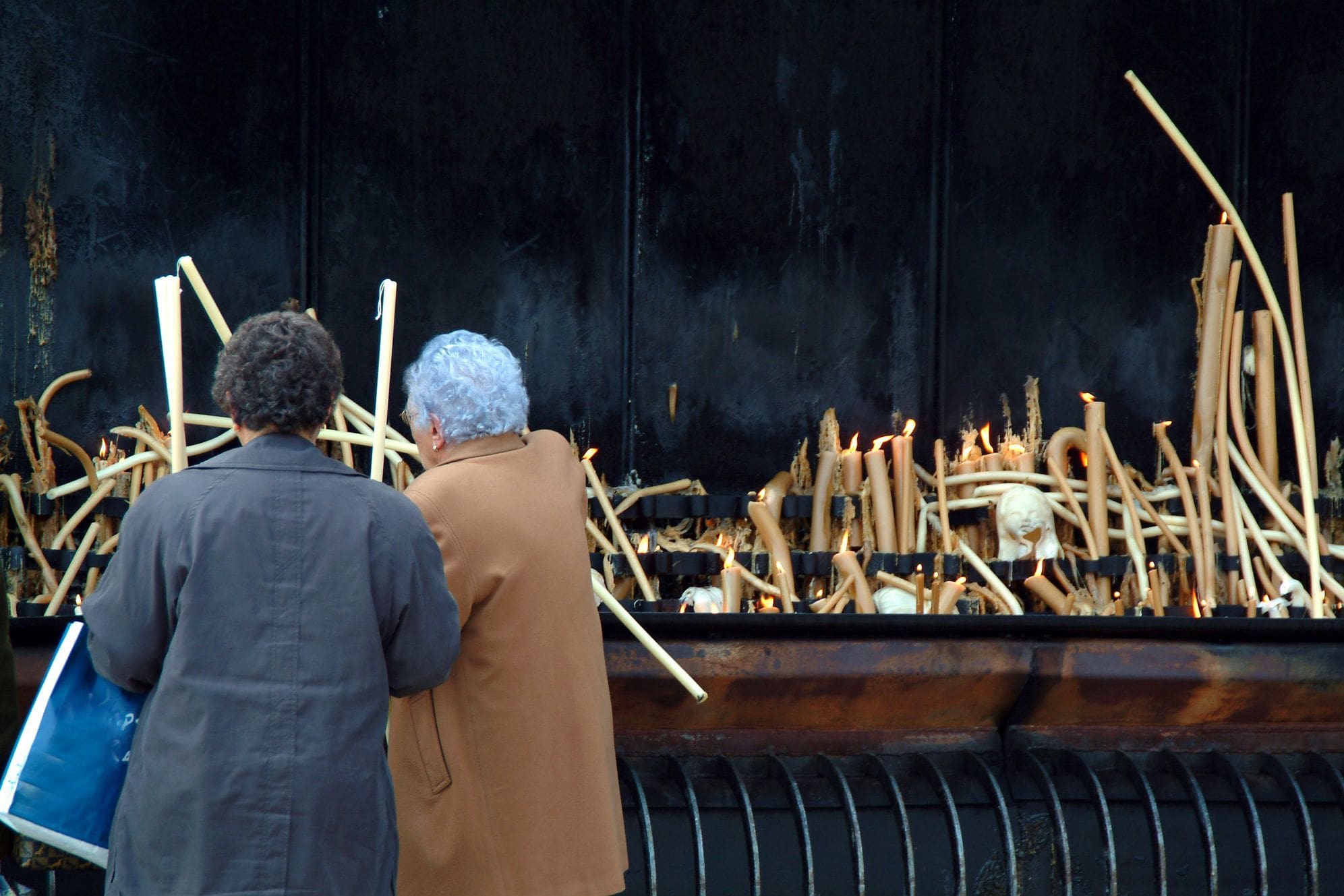
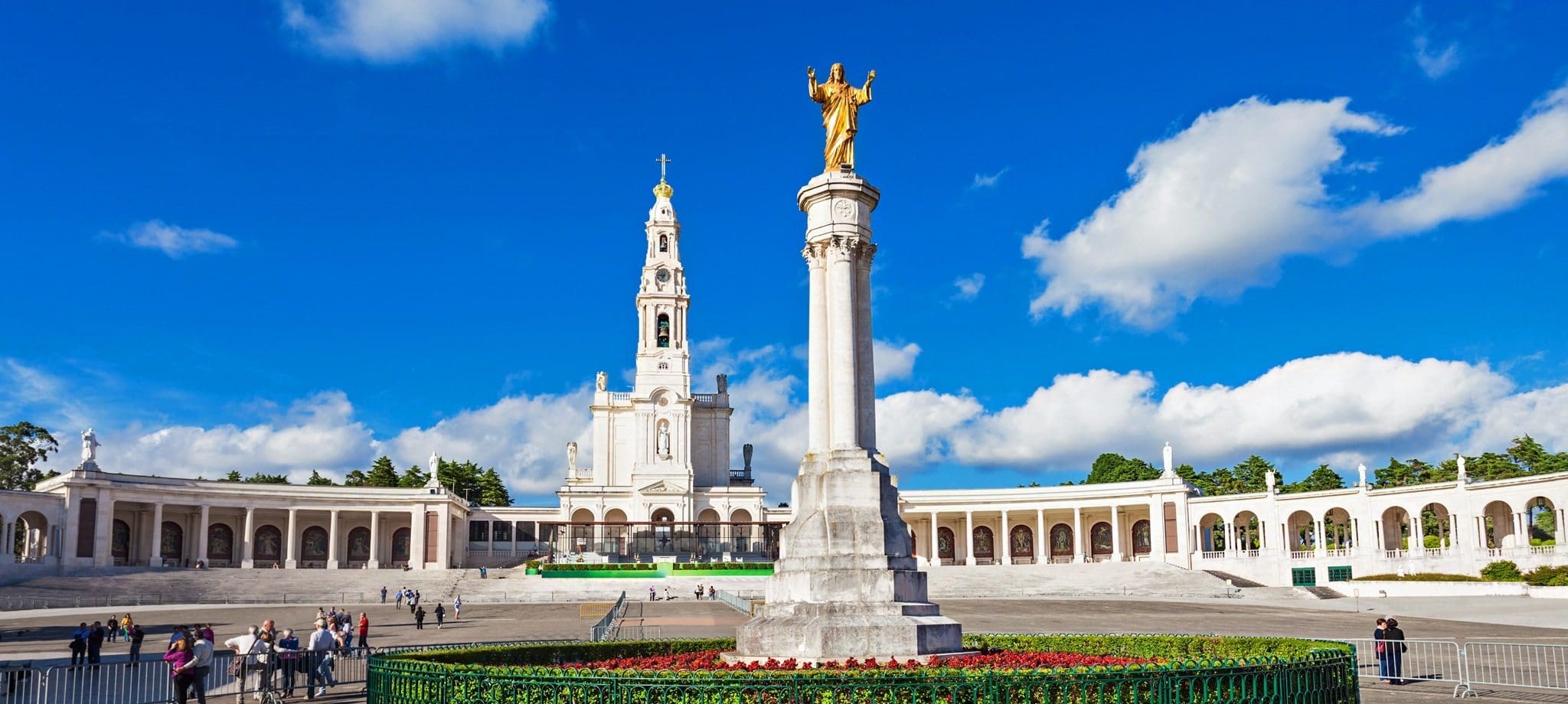
Fátima in Portugal is frequently combined with Lourdes on European Catholic pilgrimage itineraries.
Fátima’s apparitions were reported between May and October 1917. The Bishop of Leiria declared the visions worthy of belief in 1930. The Sanctuary of Fátima now includes the Chapel of the Apparitions, Basilica of Our Lady of the Rosary and Basilica of the Most Holy Trinity.
For the fuller history, read our guide to the 1917 Fátima apparitions and Miracle of the Sun.
Visit Fátima and Lourdes on a Faith Tour
For travelers who want a structured Catholic pilgrimage rather than arranging each destination independently, PortugalOnline offers faith itineraries that combine Portugal with other major European pilgrimage sites.
Fátima, Spain, Lourdes & Rome Faith Tour
Begin in Lisbon and Fátima, continue through Catholic sites in Spain, spend two days in Lourdes, and finish with three nights in Rome and Vatican sightseeing. The program includes a Catholic guide, daily Mass and spiritual activities.
Lisbon, Fátima & Central Portugal
A shorter Portugal itinerary combining Lisbon with a guided visit to Fátima, Batalha, Nazaré and Óbidos for travelers who want to include the Portuguese shrine within a broader sightseeing trip.
Classic Portugal Self-Drive With Fátima
Travel independently from Lisbon to Porto, Coimbra, Fátima, Évora and other historic destinations with hotels and rental car included.
Frequently Asked Questions About Lourdes
What happened at Lourdes in 1858?
Bernadette Soubirous reported 18 apparitions of a woman she later identified as the Virgin Mary at the Grotto of Massabielle between February 11 and July 16, 1858.
When did the Catholic Church recognize the Lourdes apparitions?
Bishop Bertrand-Sévère Laurence of Tarbes formally recognized the apparitions on January 18, 1862, after a commission of inquiry lasting almost four years.
Is Lourdes water holy water?
The spring water is central to Lourdes devotion, but it is ordinary spring water rather than sacramental holy water in the technical sense. Pilgrims drink and wash with it as a devotional response to the message Bernadette reported.
Does everyone get immersed in the Lourdes Baths?
No. The Sanctuary now distinguishes between immersion in the Baths and the Water Gesture. Procedures and schedules can change, so use the current Sanctuary instructions rather than relying on older descriptions.
Does Lourdes charge admission?
Entrance to the Sanctuary is free. Donations and offerings support its operation, and separate costs may apply for accommodation, transportation or services outside the Sanctuary.
How many Lourdes healings has the Church recognized as miracles?
The Sanctuary currently lists more than 7,000 reported healings and 72 cases officially recognized as miraculous by the Catholic Church.
What is the best-known procession at Lourdes?
The Marian Torchlight Procession is the most famous. During the main pilgrimage season, thousands of pilgrims may gather in the evening with candles to pray the Rosary and sing the Ave Maria of Lourdes.
Can a non-Catholic visit Lourdes?
Yes. The Sanctuary welcomes visitors, including people who come for historical, cultural or personal reasons. Visitors should respect silence, prayer and liturgical activities in devotional areas.
Is Lourdes accessible for travelers with disabilities?
Accessibility and care for sick and disabled pilgrims are central to Lourdes. The Sanctuary provides accessible facilities and specialized support, although individual needs should be discussed with the Sanctuary or pilgrimage organizer before travel.
Should I visit Lourdes or Fátima?
Both are major Marian pilgrimage destinations, but they offer different histories and devotional experiences. Travelers particularly interested in Catholic pilgrimage often combine them on the same European faith itinerary.
Sources and Further Planning
- Sanctuary of Lourdes — Recognition of the Apparitions
- Sanctuary of Lourdes — The 18 Apparitions
- Sanctuary of Lourdes — Drinking and Washing in the Water
- Sanctuary of Lourdes — Medical Bureau
- Sanctuary of Lourdes — Recognized Healings
- PortugalOnline Fátima Travel Guide
- PortugalOnline Sanctuary of Fátima Guide
Last reviewed September 2026. Sanctuary schedules, Bath procedures, processions and special-event access can change. Verify the current Lourdes timetable before travel.